
Pests and Diseases
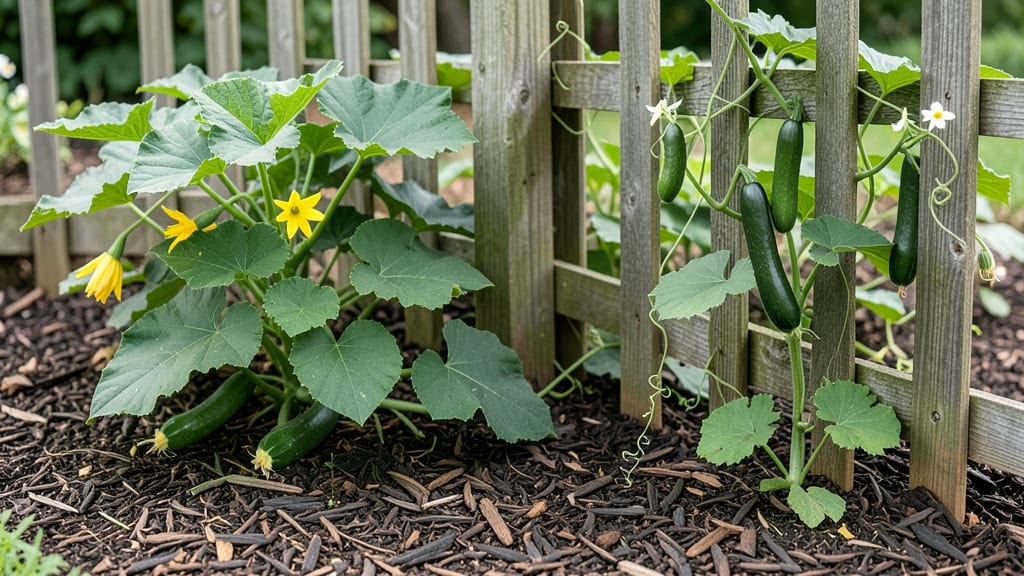
You can grow zucchini and cucumbers together, but it requires careful planning since they attract the same pests and diseases. Both plants thrive with similar sunlight and soil conditions, but spacing them 3–4 feet apart helps reduce competition and improves airflow.
While zucchini and cucumbers share similar growing needs—like full sun and well-draining soil—their shared vulnerabilities make co-planting tricky. 🌱 Both are magnets for cucumber beetles and susceptible to powdery mildew, which can spread rapidly in crowded conditions.
The key is strategic spacing: giving each plant enough room prevents overcrowding, which weakens defenses against pests and diseases. I've found that trellising cucumbers separately from sprawling zucchini vines often solves this problem while keeping them in close proximity.
If you're worried about risks, consider adding pest-repelling companions like marigolds or nasturtiums nearby. These plants act as natural barriers while attracting beneficial insects. For maximum safety, some gardeners opt to grow them in separate beds but within the same garden section to maintain consistent care.
💡 In This Article
- Zucchini and Cucumber Growing Conditions and Challenges
- Best Companion Plants and Alternatives for Zucchini or Cucumbers
Zucchini and cucumber growing conditions and challenges
Both zucchini and cucumbers belong to the Cucurbitaceae family, which explains why they share nearly identical growing requirements. They both crave full sun exposure (6-8 hours daily) and thrive in well-draining soil with a pH between 6.0 and 7.0.
The key similarity is their water needs: 1-2 inches per week during active growth, delivered consistently at the soil level to prevent fungal issues. 💧 This shared foundation makes them ideal candidates for companion planting—if managed properly.
The real challenges emerge from their vulnerabilities. Cucumber beetles, for example, target both plants with equal enthusiasm, laying eggs that hatch into larvae capable of transmitting bacterial wilt—a fatal disease that clogs plant vascular systems. Powdery mildew, another shared enemy, thrives in humid conditions created by dense foliage.
The disease starts as white powdery spots but quickly spreads when leaves remain wet, reducing photosynthesis by up to 60% in severe cases. Spacing plants 3-4 feet apart creates airflow that dries leaves faster and deters pests.
Root competition becomes another factor when growing these together. Zucchini vines spread aggressively, while cucumbers often climb or sprawl—both behaviors can smother nearby plants if not contained. I've observed that zucchini plants develop 10-12 inch diameter canopies by mid-season, while cucumbers need 2-3 feet of vertical space if trellised.
This spatial mismatch forces gardeners to choose between letting vines sprawl (risking crowding) or investing in support structures to separate growth habits.
Soil-borne diseases add another layer of complexity. Both plants are susceptible to Fusarium wilt, which survives in soil for years and attacks weakened roots. The disease appears as sudden wilting followed by yellowing leaves, often within 2-3 weeks of infection.
Rotating crops annually and avoiding contaminated soil is critical—something many home gardeners overlook when planting these together. 🌱 The solution? Test soil before planting and consider raised beds if your garden history includes fungal issues.
Temperature preferences also create subtle challenges. While both tolerate 55-95°F ranges, cucumbers prefer slightly cooler nights (60-70°F) to set fruit, whereas zucchini handles heat better. This means early spring or late summer plantings might favor one over the other unless you're in a consistently warm climate.
The overlap occurs during peak summer months when both perform optimally—but only if pests and diseases are actively managed.
What most gardeners don't realize is how quickly these shared vulnerabilities compound. A single cucumber beetle can lay 1,000 eggs in a season, while powdery mildew spores spread via wind at speeds up to 100 miles per hour.
The combination creates a perfect storm where one infected plant can compromise an entire bed. This is why professional growers often separate these crops by at least 10 feet or use physical barriers like row covers during vulnerable growth stages.