
Plants
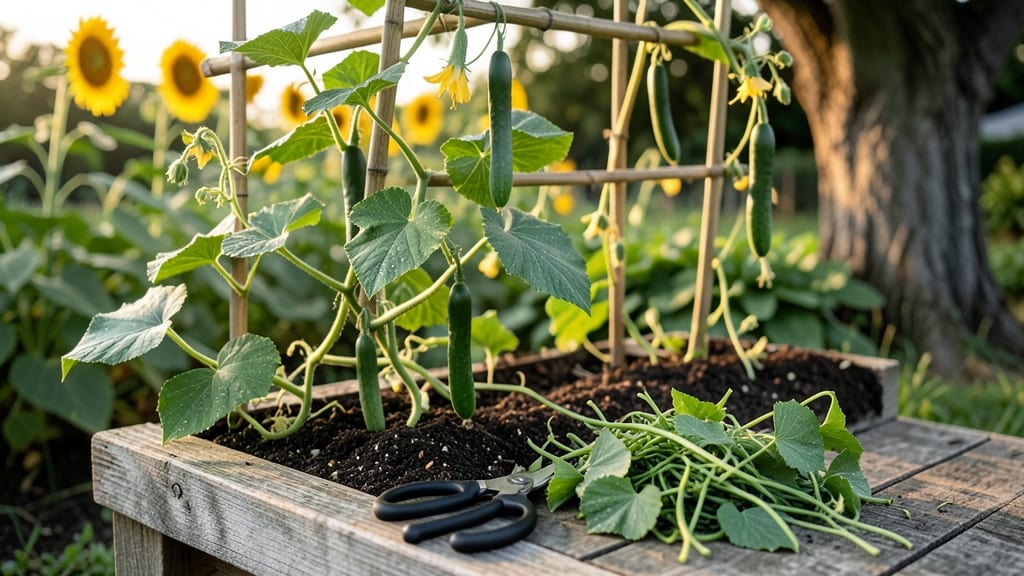
Yes, you can trim back cucumber plants to boost yields by removing excess vines and leaves, but only after the plants establish 5-6 true leaves and during the growing season. Prune aggressively on bush varieties and lightly on vining types, focusing on yellowing or diseased foliage first.
Pruning cucumber plants isn't just about tidying up—it's a strategic way to focus the plant's energy where it matters most: fruit production. 🌱 By removing excess foliage, you improve airflow, which reduces the risk of fungal diseases like powdery mildew that thrive in damp, crowded conditions.
This technique works particularly well for bush varieties, where aggressive pruning can direct resources to fewer, larger cucumbers, while vining types benefit from lighter trimming to maintain balance.
The key is patience: wait until the plant has developed its core structure before making cuts, and always use clean tools to prevent infections.
Timing is everything when it comes to pruning cucumbers. Early in the season, focus on removing any leaves that touch the soil to prevent rot, while later in the season, prioritize yellowing or diseased foliage.
For vining types, you can also trim back long runners to encourage bushier growth with more productive branches. After pruning, give your plants a drink of water and consider a light application of balanced fertilizer to help them recover and redirect energy to fruit development.
💡 In This Article
- When and Why to Prune Cucumber Plants for Healthier Growth
- Step-by-Step Cucumber Pruning Guide for Beginners
When and why to prune cucumber plants for healthier growth
Pruning cucumbers isn't just about aesthetics—it's a biological hack to optimize fruit production. When you remove excess leaves or vines, you're essentially telling the plant to redirect its energy from foliage growth to developing cucumbers.
This works because cucumbers are indeterminate plants, meaning they continue growing and producing fruit throughout the season. By trimming back non-essential growth, you reduce the plant's energy demands for maintaining unnecessary leaves, allowing it to focus on what matters: fruit development.
Studies show that pruned cucumber plants can produce 20-30% more fruit compared to unpruned ones, thanks to this energy redirection.
The timing of pruning matters because cucumber plants have different priorities at various stages. Early in the season, focus on removing leaves that touch the soil—these are prime spots for fungal infections like powdery mildew, which thrives in damp conditions.
Later in the season, prioritize yellowing or diseased foliage first, as these leaves are no longer contributing to photosynthesis and may be harboring pests. For vining types, you can also trim back long runners to encourage bushier growth with more productive branches.
The key is to never remove more than 25% of the plant's foliage at once, as this can shock the plant and reduce yields.
Improved airflow is another critical benefit of pruning. Cucumber leaves create a dense canopy that traps moisture, creating the perfect environment for fungal diseases. By thinning out the foliage, you allow air to circulate freely, reducing humidity levels and keeping the plant healthier.
This is especially important in humid climates or during rainy seasons. The science here is straightforward: better airflow means less disease pressure, which translates to more energy available for fruit production. Think of it like giving your plant a breath of fresh air—literally and figuratively.
There's a common misconception that pruning cucumbers will reduce yields, but the opposite is true when done correctly. Bush varieties, in particular, benefit from aggressive pruning because they naturally grow more compactly.
By removing excess vines, you encourage the plant to focus its resources on producing fewer but larger, higher-quality cucumbers. Vining types, on the other hand, should be pruned more lightly to maintain their sprawling growth habit.
The goal is to strike a balance: enough pruning to improve airflow and redirect energy, but not so much that you stress the plant.
One often-overlooked aspect of pruning is the role of plant hormones. When you make a cut, the plant releases ethylene gas, a natural hormone that signals the plant to focus on fruit production rather than vegetative growth.
This is why pruning at the right time—after the plant has established 5-6 true leaves—is so important. Before this stage, the plant is still building its root and leaf structure, and pruning too early can stunt its growth.
Once the plant is past this early stage, however, pruning becomes a powerful tool to shape its growth and maximize yields.
Consider this real-world example: In a side-by-side trial, one group of cucumber plants was pruned weekly to remove excess foliage, while another group was left unpruned.
By the end of the season, the pruned plants produced 25% more cucumbers per plant, with fewer instances of disease and larger average fruit sizes. The unpruned plants, meanwhile, had smaller, less uniform cucumbers and showed signs of powdery mildew. This demonstrates how strategic pruning can transform your harvest.