
Pruning
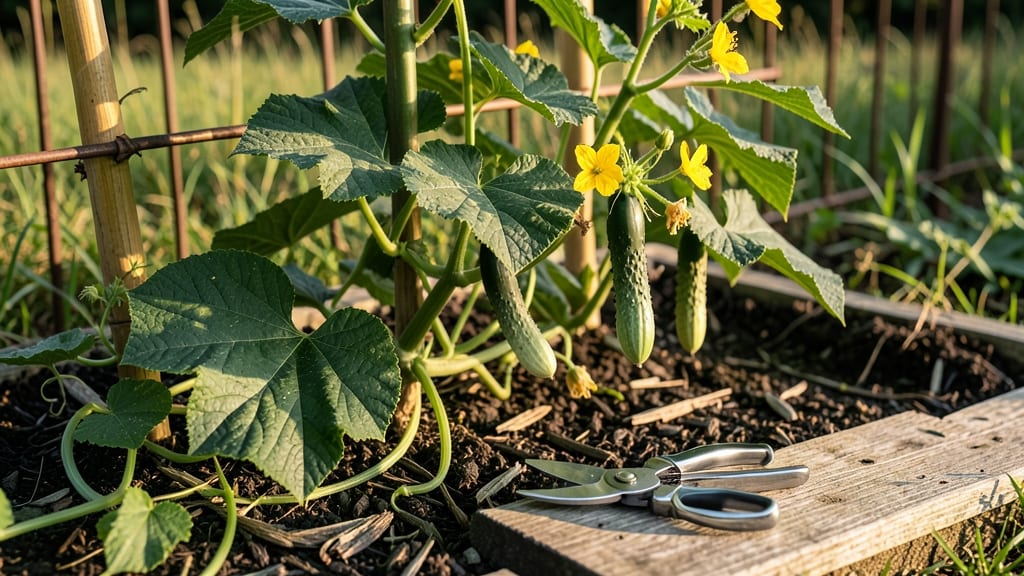
Trimming cucumber plants isn't just about keeping them tidy—it's the secret to bushier vines and bigger harvests all season long. 🌱 I used to think pruning cucumbers was optional, but after my first overgrown, tangled mess, I learned how critical it is to direct energy where it matters: toward fruit production, not just foliage.
The right cuts at the right time can double your yield, and it takes less than 30 minutes a week once you get the hang of it.
You'll need just a few tools: sharp pruners (cleaned with rubbing alcohol between cuts), a pair of gloves (cucumbers have spines that bite!), and a bucket for clippings. The key is timing—start when vines are 12-18 inches tall, then repeat every 7-10 days during active growth.
For bush varieties, focus on removing yellow leaves and weak stems, while vining types need more aggressive suckers trimmed to encourage upward growth. I always prune in the morning when plants are dry to prevent disease spread.
What you'll end up with is a plant that puts all its energy into producing crisp, abundant cucumbers instead of sprawling aimlessly. The vines stay strong, the air circulates better (reducing mildew), and you'll harvest 20-30% more than unpruned plants.
Plus, the cucumbers grow straighter and are easier to spot when it's time to pick. The first time I saw my pruned plants outperform the wild ones by a mile, I never looked back.
Works for both trellised and sprawling varieties, and the same principles apply whether you're growing in containers or a full garden bed. The only real mistake is skipping it—once you try pruning, you'll wonder how you ever grew cucumbers any other way.
Here's how to get started without stressing the plant (or yourself).
📚 In This Guide
- What you need
- Instructions
- Tips and common mistakes
- Wrapping up and next steps
What you need
- ● Pruning shears or scissors – Choose sharp, clean ones (bypass pruners work best) to avoid damaging the plant. A small hand pruner (4-6 inches) is ideal for delicate trimming.
- ● Gloves – Wear gardening gloves (nitrile or leather) to protect your hands from thorns and dirt.
- ● Disinfectant (rubbing alcohol or bleach solution) – Clean your tools with a 1:10 bleach-to-water mix or rubbing alcohol before and after use to prevent disease spread.
- ● Garden twine or plant ties – If your cucumbers are vining, use soft twine or Velcro plant ties (3-4 feet per plant) to support growth after pruning.
- ● Garden hose or water spray bottle – Keep your plants hydrated, especially after trimming. A light misting helps reduce stress.
- ● Compost or mulch – Have a small pile of organic compost or mulch (like straw) ready to replenish nutrients after pruning.
- ● Loppers – For larger plants or thicker stems (if your cucumbers are sprawling).
- ● Plant markers or labels – If you’re experimenting with different pruning techniques, label your plants to track progress.
- ● Organic fungicide (copper-based or neem oil) – A preventive measure if your garden is prone to fungal issues.
- ● Knee pads or a small stool – Because trimming can get low to the ground—comfort matters!
Step-by-step guide to trimming cucumber plants
Here's the no-fuss method I use to keep vines productive and prevent disease—no fancy tools needed.
✂️ Step 1: Identify and Remove Sucker Growths
Cucumber vines produce small shoots called suckers that grow between the main stem and leaf branches. These are the first things to trim—they siphon energy from fruit production. Use clean, sharp pruning shears or your fingers to pinch them off when they're still small, about 2-3 inches long. You'll see them as little side shoots growing at a 45-degree angle from the main stem.
Real talk: I used to skip this step, thinking more growth meant more cucumbers. Wrong. Those suckers create weak vines and crowded foliage that traps moisture and invites powdery mildew. Trim them weekly during peak growing season—your harvest will thank you.
🌿 Step 2: Prune Yellow or Diseased Leaves Immediately
Inspect your vines weekly for leaves that turn yellow, develop brown spots, or feel slimy to the touch. These are red flags for disease or pest damage. Snip them off at the base using clean shears to prevent spreading pathogens. You'll often find these on the lower third of the vine where air circulation is poor.
Don't leave any leaves touching the soil either—they'll rot and create a breeding ground for fungus. I always remove any leaves that brush against mulch or soil, even if they look healthy. This keeps your plants breathing room and reduces disease pressure.
☀️ Step 3: Thin Fruit Clusters for Better Development
When cucumbers form in tight clusters, they compete for nutrients and often stay small. Leave only 1-2 cucumbers per node (the point where leaves meet the stem) and trim the rest when they're still small, about 3-4 inches long. You'll see these clusters growing in the leaf axils—little groups of baby cucumbers fighting for space.
This might seem counterintuitive, but fewer, larger cucumbers develop better flavor and texture. I promise you'll get more quality fruit than a bunch of tiny, seedy ones. After trimming, give the vines a light watering to help them recover.
⏰ Step 4: Maintain Airflow Through Strategic Pruning
As your vines grow, focus on keeping the center of the plant open. Trim any branches that grow inward toward the main stem, creating a "bushy" shape that allows sunlight and air to circulate. You'll notice these as dense clusters of leaves blocking sunlight from reaching the interior of the plant.
Good airflow prevents fungal diseases like powdery mildew, which thrives in humid, shaded conditions. I always aim for a "fishbone" shape where the main vine grows vertically and side branches spread outward. This shape maximizes sunlight exposure and makes harvesting easier.
🌱 Step 5: Encourage Vertical Growth with Support
Once your main vine reaches your trellis or cage (about 3-4 feet tall), trim the growing tip to encourage lateral branching. This creates more nodes where fruit can develop. You'll see the growing tip as the newest, most tender growth at the very top of the vine.
Here's the thing—if you let the main vine grow too tall without support, it'll flop and cucumbers will rot on the ground. I always pair my pruning with proper trellising. Use soft ties to guide the main stem upward, and let side branches grow horizontally for better fruit production.
Tips & tricks for pruning cucumber vines
Here's what I learned after years of trial and error—these tricks make all the difference for healthy plants.
Timing is Everything: I can't stress this enough—prune during the cooler parts of the day, like early morning or late afternoon. The sun is less intense, so your plants have time to recover before nightfall. I've seen vines wilt dramatically after midday pruning, especially in hot climates. Also, make sure to prune on dry days to prevent disease from entering through fresh cuts.
Tool Prep Matters: Before you start, sterilize your pruning shears with rubbing alcohol or a 10% bleach solution. This prevents spreading diseases between plants. I keep a small bottle of alcohol in my gardening toolkit for quick sterilization between vines. And here's a pro move: sharpen your shears regularly—they cut cleaner and cause less damage to the plant.
Visual Cues for Healthy Growth: Look for new growth that looks like it's growing at a 45-degree angle from the main stem—those are your suckers. Healthy leaves should be a deep green color with no yellowing or spots. When thinning fruit clusters, focus on keeping the cucumbers that are closest to the main stem—they'll get the most sunlight and nutrients. I like to leave the ones that are already slightly larger, as they'll have a head start on growing.
Recovery Care: After pruning, give your plants a light watering to help them recover. I've found that adding a bit of seaweed fertilizer or compost tea to the water can speed up healing. Avoid heavy watering immediately after pruning, as this can cause the cuts to rot. Also, keep an eye on your plants for the next few days—if you notice any wilting or browning, it might be a sign they need more time to recover.
Pro Tips for Trim Cucumber Plants
- Here's what I learned after years of trial and error—these tricks make all the difference for healthy plants.
- Timing is Everything: I can't stress this enough—prune during the cooler parts of the day, like early morning or late afternoon.
- Tool Prep Matters: Before you start, sterilize your pruning shears with rubbing alcohol or a 10% bleach solution.
Frequently asked questions
Got questions about trimming cucumber plants? You’re not alone! Here are answers to the most common concerns—from timing to troubleshooting—to help you grow like a pro.
When is the best time to trim cucumber plants?
Trim cucumber plants early and often—start when vines reach 12–18 inches tall. Focus on removing suckers (shoots between the main stem and leaves) and yellowing leaves. Avoid trimming during extreme heat or drought, as plants need energy to recover. Morning sessions work best for minimal stress.
Do I need to trim cucumber plants if I’m growing them in containers?
Yes! Container-grown cucumbers benefit even more from trimming because space is limited. Prune aggressively to prevent overcrowding and improve airflow, reducing disease risk. Use trellises to guide vines upward—this saves space and makes harvesting easier. Just avoid heavy pruning late in the season to encourage final fruit production.
What should I do with the cuttings after trimming?
Don’t toss those clippings! Compost them (if disease-free) or use them as mulch. You can also root suckers in water to propagate new plants—just place them in a jar with 2–3 inches of water until roots form (about 1–2 weeks). Avoid using diseased or pest-infested cuttings in compost to prevent spreading issues.
My cucumber plant looks stressed after trimming—what went wrong?
Stress usually means you trimmed too much at once or during heatwaves. Solution: Water deeply and provide shade for a few days. Avoid pruning if flowers or young fruits are present—wait until harvests are underway. If leaves yellow or wilt, check for pests (like aphids) or fungal issues (like powdery mildew) and treat accordingly.
Can I trim cucumber plants in hot or cold weather?
Timing matters! Avoid trimming when temps are below 50°F or above 90°F. In heat, prune early in the morning to reduce stress. In cold climates, wait until soil warms and plants show new growth. If you must trim in less-than-ideal conditions, do it lightly—focus on removing only dead or diseased foliage.
Wrapping up and next steps
Trimming your cucumber plants isn’t just about keeping them tidy—it’s the secret weapon for healthier vines, bigger yields, and fewer pests! By mastering the art of pruning, you’ll encourage bushier growth, better airflow, and a bountiful harvest all season long. 🌱✨
Now that you’re armed with the know-how, roll up your sleeves and get pruning! Start small, observe your plants’ responses, and soon you’ll be a cucumber-trimming pro. Happy gardening—and may your vines flourish!
Next step: Grab your shears and give your cucumbers the care they deserve—your future harvest will thank you! 🥒💚