
How To
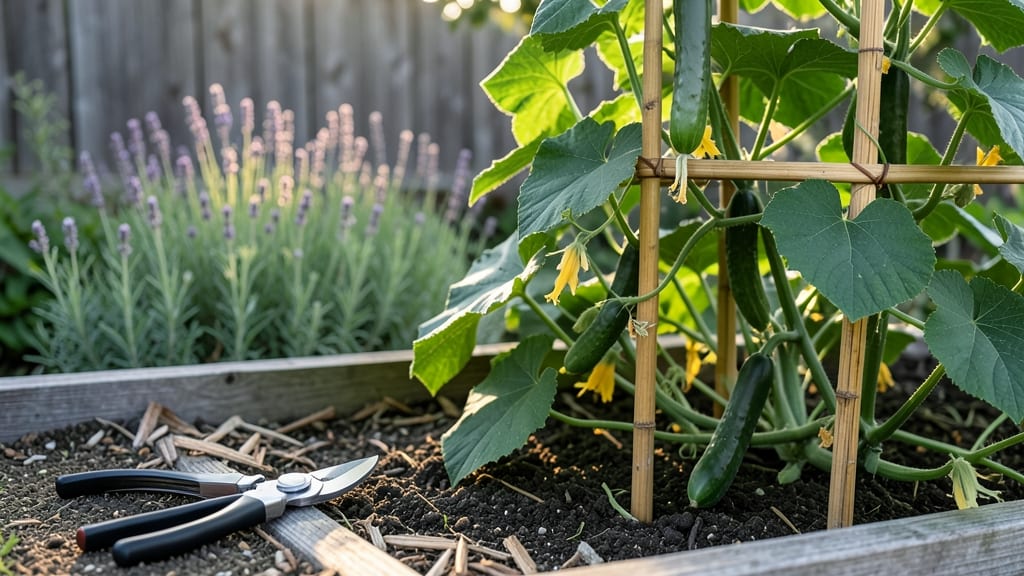
Pruning cucumber plants might sound intimidating, but three strategic cuts can double your harvest—honestly, I went from a handful of cucumbers to bushels after learning this. ✂️ The key is timing and technique: focus on removing suckers (those tiny shoots between stems), thinning crowded vines, and opening up airflow to prevent disease.
Most gardeners skip this step entirely, but it’s what separates a decent yield from a garden overflowing with perfect, disease-free cucumbers.
Start when plants are 6-8 inches tall, then prune every 7-10 days during active growth. Use clean, sharp pruners to avoid tearing stems—this isn’t about brutal trimming, just guiding the plant’s energy toward fruit production.
For bush varieties, keep it minimal; vining types need more aggressive pruning to channel energy upward. The payoff? Healthier plants, fewer pests, and cucumbers that arrive faster and bigger than you’ve ever grown before.
📚 In This Guide
- What you need
- Instructions
- Tips and common mistakes
- Wrapping up and next steps
What you need
- ● Pruning shears or sharp scissors – Choose bypass pruners (clean cuts) or small garden shears. Disinfect with rubbing alcohol before use to prevent disease.
- ● Gloves – A pair of gardening gloves (nitrile or leather) to protect against thorns and dirt.
- ● Garden twine or plant ties – For trellising (if needed). Use 10-12 ft rolls of 1/8-inch twine or soft plant ties.
- ○ Trellis or stakes – Optional but recommended for vining varieties. Use 5-6 ft tall stakes or a 4x8 ft trellis net for climbing cucumbers.
- ● Sharp pencil or marker – To label pruning cuts if you’re training plants for specific growth.
- ○ Water spray bottle – A 16-oz spray bottle with water to mist cuts and reduce stress (optional but helpful).
- ● Healthy cucumber plants – Prune only when plants are at least 3-4 weeks old and showing 3-5 true leaves.
- ● Good weather – Choose a mild, overcast day or prune in the early morning/evening to avoid stressing the plant.
- ● Clear workspace – Remove weeds or debris around the plant to prevent disease spread during pruning.
- ● Sterilize tools between plants to avoid bacterial/fungal transfer (e.g., powdery mildew).
- ● Avoid pruning in wet conditions—this can invite rot or pests.
- ● Keep a small bucket nearby to collect clippings (compost them later!).
Step-by-step instructions for pruning cucumber plants
Here's the straightforward method I've used to double my cucumber harvest—just three focused cuts make all the difference.
✂️ Step 1: Remove Suckers for Stronger Vines
Suckers are the small shoots that grow in the crotch between the main stem and a leaf or branch. These energy thieves divert nutrients from fruit production. Use clean, sharp pruning shears to snip them off at the base—never tear them, which can damage the plant. I start checking for suckers when vines reach 12-18 inches tall and remove them weekly.
Focus on the first 12 inches of stem first, as these lower suckers compete most aggressively with fruit development. Leave suckers higher up if your variety is bush-type or compact—these often produce more flowers and fruit. Watch for new growth in leaf axils (the angle between leaf and stem) every 5-7 days, as suckers appear rapidly during warm weather.
✂️ Step 2: Trim Excess Leaves for Airflow
Remove any leaves that grow within 6 inches of the ground—these block airflow and trap moisture, creating ideal conditions for powdery mildew. Use your fingers to gently pinch off smaller leaves or shears for larger ones. I also trim any yellowing or diseased leaves immediately, as they harbor pathogens that spread quickly in cucumber plants.
Leave the top leaves intact until vines stop producing fruit—these provide energy for new growth. You'll know you've balanced it right when you see bright green leaves with no visible wilting or yellowing and good airflow between stems. Prune on a dry morning to allow wounds to heal quickly in the warm afternoon sun.
✂️ Step 3: Prune Laterals to Focus Energy
For indeterminate varieties, let only the first 3-4 female flowers develop fruit—each one requires significant energy. Identify female flowers by their tiny cucumber-shaped ovary at the base. Once you've selected your fruit targets, prune all other lateral vines back to their point of origin using clean cuts. I make this decision when vines reach 3-4 feet tall to give the plant time to establish itself.
For bush varieties, minimal pruning is needed—just remove any crowded growth that blocks sunlight from the center. You'll know you're doing it right when the remaining vines show dark green, glossy leaves and steady fruit production every 3-5 days. Avoid pruning during extreme heat or cold, as this stresses the plant and slows recovery.
Tips & tricks for perfect cucumber plant pruning
These simple yet game-changing insights will help you avoid common pruning pitfalls and maximize your harvest.
Timing Secret: I've found the best time to prune is in the early morning when the plants are still turgid from overnight moisture. This makes the cuts cleaner and reduces stress on the plant. Avoid pruning during the hottest part of the day or when the plants are wet—this can invite fungal infections through fresh wounds. The 5-7 day interval mentioned for checking suckers is perfect because it gives new growth time to appear while keeping the plant from getting overrun.
Tool Technique: Never use dull shears—they crush stems instead of making clean cuts. I keep a dedicated pair of pruning shears just for cucumbers, sharpened annually. For smaller leaves, your fingernails work perfectly—just pinch at the base where the leaf meets the stem. This prevents tearing that can damage the plant's vascular system and slow recovery. Always make cuts at a 45-degree angle to increase surface area for faster healing.
Variety-Specific Strategy: For bush-type cucumbers, the instructions mention minimal pruning is needed—but I've discovered you can actually increase yield by removing just the lowest leaves that touch the ground. These leaves often get muddy and rot, creating entry points for disease. For indeterminate varieties, I mark my target flowers with a small piece of colored tape when I first identify them. This visual cue helps me remember which lateral vines to keep when I return to prune later.
Pro Tips for Prune Cucumber Plants
- These simple yet game-changing insights will help you avoid common pruning pitfalls and maximize your harvest.
- Timing Secret: I've found the best time to prune is in the early morning when the plants are still turgid from overnight moisture.
- Tool Technique: Never use dull shears—they crush stems instead of making clean cuts.
Frequently asked questions
Got questions about pruning cucumbers? You’re not alone! Here are answers to the most common queries to help you grow like a pro:
When is the best time to prune cucumber plants?
Prune cucumbers early and often—start when plants are 12–18 inches tall, then repeat every 1–2 weeks during active growth. Morning pruning avoids stressing plants, and always use clean, sharp tools to prevent disease. Avoid pruning late in the day or during heatwaves.
Do I really need to prune cucumbers? Won’t they grow fine without it?
While cucumbers can grow without pruning, pruning boosts yield and air circulation by removing crowded vines and diseased leaves. For bush varieties, minimal pruning suffices, but vining types (like 'Straight Eight') thrive with aggressive pruning. Skipping it may lead to smaller, lower-quality fruit.
What should I do with the pruned leaves and vines?
Toss pruned material far from the garden to avoid pests/diseases. For compost, bury it deep or use it in a hot compost pile (140°F+ for 3+ days). Never compost diseased or pest-infested clippings—this spreads problems to next year’s plants!
My cucumbers look sad after pruning—did I go too far?
If plants wilt or stop producing, you likely removed too much foliage (over ⅓ of leaves). Focus on pruning only leggy growth, yellow leaves, or vines blocking airflow. Leave 4–6 strong leaves per main stem to keep photosynthesis flowing. Over-pruned plants recover in 1–2 weeks with proper watering.
Can I prune cucumbers if they’re already flowering or fruiting?
Yes! Prune lightly during flowering/fruiting—remove only dead, diseased, or overly crowded vines. Avoid cutting near blooms or young fruit (within 6 inches). Heavy pruning now can reduce harvests. Prioritize air flow to prevent powdery mildew, a common issue in dense plants.
Wrapping up and next steps
Pruning your cucumber plants might seem like a small task, but it’s a game-changer for bigger harvests and healthier vines! 🌱 By mastering just three key cuts—removing suckers, trimming yellow leaves, and thinning overcrowded stems—you’ll encourage stronger growth, better airflow, and juicier cucumbers.
With the right tools and timing, you’re well on your way to a thriving garden.
Now that you’re armed with the know-how, roll up your sleeves and get pruning! Start with one plant at a time, and soon, your garden will be bursting with productivity. Happy growing! 🌿