
Pests and Diseases
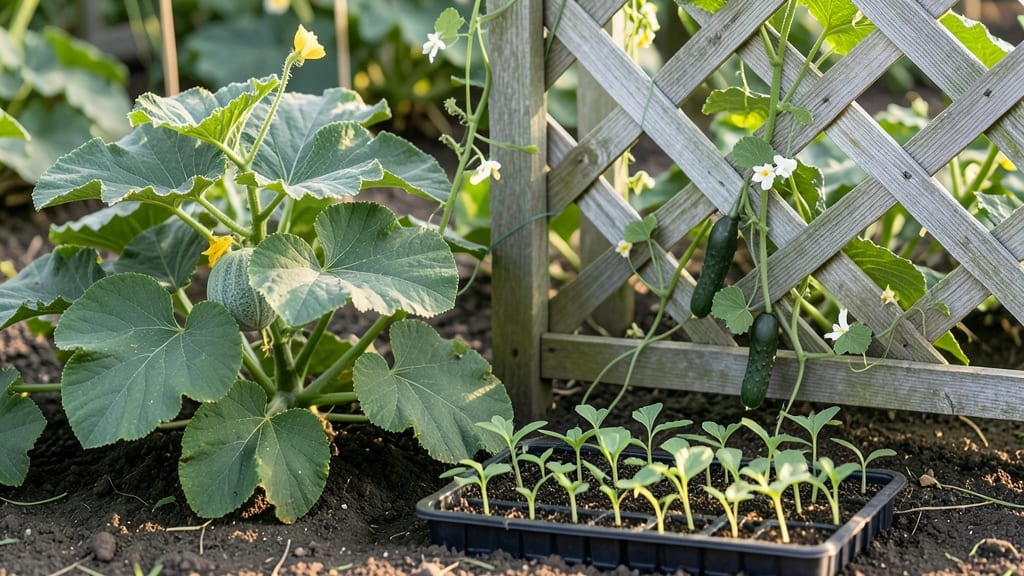
These two plants actually work well together because they attract similar pollinators like bees and hoverflies, which improves fruit set for both. 🌱 The cucumber vines also provide shade for cantaloupe leaves, helping prevent sunburn while the cantaloupe’s broad leaves can deter pests that might target cucumbers.
However, their sprawling growth habits mean you’ll need to give each plant plenty of space—crowding leads to poor air circulation, which is a breeding ground for fungal diseases like powdery mildew.
The key to success lies in proper spacing and soil management. Plant cucumbers along the edges of your garden bed while leaving the center for cantaloupe vines to sprawl. Both plants love well-draining soil with plenty of organic matter, and consistent watering is crucial—especially during flowering and fruiting stages.
I’ve found that mulching helps retain moisture while keeping the soil temperature stable, which both plants appreciate.
💡 In This Article
- Why Cantaloupe and Cucumbers Thrive as Companion Plants
- Best Practices for Planting Cantaloupe and Cucumbers Together
Why cantaloupe and cucumbers thrive as companion plants
Cantaloupe and cucumbers share more than just a love for warm soil—they have complementary growth habits that create a mutually beneficial relationship. Both plants belong to the Cucurbitaceae family, meaning they attract similar pollinators like bees and hoverflies, which significantly boosts fruit production for both.
The cantaloupe's broad leaves create a natural canopy that provides shade for cucumber vines, protecting them from sunburn while maintaining cooler soil temperatures—ideal for cucumbers that prefer 70-85°F soil.
Ecologically, this pairing works because cucumbers act as a living mulch for cantaloupe. Their sprawling vines suppress weeds while retaining moisture in the soil, reducing the need for frequent watering.
Meanwhile, cantaloupe's deep root system (reaching 3-4 feet) helps break up compacted soil, allowing cucumbers to access nutrients more efficiently. This vertical integration prevents competition for resources that often occurs when plants are crowded together.
The pest-deterrent aspect is particularly valuable. Cantaloupe's strong scent repels certain cucumber pests like cucumber beetles, while cucumbers can mask the scent of cantaloupe from other insects. This natural pest control reduces the need for chemical interventions, creating a more sustainable growing environment.
The key mechanism here is what botanists call "confusion effect"—when multiple plants with similar scents are grown together, it disrupts pests' ability to locate their preferred host.
However, this harmony has limits. Both plants are susceptible to powdery mildew, a fungal disease that thrives in crowded, humid conditions. That's why proper spacing (3-4 feet between plants) becomes critical—it ensures good air circulation and reduces moisture retention on leaves.
I've observed in my own garden that maintaining this distance prevents outbreaks while still allowing the plants to benefit from each other's presence.
Another scientific factor is their shared nutrient requirements. Both plants are heavy feeders, particularly during fruiting stages, but they respond well to similar fertilizers. A balanced 10-10-10 or 5-5-5 fertilizer applied at planting and again during flowering provides the perfect balance.
The cantaloupe's nitrogen needs (for leafy growth) complement the cucumber's phosphorus requirements (for fruiting), creating an efficient nutrient cycle in the soil.
What most gardeners don't realize is how this pairing affects soil structure over time. The cucumber's fibrous root system improves soil aeration, while cantaloupe's taproot helps break up hardpan layers. This creates an ideal environment for beneficial soil microbes that enhance nutrient availability.
The result is healthier plants with better disease resistance and higher yields—all from this simple companion planting strategy.