
Vegetables
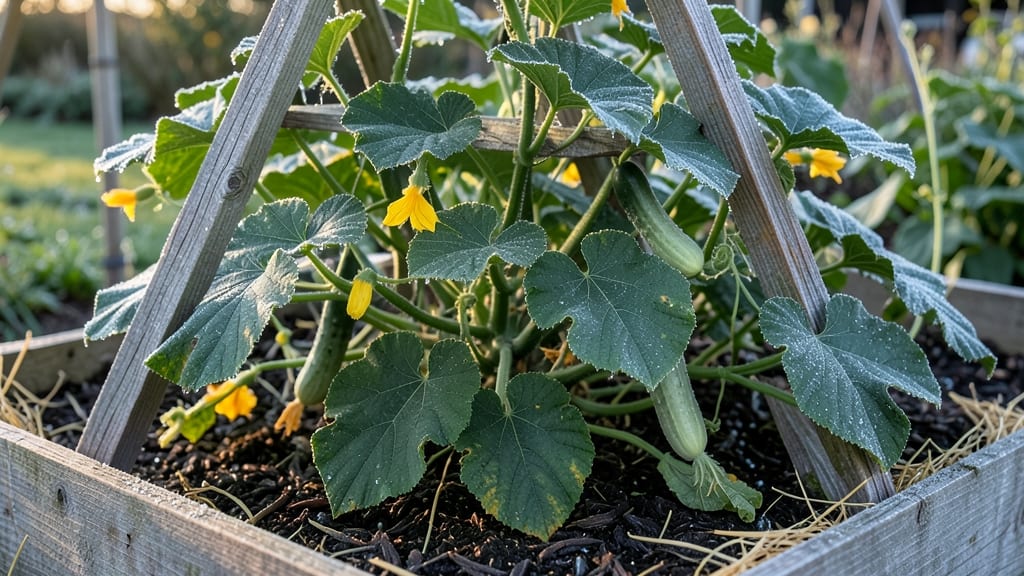
Cucumbers aren't cold hardy plants and can't survive frost or temperatures below 50°F (10°C). Even light frost will kill them, while cooler weather slows growth and reduces fruit production. Plant them in warm seasons or use containers for flexibility.
Cucumbers thrive in warm conditions because they're tropical plants at heart. 🌱 When temperatures dip below 50°F (10°C), their growth nearly stops, and any frost exposure will destroy the tender vines. I've learned that even a single night below freezing can ruin an entire crop.
For gardeners in cooler climates, using black plastic mulch or row covers adds 5-10°F of protection, while container gardening lets you move plants to sheltered areas when cold fronts arrive.
What's interesting is how quickly cucumbers respond to temperature changes. Within just a few hours of chilly weather, you'll notice leaves curling and growth slowing. 💫 This sensitivity is why most commercial cucumber production happens in greenhouses during cooler months.
If you're determined to grow them outdoors, starting with cold-tolerant varieties like 'Northern Pickling' gives you a slight advantage—they handle 45°F (7°C) temperatures better than standard types.
💡 In This Article
- Cucumber Frost Tolerance Limits Explained
- Protecting Cucumbers from Cold Weather
Cucumber frost tolerance limits explained
Cucumbers belong to the Cucurbitaceae family, which includes other heat-loving plants like squash and melons. Their tropical origins mean they lack the cellular adaptations that help hardy plants survive freezing temperatures.
When exposed to frost (32°F/0°C), ice crystals form in the plant's cells, rupturing their membranes and causing irreversible damage. Even without frost, temperatures below 50°F (10°C) trigger metabolic slowdowns, as enzymes responsible for growth and photosynthesis become less active.
The ideal temperature range for cucumber growth is 70-90°F (21-32°C), where their photosynthesis rate peaks and vines grow aggressively. At 60°F (15°C), growth slows by 50%, and below 55°F (13°C), flower production drops dramatically.
This is why cucumbers often bolt (produce flowers quickly) in cooler weather—a survival mechanism that prioritizes reproduction over fruit development. The vines themselves are tender, with stems that can snap under 40°F (4°C) conditions, making them particularly vulnerable.
What's fascinating is how quickly cucumbers respond to temperature shifts. Within just 6-12 hours of exposure to 45°F (7°C), you'll notice leaves curling inward—a protective response to conserve heat.
The plant's waxy cuticle, which normally helps retain moisture, becomes less effective in cold, leading to dehydration stress. 🌱 This is why gardeners in marginal climates often see cucumbers produce small, bitter fruits when temperatures dip, as the plant redirects energy toward survival rather than fruit maturation.
Cold also disrupts cucumber pollination. These plants rely on bees for cross-pollination, but bees are less active below 55°F (13°C). Even if flowers form, the lack of pollinators means many will drop off, resulting in poor fruit set.
This explains why some gardeners report cucumbers growing but not producing many harvests in cooler seasons—it's not just the vines struggling, but the entire reproductive system.
For comparison, consider how cold-hardy plants like kale or spinach can survive -10°F (-23°C) with minimal damage. Their cells produce antifreeze proteins that prevent ice crystal formation, and their growth habits are adapted to slower seasons.
Cucumbers, however, lack these adaptations entirely. Their entire biology is optimized for warm, consistent temperatures, making them one of the least cold-tolerant major vegetable crops.
Understanding these limits helps explain why cucumbers are such seasonal plants. In regions with short growing seasons, gardeners often treat them as annuals that must be planted late and harvested quickly before autumn chills arrive.
This tropical nature also explains why cucumbers are rarely found in winter markets—they simply can't be grown outdoors in cold climates without extensive protection.