
Plants
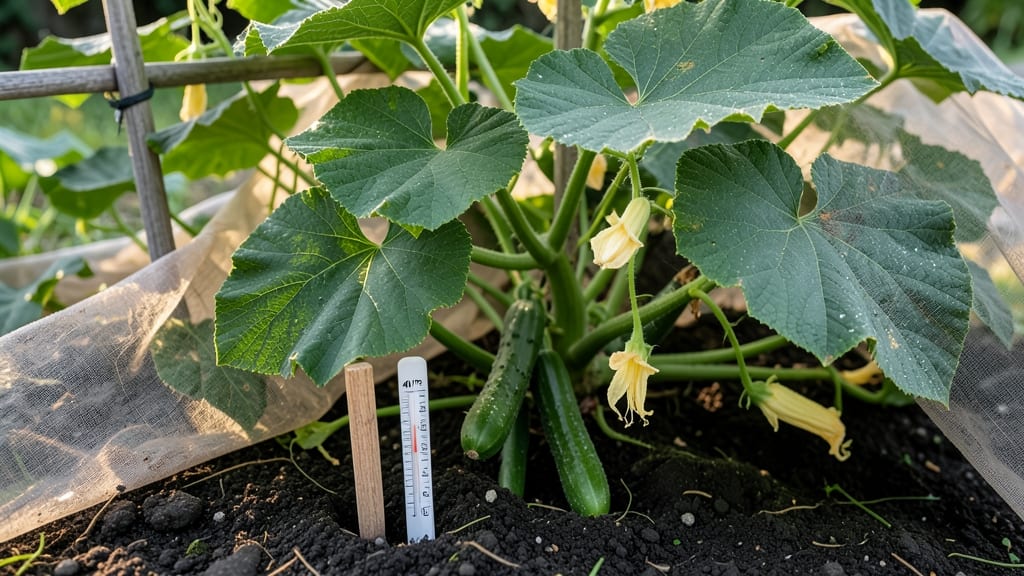
Cucumber plants can survive brief exposure to 40-degree weather but thrive best above 55°F. Young seedlings are most vulnerable, while mature plants tolerate short cold snaps if protected with row covers or mulch. Frost or prolonged cold will damage foliage and stunt growth.
Cucumbers are tropical plants at heart, so their cold tolerance is limited. 🌱 While they might endure a 40°F night if protected, anything below 50°F slows their growth dramatically. The real danger comes when temperatures drop below freezing—frost kills foliage instantly and can damage roots permanently.
I’ve found that even mature plants struggle when cold snaps last more than 24 hours, especially if they’re not shielded from wind and moisture.
For gardeners in cooler climates, the key is preparation. Using black plastic mulch or straw around the base helps insulate roots, while lightweight row covers create a microclimate that can raise soil temperatures by 5-10°F.
If you’re dealing with unpredictable weather, consider starting seeds indoors and transplanting only after the last frost date—this gives young plants a fighting chance against early-season chills.
💡 In This Article
- Cucumber Plant Cold Tolerance: Science Behind Temperature Sensitivity
- Protecting Cucumbers in 40-Degree Weather: Practical Survival Strategies
Cucumber plant cold tolerance: science behind temperature sensitivity
Cucumbers originate from tropical regions where temperatures rarely drop below 70°F, which explains why they struggle in cooler climates. Their metabolic processes—like photosynthesis and nutrient uptake—slow dramatically when exposed to 40°F or lower.
Below 50°F, enzymes responsible for growth become inactive, leading to stunted vines and small, bitter fruits. The plant’s delicate cell membranes also begin to rupture when temperatures near freezing, causing irreversible damage to foliage and roots.
The roots are particularly vulnerable because they absorb water and nutrients through a process called osmosis, which becomes inefficient in cold soil. When soil temperatures drop below 55°F, root activity slows by up to 50%, depriving the plant of essential hydration.
Seedlings are especially fragile—young roots lack the depth and insulation of mature plants, making them prone to rot or frostbite even in 40°F conditions. 🌱 This is why gardeners often lose entire seedlings overnight during unexpected cold snaps.
Frost is the ultimate enemy, as ice crystals form within plant cells, physically tearing them apart—a process called cytorrhysis. Even a light frost can kill tender cucumber leaves, leaving the plant weakened and susceptible to disease. The good news?
Mature cucumber plants can recover from brief 40°F exposure if their roots stay warm and dry, but prolonged cold stress leads to permanent stunting. This is why many gardeners in cooler zones treat cucumbers as annuals and replant each season.
Another critical factor is humidity. Cold air holds less moisture, causing cucumber leaves to dry out faster. When combined with wind, this desiccation effect accelerates damage. The plant’s waxy cuticle, which normally protects it, becomes brittle and cracks under these conditions.
This is why windbreaks and protective covers are essential—even a 10°F temperature drop feels like -10°F with wind chill, amplifying the stress on cucumber plants.
For comparison, cold-hardy vegetables like kale or spinach can tolerate 20°F with minimal damage, while cucumbers begin showing stress at 55°F. Their tropical heritage means they prioritize rapid growth over cold resistance.
This is why gardeners in Zone 5 or cooler often grow cucumbers in containers that can be moved indoors or under protective structures during cold snaps.
The ideal temperature range for cucumber growth is 70-90°F, where photosynthesis and flowering peak. Below 60°F, pollination becomes unreliable, leading to poor fruit set.
This is why many gardeners use row covers or cold frames—not just to raise temperatures, but to create a stable microclimate that mimics the cucumber’s natural tropical environment. 🌿