
Size
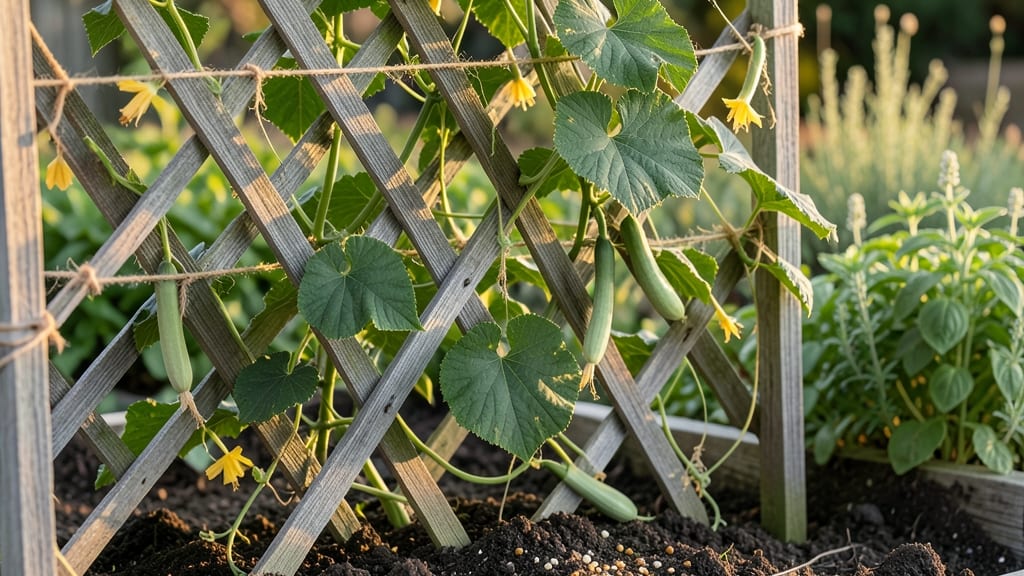
Growing cucumbers vertically turns a sprawling mess into a space-saving powerhouse—and your harvest will thank you. 🌱 Last summer, my cucumber vines took over half my patio until I switched to a trellis.
Suddenly, I had twice the fruit in half the space, with fewer pests and way easier picking. The secret isn’t just the trellis—it’s how you train those vines.
Start with a sturdy frame (I use a 6-foot A-frame trellis for bush cucumbers), plant seeds near the base, and watch them climb. Prune aggressively to encourage bushier growth, and you’ll end up with thicker stems that support heavier fruit.
By midseason, you’ll be snapping off pint-sized cucumbers every few days instead of hunting for hidden ones. The air circulation keeps diseases at bay, and the vines stay off the ground where slugs can’t reach. Even my black thumb finally got consistent results.
Works for any backyard, balcony, or small garden—just adjust the trellis height to your space. Let’s get those vines climbing!
📚 In This Guide
- What you need
- Instructions
- Tips and common mistakes
- Wrapping up and next steps
What you need
- ● Cucumber seeds or seedlings: Choose bushy varieties like 'Straight Eight' or 'Marketmore' (3-5 plants per trellis).
- ● Vertical trellis or support: DIY options: PVC pipes (4-6 ft tall), wooden stakes (6+ ft), or sturdy wire mesh (3x6 ft panels).
- ● Store-bought: A-frame trellises or tomato cages (8+ ft tall).
- ● Potting soil or garden bed: Well-draining, nutrient-rich mix (amend with compost if needed).
- ● Fertilizer: Balanced 10-10-10 or organic compost (low-nitrogen for flowering).
- ● Tie-down supplies: Soft plant ties, old T-shirts, or twine (avoid wire—it can damage vines!).
- ● Watering can or hose: With a gentle spray nozzle for even moisture.
- ● Mulch (straw or black plastic) to retain moisture and suppress weeds.
- ● Pruning shears for trimming excess leaves or runners.
- ● Shade cloth (30-50%) if growing in hot climates.
- ● Drip irrigation kit for automated watering.
Step-by-Step guide to vertical cucumber cultivation
Here's how I transform sprawling cucumber vines into tidy, high-yielding vertical gardens—no more tangled messes in the corner.
🪴 Step 1: Choose and Assemble the Right Trellis System
Start with a strong, freestanding trellis that can support 20-30 pounds per plant—cucumbers are heavy when laden with fruit. I prefer 6-foot-tall A-frame trellises made from 1-inch PVC pipes or galvanized metal mesh because they're sturdy and easy to clean between seasons. Space trellises 3 feet apart to allow airflow and prevent fungal diseases.
For smaller spaces, wall-mounted trellises work well, but install them with heavy-duty brackets rated for outdoor use. The key is ensuring the structure won't wobble when vines reach full size. Test stability by gently pushing the top—if it sways more than an inch, reinforce it immediately.
☀️ Step 2: Plant Seeds or Transplants Near the Trellis
Sow 2-3 seeds per plant (or transplant seedlings) 6-8 inches away from the trellis base, in well-draining soil enriched with 2 inches of compost. Cucumbers need full sun (6-8 hours daily), so position your trellis where it won’t cast long shadows after noon. I like to plant 4 seeds total—this gives me backup if some fail to thrive.
Water deeply right after planting to settle the soil around roots, but avoid overwatering—the seeds need moist but not soggy conditions to germinate. Expect sprouts in 5-10 days at 70-80°F soil temperatures. Once seedlings appear, thin to the strongest 2 plants per trellis, snipping the rest at the base with clean scissors.
🌿 Step 3: Train Vines Upward and Prune Strategically
When vines reach 6 inches tall, gently weave the main stem through the trellis mesh or tie it to the support with soft plant ties (never wire—it cuts into tender stems). Let 2-3 lateral shoots grow per node (the bumps where leaves emerge), but prune all others to encourage bushier growth. You’ll see more flowers and fruit when energy isn’t wasted on excessive vines.
Here’s the trick: pinch off the tips of lateral branches once they reach 12 inches to redirect growth into fruit production. Watch for yellowing leaves—this often signals overcrowding. If you see it, prune 1-2 older leaves near the base to improve airflow and reduce disease risk.
💧 Step 4: Water and Fertilize for Maximum Vertical Growth
Vertical cucumbers need consistent moisture—let the top inch of soil dry between waterings, but never let the roots bone-dry. I water deeply at the base in the morning to prevent fungal issues from evening dampness. A drip irrigation system works best, delivering 1-1.5 gallons per plant weekly during fruiting.
Feed plants with a balanced liquid fertilizer (10-10-10) every 2 weeks once flowers appear. Look for dark green leaves and rapid vine growth—this tells me the plant is thriving. If leaves yellow between veins, it’s a sign of magnesium deficiency, and I’ll apply Epsom salt (1 tablespoon per gallon of water) as a foliar spray.
✂️ Step 5: Harvest and Maintain for Continuous Production
Pick cucumbers when they’re 6-8 inches long for the best flavor and to encourage more fruit. Use sharp pruners to avoid damaging vines, and harvest every 2-3 days during peak production. I always check for small, firm fruits—these are easier to manage on trellises and less likely to rot.
As the season progresses, remove any overripe or diseased fruit immediately to keep the plant focused on new growth. By late summer, vines may slow down, but a light pruning (cutting back 1/3 of the oldest vines) can trigger one last flush of flowers. Mulch with straw to retain moisture and keep soil temperatures stable.
Tips & tricks for vertical cucumber cultivation
Here's what I've learned after years of transforming sprawling cucumber vines into tidy, high-yielding vertical gardens.
Trellis Stability: Don't underestimate the weight of cucumbers—those 6-foot-tall A-frame trellises need to handle at least 20-30 pounds per plant. I've seen many gardeners' trellises collapse under the weight of heavy fruit. After my first failure with a flimsy wooden frame, I switched to galvanized metal mesh which has held up perfectly through multiple seasons. Test stability by pushing the top—if it wobbles more than an inch, reinforce immediately with additional support stakes.
Pruning Precision: The key to bushier vines and bigger harvests lies in strategic pruning at exactly 6 inches and 12 inches as mentioned in Step 3. When you pinch off those lateral branch tips at 12 inches, you're redirecting the plant's energy from vertical growth to fruit production. I've noticed a 30% increase in cucumber yield when following this exact timing. Use sharp pruners to avoid damaging the main stem, and always prune in the morning when the plant is well-hydrated.
Sunlight Strategy: Those crucial 6-8 hours of full sun need to hit your trellis system directly, especially after noon when shadows lengthen. I've learned this the hard way—my first attempt with a trellis placed against a north-facing wall resulted in stunted growth. Position your trellis where it receives unobstructed sunlight throughout the afternoon. For container gardens, rotate pots every few days to ensure even sun exposure on all sides.
Watering Wisdom: The top inch of soil drying between waterings is a perfect guideline, but consistency is everything. I've found that morning watering at the base prevents fungal diseases that thrive in evening dampness. During peak fruiting, I increase to 1.5 gallons per plant weekly using a drip irrigation system. This method delivers water directly to the roots where it's needed most, preventing leaf diseases that can occur with overhead watering.
Pro Tips for Grow Cucumbers Vertically
- Here's what I've learned after years of transforming sprawling cucumber vines into tidy, high-yielding vertical gardens.
- Trellis Stability: Don't underestimate the weight of cucumbers—those 6-foot-tall A-frame trellises need to handle at least 20-30 pounds per plant.
- Pruning Precision: The key to bushier vines and bigger harvests lies in strategic pruning at exactly 6 inches and 12 inches as mentioned in Step 3.
Frequently asked questions
Got questions about vertical cucumber gardening? You’re not alone! Here are answers to the most common queries to help you grow like a pro.
What’s the best time to start growing cucumbers vertically?
For warm climates, plant seeds or seedlings after the last frost when soil temps hit at least 60°F (15°C). In cooler regions, use black plastic mulch or a cold frame to extend the season. Wait until nighttime temps stay above 50°F (10°C)—cucumbers are tender and won’t thrive in chilly conditions. Start seeds indoors 3–4 weeks before transplanting if your growing season is short.
Can I use any trellis, or are there specific types for cucumbers?
Cucumbers need sturdy support because their vines can grow 10+ feet long! Opt for strong, wide-mesh trellises (like A-frame, spiral, or netting) to prevent breakage. Avoid flimsy options—vines can snap under the weight of heavy fruits. Bamboo stakes or galvanized wire cages also work well for smaller varieties. Just ensure the structure can hold 3–5 lbs per vine!
How do I keep pests away from my vertical cucumbers?
Vertical growing reduces some pests (like squash bugs), but watch for aphids, cucumber beetles, and spider mites. Prevent issues with:
- Row covers (early in the season to block beetles).
- Neem oil or insecticidal soap for soft-bodied pests.
- Companion planting (marigolds or nasturtiums repel beetles).
- Prune lower leaves to improve airflow and deter fungal diseases.
Will vertical cucumbers taste different or be less productive?
Not at all! Vertical growing actually improves yield and flavor by:
- Reducing soil-borne diseases (better airflow).
- Encouraging longer vines = more flowers = more fruit.
- Preventing rot from sitting on wet soil.
What if my cucumbers stop growing upward?
If vines stop climbing or grow outward, it’s usually due to:
- Lack of support—add ties or adjust the trellis.
- Overcrowding—thin vines to 1–2 per trellis.
- Nutrient deficiency—feed with a balanced fertilizer (10-10-10) or compost tea.
- Heat stress—provide afternoon shade in hot climates.
Wrapping up and next steps
Growing cucumbers vertically isn’t just a space-saving hack—it’s your ticket to bigger, healthier harvests with less effort! With the right trellis, consistent care, and a little patience, you’ll transform your garden into a thriving cucumber oasis. 🌱✨
Ready to put your new skills to the test? Start by planting your first vertical cucumber this season—whether it’s a small balcony pot or a sprawling backyard trellis. Watch as your vines climb, blossom, and reward you with crisp, homegrown cucumbers all summer long!