
Planting
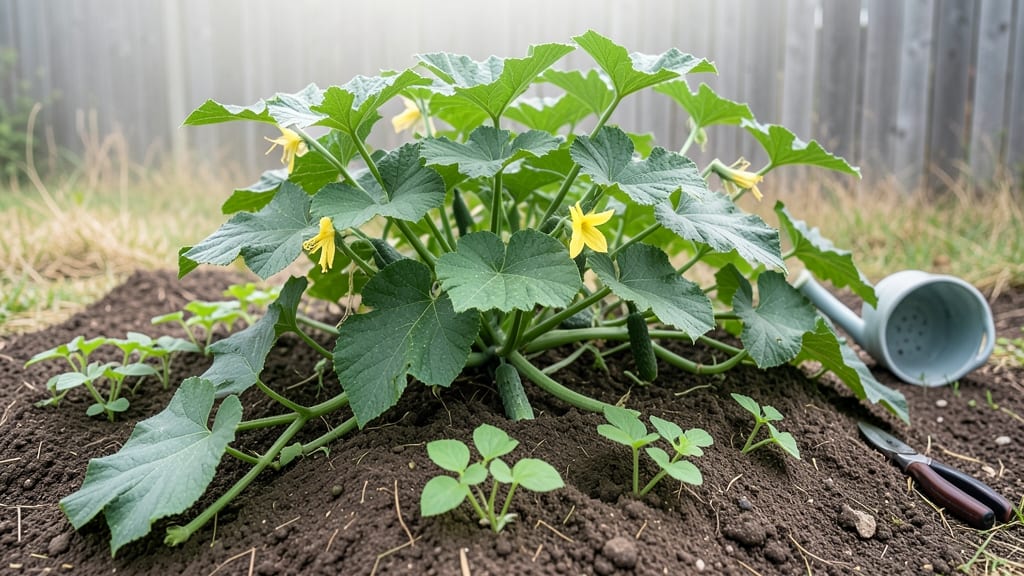
Planting cucumbers in mounds isn't just tradition—it's a game-changer for stronger vines and bigger harvests. 🌱 The raised soil warms faster in spring, improves drainage, and encourages deeper roots that support heavier fruits.
I learned the hard way when my flat-bed cucumbers flopped in July—until I switched to hills and saw the difference within weeks.
Start by creating 3-4 inch mounds spaced 3-4 feet apart, with a 12-18 inch diameter. Use well-draining soil mixed with compost, and plant seeds 1 inch deep at the mound's peak.
This elevation helps prevent rot and keeps fruits off damp soil, cutting down on disease. For bush varieties, keep mounds smaller and closer together.
Once vines take off, add trellis supports at the mound's base to guide growth upward. The hill shape naturally funnels water toward roots while keeping leaves dry—critical for powdery mildew prevention.
You'll notice vines spreading wider and fruits ripening 2-3 weeks earlier than in flat beds. The secret? Better airflow and heat retention.
If you're short on space, try raised beds with shallow mounds instead—just keep the same principles. The key mistakes? Overwatering mounds (they dry faster) or planting too deep (seeds rot). Stick to these basics, and you'll get healthier plants, more cucumbers, and fewer struggles all season long.
📚 In This Guide
- What you need
- Instructions
- Tips and common mistakes
- Wrapping up and next steps
What you need
- ● Cucumber seeds or seedlings: 3–5 plants per mound (choose bush or vining varieties like ‘Straight Eight’ or ‘Bush Champion’).
- ○ Well-draining potting mix or garden soil: 1–2 bags (or enough to fill mounds to 12–18 inches high). Optional: Add compost for extra nutrients.
- ● Planting mounds or hills: For in-ground gardens: Form mounds 12–18 inches tall, 12–18 inches wide, spaced 3–4 feet apart.
- ● For containers: Use 5-gallon pots or fabric grow bags (at least 12 inches deep).
- ● Organic mulch: Straw, grass clippings, or shredded leaves (1–2 inches thick to retain moisture).
- ● Fertilizer: Balanced fertilizer (10-10-10): 1 tbsp per mound at planting.
- ○ Compost or worm castings: ½ cup per mound (optional but recommended).
- ● Watering can or hose with gentle nozzle: For consistent moisture (cucumbers love hydration!).
- ○ Trellis or small stakes (optional): For vining varieties (3–4 feet tall).
- ● Garden gloves and trowel: For easy planting and mound shaping.
- ● Sunlight: Full sun (6–8+ hours daily).
- ● Warm soil: Wait until soil temps reach 60°F+ (use a soil thermometer if unsure).
- ● Well-draining location: Avoid soggy spots—cucumbers hate "wet feet."
- ● Patience: Germination takes 5–10 days in ideal conditions!
Step-by-Step instructions for hill planting cucumbers
Here's how I transform leggy cucumber vines into bushy, productive powerhouses using the mound method.
🌱 Step 1: Prepare the Planting Mounds
Choose a sunny spot with well-draining soil—cucumbers demand at least 6 hours of direct sun daily. Mounds should be 12-18 inches tall and spaced 3-4 feet apart for proper airflow. I use a shovel to create a small pyramid shape, piling soil up from the center outward.
Work in 2-3 inches of compost into the top third of each mound before planting. This nutrient-rich layer encourages vigorous root development and prevents the vines from stretching toward the soil surface. The mound's height naturally elevates the fruit off damp ground, reducing rot risk.
🌿 Step 2: Plant Seeds or Transplants
For seeds, plant 2-3 per mound at a depth of 1 inch, spacing them 6 inches apart at the mound's base. If using transplants, place 1 per mound—I've found this prevents overcrowding and stem competition. Gently press the soil around the stems to eliminate air pockets.
Water immediately after planting to settle the soil, but avoid soaking the mound. The goal is to moisten the roots without creating soggy conditions. I like to use a soaker hose for even distribution without disturbing the newly placed plants.
☀️ Step 3: Train Vines to Climb the Mound
As vines reach 6-8 inches tall, gently guide the main stem upward along the mound's slope. Use soft plant ties or small stakes to support growth without restricting movement. The mound's shape naturally encourages lateral branching—this is where the bushier growth happens.
Here's the trick: when vines reach the mound's peak, pinch off the tip to redirect energy into side shoots. You'll see new growth emerge within 7-10 days—these are your future fruit-bearing branches. This pruning technique creates a fuller plant structure that maximizes yield.
💧 Step 4: Maintain Moisture and Fertility
Water at the mound's base 1-2 inches per week, keeping soil consistently moist but never waterlogged. The mound's design helps prevent soil compaction around roots. I water in the morning to allow foliage to dry before evening—a critical step to prevent powdery mildew.
Every 2-3 weeks, add a 1-inch layer of compost around the mound's base. This gradual feeding supports continuous fruiting. The mound's elevated structure also makes it easier to spot pests early—just check the undersides of leaves for signs of trouble.
✂️ Step 5: Prune for Maximum Production
Throughout the season, remove any suckers (side shoots) that grow below the first flower cluster. These compete with fruit production. The goal is to maintain 3-5 main vines per plant, each with its own flower clusters. You'll know you're doing it right when you see 3-4 flowers per vine within 4-6 weeks of planting.
When fruit sets, thin clusters to 6-8 inches apart on each vine. This prevents overcrowding and ensures larger, healthier cucumbers. The mound's structure makes it easy to access all sides of the plant for harvesting and maintenance.
Tips & tricks for perfect cucumber mound planting
Transforming leggy cucumber vines into productive bushes isn't just about planting—it's about creating the perfect growing environment from day one.
Soil Preparation Secret: Before building mounds, test your soil's drainage. Cucumbers hate soggy roots, so if your garden soil is heavy clay, mix in 25% sand or perlite into your mound mixture. The 12-18 inch height we're targeting already helps, but proper soil structure prevents rot at the base where moisture collects. I've seen plants double their yield just from this one adjustment.
Planting Depth Matters: That 1-inch planting depth for seeds is critical—any deeper and they'll struggle to emerge, any shallower and they'll dry out. For transplants, press the soil firmly around the stem to eliminate air pockets, which can cause transplant shock. I like to make a small trench around each plant's base to direct water straight to the roots during the critical first week.
Pruning Timing: When you pinch those vine tips at the mound's peak (as mentioned in Step 3), do it on a dry morning when the plants are fully turgid. This reduces stress on the plant and gives you a clearer view of where to make your cuts. The 7-10 day window for new growth to appear is your cue that the plant is redirecting energy properly—if you don't see new shoots by day 12, you may have pinched too late in the season.
Compost Strategy: That 2-3 inches of compost in Step 1 should be well-aged—fresh compost can burn young roots. For the 1-inch top-ups every 2-3 weeks, I recommend using a mix of compost and worm castings. The castings provide gentle, immediate nutrition while the compost builds long-term soil structure. Spread it around the mound's base rather than piling it against the stem to prevent rot.
Pro Tips for Do You Plant Cucumbers In Mounds
- Transforming leggy cucumber vines into productive bushes isn't just about planting—it's about creating the perfect growing environment from day one.
- Soil Preparation Secret: Before building mounds, test your soil's drainage.
- Planting Depth Matters: That 1-inch planting depth for seeds is critical—any deeper and they'll struggle to emerge, any shallower and they'll dry out.
Frequently asked questions
Why plant cucumbers in mounds instead of rows?
Planting in mounds improves drainage, reduces soil compaction, and encourages stronger root systems. This method also makes harvesting easier and can increase yields by up to 30%! Mounds warm up faster in spring, giving vines a head start.
When is the best time to mound and plant cucumbers?
Wait until the soil is at least 60°F (15°C) and all frost danger has passed. For warm climates, mound and plant in early spring; in cooler areas, wait until late spring or early summer. Raised mounds also help extend the growing season in fall.
Can I use mounds for other vining plants like squash or melons?
Mounds work well for squash, melons, and even beans. Just adjust spacing—larger plants (like pumpkins) need bigger mounds (3–4 feet wide) with wider spacing (3–5 feet apart). Smaller vines (like bush beans) can share smaller mounds.
How do I prevent pests like cucumber beetles when using mounds?
Use row covers for the first 2–3 weeks to block beetles, or plant pest-repellent companions like nasturtiums or marigolds nearby. Mulch with straw to deter crawling pests, and avoid overwatering, which attracts slugs and snails.
What if my mounds get too wet or erode?
Amend mounds with compost or aged manure to improve drainage, and add a layer of mulch (straw or grass clippings) to stabilize soil. For heavy clay, mix in sand or perlite. If erosion is severe, rebuild mounds with steeper slopes (30° angle) for better runoff.
Wrapping up and next steps
Planting cucumbers in mounds isn’t just a trick—it’s a game-changer for healthier, bushier vines and bigger harvests! 🌱 Whether you’re a seasoned gardener or just starting out, this simple technique boosts airflow, reduces pests, and makes maintenance a breeze.
The key is preparing the soil, spacing properly, and giving those roots room to thrive.
Now that you’re armed with these hill planting hacks, it’s time to roll up your sleeves and get growing! Start small—try a few mounds in your garden this season—and watch your cucumbers flourish. Happy planting! 🌿