
Vegetables
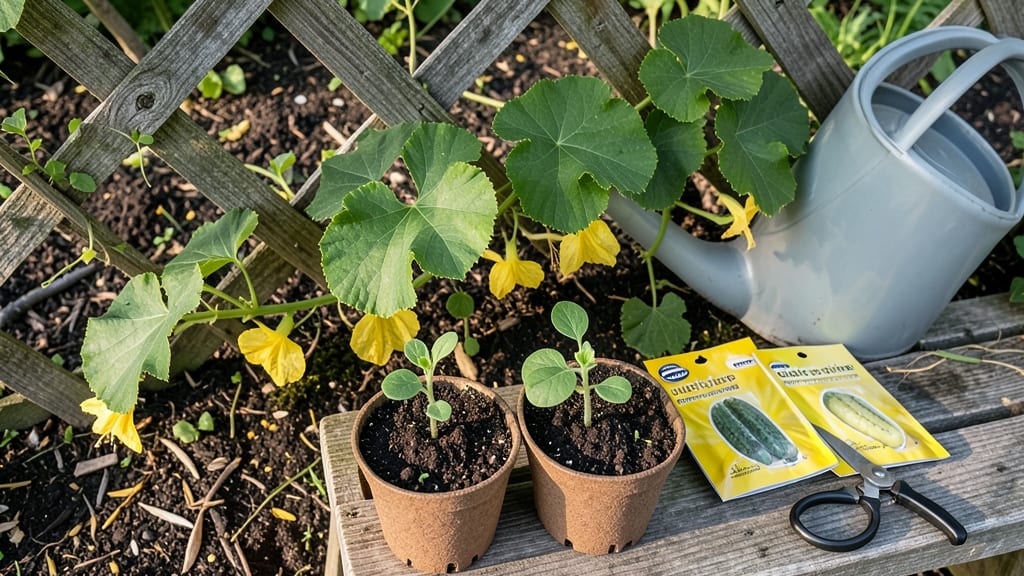
Growing yellow cucumber seeds gives you crisp, seedless slices in just 55 days—faster than store-bought cucumbers ever ripen. 🌱 I learned the hard way that these varieties need consistent warmth and moisture, but once you nail the timing, you'll harvest bushels of sweet, pale yellow fruit that disappears from the garden (and your plate) in minutes.
The secret starts with soil: warm it to 70°F before planting, use a 5-foot trellis to save space, and water at the base—not the leaves—to prevent mildew.
My first batch flopped because I planted too early, but since then, I've doubled my yield by following these simple steps that work even in small spaces.
📚 In This Guide
- What you need
- Instructions
- Tips and common mistakes
- Wrapping up and next steps
What you need
- ● Yellow cucumber seeds: 5–10 seeds (non-GMO, heirloom varieties like 'Lemon' or 'Straight Eight' work great!)
- ● Seed starting mix: 1–2 cups (sterile, peat-free blend for better drainage)
- ● Containers: 3–4 small pots (3–4 inches deep) or a seed tray with cells
- ● Grow lights or sunny windowsill: 6–8 hours of light daily (south-facing window or LED grow lights)
- ● Watering can or spray bottle: With a fine mist nozzle (avoid overwatering!)
- ● Fertilizer: Balanced liquid fertilizer (5-5-5 or 10-10-10, diluted to half-strength)
- ● Transplanting pots or garden bed: 12–18 inches deep, with well-draining soil (pH 6.0–6.8)
- ● Seedling heat mat ($10–$20) – Speeds up germination in cooler climates.
- ● Trellis or stakes – Supports vines (yellow cucumbers grow 6–12 feet long!)
- ● Organic mulch (straw or shredded leaves) – Retains moisture and deters weeds.
- ● pH test kit – Ensures soil is optimal for cucumbers.
- ● Compost or worm castings – Boosts soil nutrients for faster growth.
Step-by-step instructions for growing yellow cucumbers from seeds
Here's how I get crisp, seedless yellow cucumbers ready to harvest in just 55 days—no fancy equipment needed.
🌱 Step 1: Start Seeds Indoors 3-4 Weeks Before Last Frost
Fill 2-3 inch deep seed-starting trays with moistened seed-starting mix (not garden soil). Press the mix down gently so it's firm but not compacted. Plant 2-3 seeds per cell at a depth of about ½ inch—this is roughly twice the seed's diameter. I like to use a toothpick to make small holes for each seed so they go in straight.
Cover the seeds lightly with additional mix and mist the surface until evenly damp. Place the trays in a warm spot—70-80°F is ideal—either on a seedling heat mat or near a sunny window. Keep the soil consistently moist but never soggy. You'll see sprouts in 5-7 days, so check daily for the first signs of green.
☀️ Step 2: Provide Light and Harden Off Seedlings
Once seedlings emerge, move them to a location with 12-14 hours of bright light daily. A south-facing window works, but most homes don't have enough light there, so I use a grow light instead. Position it 2-3 inches above the seedlings and adjust as they grow to keep the light just above their leaves.
Leggy seedlings (long, stretched stems) mean they're not getting enough light. If you see this, move the light closer or add a second light. About 10 days before transplanting, start hardening off the seedlings by placing them outside in a sheltered spot for 1-2 hours daily. Gradually increase this time over 7-10 days until they're ready for the garden.
🪴 Step 3: Transplant Seedlings Outdoors After All Frost Risk Passes
Choose a sunny spot with 6-8 hours of direct sunlight daily. Yellow cucumbers thrive in well-draining soil with a pH of 6.0-6.8. If your soil is heavy or compacted, mix in 2-3 inches of compost before planting. Space seedlings 12-18 inches apart in rows 3-4 feet apart to allow for good airflow and easy harvesting.
Transplant on an overcast day or in the late afternoon to reduce stress. Water the seedlings thoroughly after planting to settle the soil around the roots. Mulch with 1-2 inches of straw or shredded leaves to retain moisture and keep weeds down. Avoid fertilizing at this stage—yellow cucumbers are sensitive to excess nitrogen, which can lead to leafy growth at the expense of fruit.
💧 Step 4: Water and Support for Maximum Yield
Water cucumbers at the base of the plant 1-2 inches deep, keeping the soil consistently moist but not waterlogged. Yellow cucumbers are particularly sensitive to uneven moisture—let the soil dry slightly between waterings to prevent blossom-end rot. Water in the morning so the foliage has time to dry, reducing the risk of fungal diseases like powdery mildew.
As the plants grow, provide support with a trellis, cage, or stakes. This keeps the fruits off the ground, improves air circulation, and makes harvesting easier. I use a simple 4-foot tall trellis for my plants, and I gently tie the vines to the trellis as they grow. Prune any suckers (side shoots) that form in the leaf axils to direct the plant's energy into producing fruit instead of extra foliage.
✂️ Step 5: Harvest for Continuous Production
Yellow cucumbers are ready to harvest when they're 6-8 inches long and fully colored. Use pruning shears or a sharp knife to cut the fruit from the vine, leaving a small stem attached. Harvest every 2-3 days to encourage more production—unharvested cucumbers will turn bitter and stop the plant from producing new flowers.
You'll see the first fruits appear around 50-55 days after sowing, and with consistent care, the plant will keep producing for another 4-6 weeks. Save a few seeds from the best-tasting cucumbers for next year by letting them fully ripen on the vine and then drying them in a cool, dry place. Enjoy your crisp, seedless yellow cucumbers fresh, in salads, or pickled!
Tips & tricks for growing seedless yellow cucumbers
Here's what I've learned after growing these crisp beauties for years—these little details make all the difference.
Seed-Planting Precision: When planting those 2-3 seeds per cell, use a toothpick to create small holes—this ensures seeds go in straight and at the perfect ½-inch depth. I've found that seeds planted too deep (over ½ inch) often struggle to emerge, while those too shallow dry out before sprouting. The goal is to mimic their natural depth in soil.
Lighting Strategy: Those 12-14 hours of bright light daily are non-negotiable for sturdy seedlings. I've had the best success with LED grow lights positioned 2-3 inches above the seedlings, adjusted as they grow. Watch for "leggy" seedlings (long, stretched stems)—this is your cue to move the light closer immediately. In my experience, seedlings need this light intensity to develop strong stems that can support the heavy cucumbers later.
Transplanting Timing: The 10-day hardening off period before transplanting is where many gardeners cut corners. Start with just 1-2 hours daily in sheltered spots, then gradually increase. I've seen seedlings shock and wilt when moved too quickly to full sun. The key is to let them adjust to outdoor conditions—wind, temperature fluctuations, and direct sunlight—before their final move to the garden bed.
Soil Preparation: Before transplanting, mix in 2-3 inches of compost if your soil is heavy or compacted. Yellow cucumbers thrive in well-draining soil with a pH of 6.0-6.8. I test my soil annually and amend it with compost or aged manure if needed. This extra step prevents issues like poor root development or nutrient deficiencies that can show up later as yellowing leaves or stunted growth.
Pro Tips for Yellow Cucumber Seeds
- Here's what I've learned after growing these crisp beauties for years—these little details make all the difference.
- Seed-Planting Precision: When planting those 2-3 seeds per cell, use a toothpick to create small holes—this ensures seeds go in straight and at the perfect ½-inch depth.
- Lighting Strategy: Those 12-14 hours of bright light daily are non-negotiable for sturdy seedlings.
Frequently asked questions
Got questions about growing yellow cucumber seeds? You’re not alone! Here are some of the most common queries—plus quick, no-fuss answers to keep your garden thriving.
How long do yellow cucumber seeds take to germinate?
Most yellow cucumber varieties sprout in 5–10 days after planting, especially in warm soil (70°F+). Keep seeds moist but avoid soggy soil—germination slows below 60°F. If nothing appears after 2 weeks, try replanting or check for rot.
When is the best time to plant yellow cucumber seeds?
Wait until after the last frost when soil temps hit 60°F+ (use a soil thermometer!). For cooler climates, start seeds indoors 3–4 weeks before transplanting. In warm zones, direct-sow seeds 2–3 weeks before your average last frost for a head start.
Can I grow yellow cucumbers in containers?
Choose a 5-gallon+ container with drainage holes and a trellis (cucumbers vine aggressively). Opt for bush varieties like ‘Lemon’ or ‘Straight Eight’ if space is tight. Just ensure 6+ hours of sunlight and consistent watering—containers dry out fast!
What’s eating my cucumber plants? How do I fix it?
Common culprits: cucumber beetles (skeletonized leaves), squash bugs (holes in vines), or aphids (sticky residue). Try neem oil, row covers, or handpick pests early. For beetles, yellow sticky traps work wonders!
Are yellow cucumbers spicier or bitter than green ones?
Not necessarily! Yellow cucumbers are milder and sweeter when harvested young (6–8 inches). Bitterness comes from overripe fruit—pick them firm and bright. Varieties like ‘Sweet Success’ are bred for low bitterness, even when larger.
Wrapping up and next steps
Growing yellow cucumber seeds is a rewarding journey that delivers crisp, flavorful harvests in just 55 days—perfect for busy gardeners and fresh-food lovers! 🌱 Whether you’re a beginner or a seasoned green thumb, these vibrant seeds offer a quick, delicious reward with minimal fuss.
Now that you’re armed with the right materials and answers to common questions, it’s time to roll up your sleeves and plant those seeds.
Your next step? Mark your calendar, prep your soil, and watch your garden transform into a crunchy, golden paradise. Happy growing—and enjoy that first sweet, seedless bite! 🥒✨