
How To
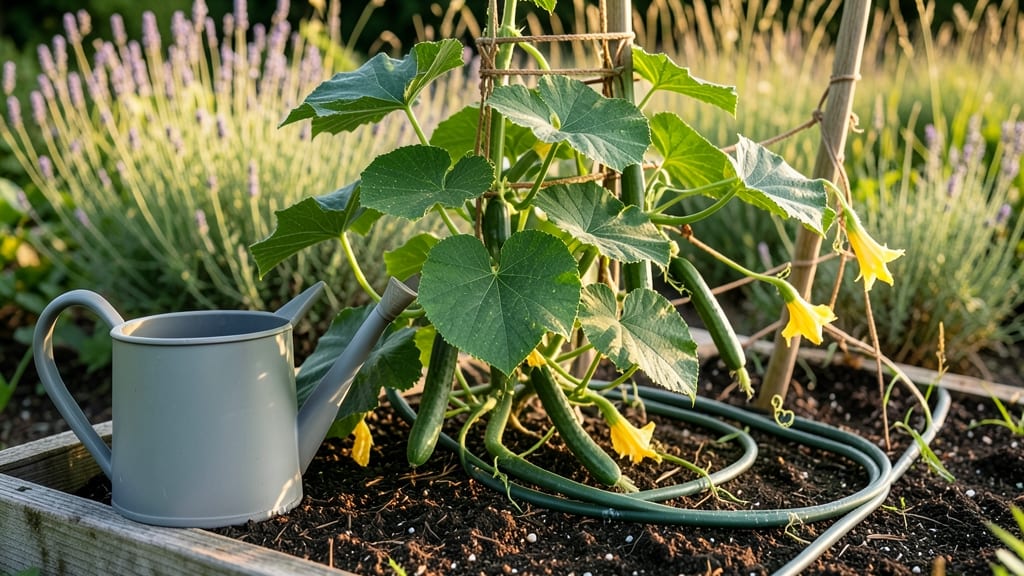
To water cucumbers properly, aim for 1-2 inches of moisture per week—but timing and technique matter just as much as the amount, or you’ll end up with wilted vines or wasted water.
Overwatering or underwatering cucumbers can turn your thriving vines into a sad, wilted mess—yet most gardeners struggle to find the perfect balance. The key lies in understanding soil moisture the right way, not just guessing by time or day.
Cucumbers 🥒 thrive when their roots stay consistently damp, but they hate soggy soil. In Zone 6a, where spring planting kicks off in April, deep watering in the morning keeps roots cool and prevents fungal diseases.
A quick finger test—pushing your index finger 1-2 inches into the soil—tells you exactly when it’s time to water again.
Below, I’ll break down the science-backed schedule for your garden, from seedlings to harvest, plus how to adjust for containers, heatwaves, and the one trick that saves water without stressing your plants.
The ideal watering schedule for cucumbers based on soil conditions
Cucumbers thrive on consistent moisture, but blindly following a one-size-fits-all schedule leads to wasted water or stunted growth.
The 1-2 inch rule (per week) is a great starting point, but your soil type dramatically changes how often you need to water. Clay soil holds moisture longer, while sandy soil drains like a sieve—both require adjustments to avoid soggy roots or thirsty vines.
Seasonal shifts also demand flexibility. During summer heatwaves, cucumbers may need daily watering in loamy soil, while spring and fall often allow for every-other-day watering. The key is checking soil moisture at the root level—not just glancing at the surface.
A simple finger test (inserting your finger 1-2 inches deep) reveals whether your cucumbers are truly thirsty or still hydrated.
Let’s break down the science-backed watering schedule tailored to your soil type, with adjustments for heat stress and seasonal changes. This ensures your cucumbers stay vigorous, productive, and free from blossom-end rot or powdery mildew.
| Soil Type | Watering Frequency | Depth per Watering | Seasonal Adjustments | Heatwave Rule |
|---|---|---|---|---|
| Clay Soil | Every 3-4 days | 1.5-2 inches | Reduce in spring/fall | Water every 2 days |
| Loamy Soil | Every 2 days | 1-1.5 inches | Standard schedule | Morning + evening |
| Sandy Soil | Daily (early AM) | 1 inch | Increase in summer | Drip irrigation |
| Container-Grown | Every 1-2 days | 1 inch (soil dries faster) | Check soil daily | Use saucers |
For clay soil, the biggest mistake is overwatering. These soils suffocate roots when soggy, leading to root rot or fungal diseases. Water deeply every 3-4 days, ensuring the top 1.5-2 inches are moist but not waterlogged.
In spring and fall, you can stretch watering to every 5 days—just monitor for wilting leaves, which signal thirst.
If you have sandy
How to perform the perfect soil-moisture test for cucumber plants
Cucumber plants thrive when their roots enjoy consistent moisture, but guessing by schedule leads to soggy soil or parched roots. The secret? Testing soil moisture before watering. This simple method saves time, prevents disease, and ensures your vines grow strong—not wilted or waterlogged.
Most gardeners water based on a time-based schedule, but cucumbers need water when the soil reaches a specific dryness level. A soil-moisture test reveals the truth: whether your plants are thirsty or drowning.
I’ve perfected this technique over years of growing cucumbers, and it’s the game-changer I wish I’d known sooner.
⚠️ WARNING: Overwatering is the #1 killer of cucumber plants! Even if your soil feels damp at the surface, roots may still be dry. Test 2-3 inches deep—this is where cucumber roots actively drink.
Water only when the soil at this depth feels dry to the touch. Overwatering causes root rot, while underwatering stunts fruit production. Both lead to lost harvests!
Start with the finger test, the most reliable method for gardeners. Stick your index finger 2 inches into the soil near the plant’s base. If it feels dry, water deeply.
If it’s moist, wait another day. Clay soil stays wet longer, while sandy soil dries out faster—adjust your testing frequency accordingly.
For a high-tech approach, use a digital soil moisture meter. These tools measure moisture levels in real time, eliminating guesswork. Insert the probes 2-3 inches deep and read the display.
Most meters show a percentage—aim for 40-60% moisture for cucumbers. This method is especially useful in containers, where soil dries out quickly.
Watch your cucumber plants for visual cues too. Wilting leaves or crispy edges signal underwatering, while yellowing leaves or mushy stems indicate overwatering. Combine these signs with your soil test for the most accurate picture.
Morning is the best time to test—soil moisture levels drop during the day, leading to false readings.
Pro tip: Mulch around your cucumber plants to lock in moisture and reduce evaporation. Organic mulch like straw or shredded leaves keeps the soil cool and retains moisture longer.
This means fewer tests and less watering overall. Pair your soil-moisture tests with mulching, and your cucumbers will reward you with bountiful, crisp harvests all season long.