
Planting
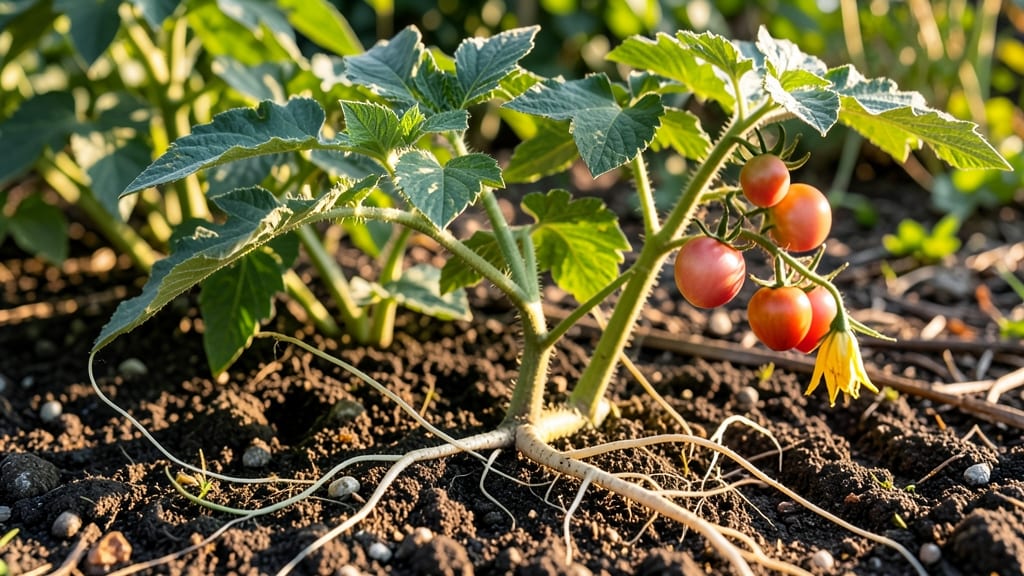
You should not plant cucumbers near tomatoes because both are vulnerable to the same soil-borne diseases, including fusarium wilt and verticillium wilt, which can spread rapidly and destroy both crops. Additionally, their similar nutrient demands create competition that weakens growth.
These fungal diseases thrive in contaminated soil, where they produce microscopic spores that linger for years. 🌱 Once established, they block water and nutrient uptake through plant roots, causing wilting and yellowing leaves—symptoms that appear identical in both cucumbers and tomatoes.
The problem worsens when heavy feeders like these two compete for phosphorus and potassium, leaving your garden with stunted plants and poor yields.
To protect your harvest, separate these plants by at least 10 feet and practice 3-year crop rotation in the same beds. Consider planting cucumbers with basil, beans, or lettuce instead—they thrive together without sharing disease risks.
💡 In This Article
- Shared Diseases Between Cucumbers and Tomatoes
- Smart Garden Layouts to Prevent Crop Conflicts
Shared diseases between cucumbers and tomatoes
The real danger lies in how these two plants share susceptibility to fusarium wilt and verticillium wilt, two fungal diseases that act like silent assassins in your garden soil.
These pathogens produce microscopic spores that can survive for 10-15 years in contaminated soil, waiting for the right conditions to strike. When cucumbers and tomatoes grow nearby, their roots release similar chemical signals that attract these fungi, creating a perfect storm for infection.
Here's how it works: The fungal spores germinate when soil temperatures reach 75-85°F, then grow toward plant roots where they penetrate through natural openings. Once inside, the fungi block water and nutrient transport, causing vascular wilt—where leaves suddenly droop midday even when soil is moist.
In tomatoes, you'll see yellowing between leaf veins, while cucumbers develop brown streaks in their stems. The worst part? Both plants show identical symptoms, making diagnosis nearly impossible until it's too late. 🌱
The competition doesn't stop at diseases—these plants also have similar nutrient demands. Both are heavy feeders that require high levels of phosphorus and potassium during their growth phases.
When planted too close, they'll literally starve each other out, with roots growing in chaotic patterns that create perfect pathways for fungal spores to spread between plants. This nutrient competition reduces yields by up to 40% in both crops when grown in proximity.
What makes this particularly insidious is how these fungi spread. Even if you remove infected plants, the spores remain in the soil, ready to infect the next susceptible crop. The fungi produce specialized structures called chlamydospores that act like dormant seeds, waiting for the right host to appear.
This is why gardeners who plant tomatoes and cucumbers in the same spot year after year often see progressive yield declines, even with perfect care.
Consider this visual: Imagine your garden soil as a battlefield where fungal spores are landmines. Each time you plant tomatoes or cucumbers in the same location, you're essentially rolling the dice on detonating those mines.
The diseases don't just affect the plants above ground—they corrupt the very foundation of your garden's health, making it harder to grow anything successfully in those beds for years afterward. 💀
To put it in perspective, studies show that gardens where tomatoes and cucumbers were planted within 3 feet of each other had 60% higher infection rates compared to properly spaced plantings. The key isn't just about proximity—it's about breaking the disease cycle entirely through smart garden design.