
Container Gardens
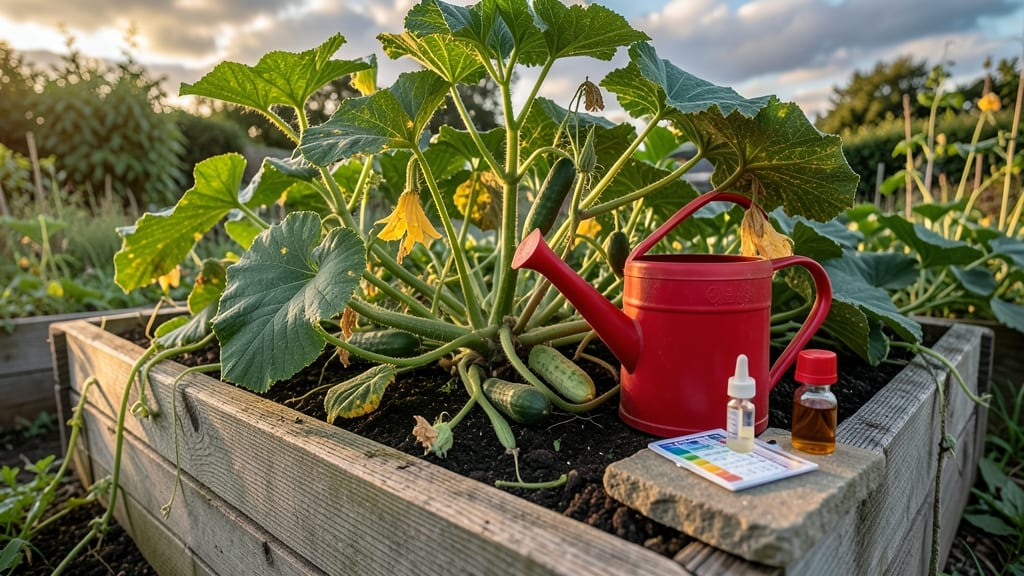
If you’re wondering why are my cucumbers growing yellow, don’t panic—it’s your garden’s SOS, and there’s always a solution. 🌱 The first step is figuring out which problem matches your plant's symptoms, because the solution depends on whether it's water, food, disease, or something else entirely.
Start by checking the undersides of leaves for powdery white spots (that's powdery mildew) or tiny holes (likely cucumber beetles). Feel the soil—if it's soggy, you're overwatering; if it's bone dry, that's another culprit.
Yellowing often starts with the older leaves first, which points to nitrogen deficiency, while new leaves turning yellow suggests magnesium issues. Each problem needs a different approach, but none are permanent if caught early.
You'll likely see improvement within 3-7 days after addressing the root cause. For mildew, a baking soda spray works wonders; for pests, neem oil does the trick. Nutrient fixes take longer but pay off with vibrant green growth and better yields.
The key is acting fast—yellow leaves left unchecked can spread to the whole plant and reduce your harvest.
This works for both container gardens and in-ground plots, though containers need more frequent monitoring. Keep a simple journal noting when you water, fertilize, and spot issues—it becomes your early warning system. With these fixes, your cucumbers will bounce back faster than you think.
📚 In This Guide
- What you need
- Instructions
- Tips and common mistakes
- Wrapping up and next steps
What you need
- ● Garden gloves – A pair to protect your hands from soil and potential pests.
- ● Trowel or small shovel – For gently inspecting roots and soil conditions.
- ● pH testing kit – To check soil acidity/alkalinity (ideal range: 6.0–7.0 for cucumbers).
- ● Moisture meter or finger-testing skills – To assess soil hydration levels.
- ● Balanced fertilizer (10-10-10 or 5-5-5) – 1–2 tablespoons per plant if nutrient deficiency is suspected.
- ● Organic mulch (straw, grass clippings, or shredded leaves) – 2–3 inches thick to retain moisture and regulate temperature.
- ● Watering can or hose with adjustable nozzle – For deep, even watering (avoid overhead sprinklers).
- ● Pruning shears or sharp scissors – To trim yellowed leaves or inspect vines.
- ● Notebook & pen – To track symptoms, watering schedules, and changes over time.
- ● Microscope or hand lens – For spotting pests like spider mites or powdery mildew up close.
- ● Compost or worm castings – To enrich soil if organic matter is lacking.
- ● Shade cloth (30–50% coverage) – If yellowing is due to excessive sun exposure.
- ● Fungicide (neem oil or copper-based) – If fungal diseases like powdery mildew are suspected.
- ● Soil moisture sensors or drip irrigation kit – For precise water management.
Diagnosing and fixing yellow cucumbers: 5 root causes
Yellowing cucumbers usually signal stress—not failure. Here’s how to identify the problem and restore healthy growth.
🌱 Step 1: Check for Overwatering or Poor Drainage
Yellowing leaves often start at the bottom and spread upward when roots suffocate. Cucumbers need consistently moist—but never soggy—soil. Stick your finger 1-2 inches deep; if the soil feels cold and clings to your fingers, you’re overwatering. Drainage issues (like compacted soil or clogged pots) trap excess moisture, starving roots of oxygen.
Fix it by amending the soil with 1-2 inches of coarse sand or perlite to improve aeration. If growing in containers, ensure pots have multiple drainage holes and elevate them on saucers. Water only when the top inch of soil feels dry—never on a schedule. Yellowing from overwatering often appears pale and mushy, not crisp like nutrient deficiency.
☀️ Step 2: Assess Sunlight Exposure
Cucumbers crave 6-8 hours of direct sunlight daily, and insufficient light triggers yellowing, especially on newer leaves. If your plants are leggy with sparse foliage, they’re stretching toward light sources. Check for nearby obstructions (like overgrown weeds or a neighbor’s fence) blocking sunlight. Even partial shade can slow photosynthesis, causing leaves to yellow from the tips inward.
Move containers to a sunnier spot or prune nearby plants to open up space. If indoors, supplement with a grow light positioned 6-12 inches above the vines. You’ll notice leaves perk up within 3-5 days of corrected light exposure. Avoid placing cucumbers near reflective surfaces (like glass or metal), which can scorch leaves.
💧 Step 3: Test for Nutrient Deficiencies
Yellowing between leaf veins (a condition called chlorosis) often signals a lack of nitrogen, magnesium, or iron. Nitrogen deficiency shows as pale yellow leaves on lower stems, while magnesium (or iron) deficiency causes yellowing between veins while keeping veins green. Soil pH imbalances (too acidic or alkaline) block nutrient uptake, even if fertilizer is present.
Test your soil’s pH with a home kit—cucumbers thrive in 6.0-6.8 pH. If deficient, amend with compost or a balanced 10-10-10 fertilizer (follow package rates). For magnesium, apply Epsom salt (1 tablespoon per gallon of water) every 2 weeks. You’ll see new growth turn green within 1-2 weeks if the issue is nutrient-related.
✂️ Step 4: Inspect for Pests or Disease
Yellowing accompanied by spots, holes, or webbing points to pests like aphids, cucumber beetles, or spider mites. These sap-suckers drain nutrients, causing leaves to yellow and curl. Fungal diseases (such as powdery mildew) also trigger yellowing, often with a white powdery coating on upper leaf surfaces. Check the undersides of leaves and stems for signs of infestation.
Remove heavily infested leaves immediately and spray with neem oil (mix 1 tablespoon per quart of water) or insecticidal soap. For fungal issues, apply baking soda spray (1 teaspoon baking soda + 1 quart water + a drop of dish soap) weekly. Quarantine affected plants to prevent spread. Healthy new growth should appear within 5-7 days of treatment.
🌿 Step 5: Rule Out Environmental Stress
Sudden temperature swings (below 50°F or above 90°F) or wind exposure can shock cucumber plants, causing leaves to yellow. Heat stress often appears as scorched edges or drooping, while cold stress makes leaves turn yellow and limp. Even poor air circulation (from crowded plants) traps humidity, promoting disease and yellowing.
Protect plants from extreme temps with shade cloth (30-50% coverage) during heatwaves or row covers in early spring. Space cucumbers 12-24 inches apart to improve airflow. Mulch with straw or grass clippings to regulate soil temperature and retain moisture. Within 3-5 days, you should see leaves firm up and regain color if stress is the culprit.
Tips & tricks for reviving yellowing cucumber plants
Real talk: Yellow leaves don’t mean your cucumbers are doomed—they’re just sending you a SOS. Here’s how to decode their signals and turn things around before it’s too late.
Diagnostic Timing: When checking for overwatering in Step 1, don’t just rely on memory—use the 1-2 inch soil test as your guide. I’ve learned the hard way that soggy soil can mimic nutrient deficiency, so always confirm with your fingers before diagnosing. The 3-5 day recovery window for light adjustments means you’ll see results faster than you think if you act now.
Light Exposure Hack: If your cucumbers are stretching toward a window (that’s your clue they’re light-starved), don’t just move them—rotate their position every 3-4 days. This prevents uneven growth and ensures all leaves get equal access to those critical 6-8 hours of sunlight. I’ve had plants perk up within days just from this simple adjustment, even when I thought they were beyond saving.
Soil pH Precision: That 6.0-6.8 pH range isn’t just a suggestion—it’s the sweet spot for nutrient uptake. If you’re unsure about your soil’s pH, grab a home test kit (they’re cheap and reliable). For quick fixes, mix 1 tablespoon of Epsom salt per gallon of water every 2 weeks—this magnesium boost often works magic when yellowing appears between veins, and you’ll notice new growth turning green within 1-2 weeks.
Pest Prevention Pro Tip: When inspecting for pests in Step 4, focus on the undersides of leaves first—this is where aphids and spider mites love to hide. I’ve caught infestations early by using a handheld magnifying glass (yes, it’s worth the $5) to spot tiny webs or sticky residue. Once you’ve treated with neem oil or insecticidal soap, quarantine affected plants immediately to prevent cross-contamination.
Pro Tips for Why Are My Cucumbers Growing Yellow
- Real talk: Yellow leaves don’t mean your cucumbers are doomed—they’re just sending you a SOS.
- Diagnostic Timing: When checking for overwatering in Step 1, don’t just rely on memory—use the 1-2 inch soil test as your guide.
- Light Exposure Hack: If your cucumbers are stretching toward a window (that’s your clue they’re light-starved), don’t just move them—rotate their position every 3-4 days.
Frequently asked questions
Got questions about those yellow cucumbers? You’re not alone!
Here are some of the most common concerns—and quick fixes—to get your plants back on track.
Why are my cucumbers turning yellow before they’re fully ripe?
Yellowing before ripeness usually signals nutrient deficiency (like nitrogen or magnesium) or overwatering. Check soil moisture—it should feel like a damp sponge, not soggy. A balanced fertilizer or compost can help restore balance. If leaves are also yellowing, it’s time to adjust your care routine!
Is it too late to save my yellow cucumbers?
Not necessarily! If the yellowing is due to underwatering or sunburn, prune affected areas and adjust care. For disease or pests, remove severely damaged fruit to redirect energy to healthy growth. Monitor closely—sometimes a little TLC is all your plants need to bounce back!
Can I still eat yellow cucumbers, or should I toss them?
Yellow cucumbers are often safe to eat if the flesh is still firm and free of soft spots or mold. They may be slightly bitter or seedy, but they’re not toxic. For best flavor, harvest when green and firm. If in doubt, peel and slice thinly to avoid any texture issues in dishes like salads or stir-fries.
Could heat or cold be making my cucumbers yellow?
Cucumbers are heat-sensitive—temperatures above 90°F (32°C) can cause yellowing and bitter taste. If your plants are in a hot climate, provide afternoon shade or mulch to keep roots cool. Conversely, cold snaps can stunt growth—use row covers if frost is a risk in your area.
What’s the fastest way to prevent yellow cucumbers next season?
Start with well-draining soil (mix in compost or perlite) and consistent watering—aim for 1–2 inches per week. Choose disease-resistant varieties like ‘Straight Eight’ or ‘Marketmore,’ and rotate crops annually to prevent soil-borne issues. A little prevention goes a long way!
Wrapping up and next steps
Don’t let yellowing cucumbers stress you out—most issues have simple fixes! Whether it’s overwatering, nutrient deficiencies, or pests, taking action early can save your harvest. 🌱 With the right adjustments, your plants will bounce back stronger and healthier.
Ready to turn things around? Start by inspecting your plants daily and applying the fixes you’ve learned. Happy gardening—your next crisp, green cucumber is waiting! 🥒✨