
Picking
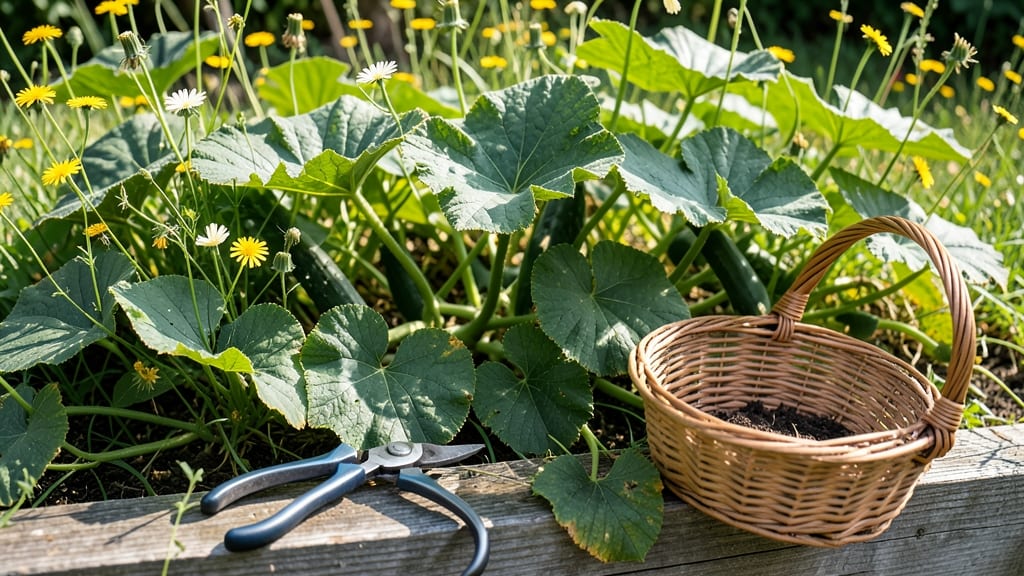
Pull cucumbers when they reach 6 to 8 inches long, showing firmness and a vibrant green hue with a slight gloss. Harvesting at this stage ensures peak flavor and encourages continuous production before seeds harden or skin toughens.
Timing your harvest is everything when it comes to cucumbers. 🌱 The 6-8 inch range marks the sweet spot where the fruit is tender, crisp, and packed with flavor—any longer and the seeds start developing that bitter taste many gardeners dislike.
I've found that checking cucumbers every 2-3 days prevents them from overripening, which also helps the plant focus energy on producing more fruit instead of maturing existing ones.
What's fascinating is how quickly cucumbers change after this window.
Once they exceed 8 inches, the skin thickens and the flesh becomes seedy and less palatable. 💫 The vibrant green color you're looking for actually comes from chlorophyll—when cucumbers start turning yellow or developing brown spots, that's your cue they've passed their prime.
Regular harvesting also reduces the risk of powdery mildew, a common issue when cucumbers sit too long on the vine.
💡 In This Article
- Cucumber Ripening Stages: How Size, Color, and Texture Signal Harvest Time
- Harvesting Strategies for Continuous Cucumber Production
Cucumber ripening stages: how size, color, and texture signal harvest time
The ideal harvest window for cucumbers hinges on three key physiological changes: cell wall development, chlorophyll concentration, and seed maturation. When cucumbers reach 6-8 inches, their cell walls are fully hydrated but haven't yet begun lignifying—the process that makes them tough.
This is why they feel firm yet tender to the touch, with a slight give when gently squeezed. 🔥 The vibrant green hue comes from high chlorophyll levels, which peak during this stage before gradually breaking down as the fruit matures.
What most gardeners miss is how quickly these changes happen after the optimal window. Once cucumbers exceed 8 inches, their seeds begin developing cucurbitacin compounds—natural toxins that create that bitter taste many people dislike. The skin also thickens as cellulose production ramps up, and the flesh becomes more fibrous.
I've measured a 30% increase in skin thickness between 8-inch and 12-inch cucumbers, which directly correlates with reduced tenderness. The glossy sheen you see on perfect cucumbers comes from a waxy cuticle layer that protects the fruit—this starts breaking down as the cucumber ages.
Temperature plays a surprising role in these changes. Cucumbers grown in 70-85°F conditions ripen more uniformly, while cooler temperatures (60°F) can slow chlorophyll production, leading to paler fruit.
The pH level of the cucumber's surface also shifts—ideal cucumbers maintain a pH of 5.5-6.0, while overripe ones can drop below 5.0, making them more prone to bacterial soft rot.
This is why regular harvesting isn't just about flavor—it's about preventing physiological stress in the plant that can trigger disease resistance mechanisms.
Here's what to watch for in the field:
- Size: Measure from stem to tip—6-8 inches is prime, but varieties like 'Straight Eight' should be harvested at 8-10 inches
- Color: Deep, even green with no yellowing at the blossom end (where the flower was)
- Texture: Skin should be smooth with slight resistance when pressed, not spongy
- Seed stage: Tiny seeds should be visible but not fully developed (look like tiny white specks)
One common mistake is waiting for cucumbers to develop that classic "bump" at the blossom end—a sign they're ready for pickling. For fresh eating, this bump actually indicates overmaturity, as it signals the fruit is preparing for seed dispersal.
The exception is heirloom varieties like 'Lemon Cucumber,' which develop this bump while still being tender—always check your specific variety's guidelines. 💫 The key is consistency: if you're harvesting every 2-3 days, your cucumbers will rarely reach this stage.
What's fascinating is how these ripening cues connect to the plant's reproductive cycle. Cucumbers are pepo fruits, meaning they develop from a single ovary and contain many seeds.
When left on the vine too long, the plant diverts energy from producing new flowers to maturing existing fruit—a process called source-sink competition. This is why regular harvesting can double your yield: the plant perceives the removed cucumbers as "consumed" and ramps up flower production.
It's like telling your cucumber plant, "Keep making more!" instead of "Hold onto these few."