
How To
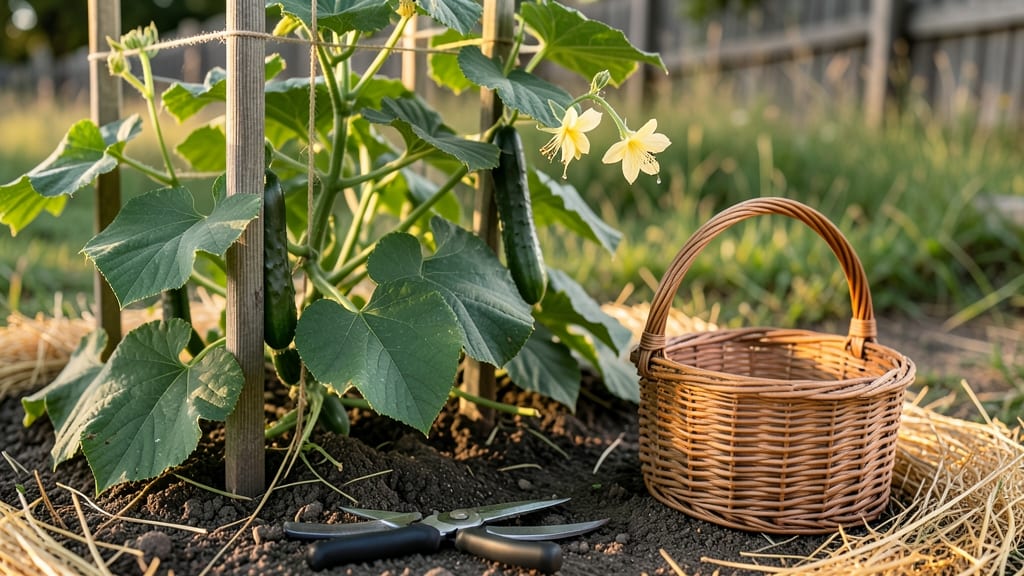
Picking slicing cucumbers at the right moment turns a garden bounty into a crisp, seedless salad superstar — or a bitter, seedy mess if you wait too long.
Harvesting slicing cucumbers at the wrong time can mean the difference between a refreshing crunch and a disappointing bite. Too early, and they’re underripe; too late, and they turn seedy and bitter. But with the right cues, you can nail that perfect harvest window every time.
Look for cucumbers that are 6-8 inches long with firm skin that just gives slightly when you press. The stem should snap cleanly, and the color should be bright and even. These are the telltale signs that your cucumbers are ready to pick.
In this guide, I’ll walk you through the 3 key signs of peak ripeness, how often to check your plants, and why timing matters for both flavor and yield. Let’s get started!


3 Key signs your slicing cucumbers are ready for harvest
Slicing cucumbers thrive when picked at their peak ripeness, delivering that perfect balance of crisp texture and mild flavor. Unlike pickling cucumbers, which are harvested small, slicing varieties need time to mature—but not too much!
Overripe cucumbers develop bitter compounds and large, seedy centers, ruining their salad potential. The key is learning to read your plant's signals before the cucumbers outstay their welcome.
I’ve learned the hard way that waiting just one extra day can turn a stellar harvest into a sad, seedy disappointment. The good news? Your cucumber vines give clear visual and tactile cues.
Master these three key signs, and you’ll enjoy a steady supply of crunchy, seedless cucumbers all season long. Let’s break down exactly what to look for when checking your plants.
🌱 3 Signs Your Slicing Cucumbers Are Ready to Pick
- 1. Size: Reach 6-8 inches in length (standard slicing variety). Measure from blossom end to tip—this is your golden rule.
- 2. Stem Color: The stem end turns yellow or brown (not green). This signals the cucumber has finished growing and is ready to harvest.
- 3. Skin Texture: Firm but yields slightly when gently pressed (like a ripe avocado). If it feels rock-hard or mushy, it’s past its prime.
✂️ Pro Tip: Use clean pruners or scissors to cut stems—never pull! This prevents damaging the vine and encourages more production.
Let’s dive deeper into each of these harvest-ready cues. First up: size matters. Slicing cucumbers are bred to grow larger than their pickling cousins, so aim for that 6-8 inch range. Smaller cucumbers (under 6 inches) often lack full flavor development, while larger ones risk bitterness.
I’ve found that variety-specific guidelines help—check your seed packet for exact measurements, as some heirloom types may differ slightly.
Next, pay attention to the stem end color. This is one of my favorite tricks because it’s foolproof. A green stem end means the cucumber is still growing, while a yellow or brown end signals it’s ready to pick.
I always check this first—it’s like a little traffic light telling me when to harvest. If you miss this cue, the cucumber will continue growing, and those seeds will swell, making the flesh less tender.
The skin texture test is where things get tactile. A perfectly ripe slicing cucumber should feel firm but slightly yielding when you gently press it. Think of it like testing a ripe peach—just enough give to know it’s ready. If the skin feels hard as a rock, it’s underripe.
If it’s soft or wrinkled, it’s overripe. I like to do this test in the morning when the cucumbers are cool and crisp, not after a hot afternoon when they might feel softer due to heat.
Don’t forget to check the seeds inside—this is where many gardeners go wrong. At peak ripeness, slicing cucumbers should have small, underdeveloped seeds (about the size of a pinhead). If the seeds are larger or the center cavity is filled with liquid, the cucumber has passed its prime.
I’ve seen gardeners assume all cucumbers are the same, but slicing varieties are deliberately bred to stay seedless when harvested at the right time.
One common mistake I see is relying only on color. While most slicing cucumbers stay green when ripe, some varieties (like Lemon Cucumbers) change to a pale yellow. Others, like Armenian Cucumbers, develop subtle stripes. Always combine color, size, and texture for the most accurate assessment.
Pro tip: Use a small notebook to track which cues work best for your specific variety—my Straight Eight cucumbers, for example, ripen slightly faster than my Marketmore plants.
Timing your harvests correctly also boosts your plant’s productivity. Cucumbers are vining plants, meaning they produce continuously as long as you keep picking. If you leave too many cucumbers on the vine, the plant diverts energy to seed development instead of growing new fruit.
I’ve had seasons where I harvested every other day and ended up with 50% more cucumbers than years I waited too long. It’s all about that balance!
Finally, remember that environmental factors can affect ripening speed. Hot weather, for example, can make cucumbers ripen faster, while cool, cloudy days may slow things down. If you’re in a hot climate zone, you might need to check your plants daily to catch them at peak ripeness.
In cooler areas, every other day is usually sufficient. I always adjust my harvesting schedule based on the weekly forecast—if a heatwave is coming, I’ll pick a few extra cucumbers to enjoy before they overripe.
Master these three key signs, and you’ll never again wonder whether your slicing cucumbers are ready for harvest. The next time you’re in your garden, take a moment to run your fingers over a cucumber, check that stem end, and measure its length.
Your future salads will thank you! 🥒
How often to check cucumbers and best harvesting practices
Knowing how often to check cucumbers is just as important as recognizing when they're ripe. I check my slicing cucumber plants daily during peak production months—June through August—to ensure I don’t miss the perfect harvest window.
This frequency helps me maintain a steady supply of crisp, seedless cucumbers while preventing overripe fruit from sapping the plant’s energy.
Morning is my preferred time for inspections. The cool temperatures reduce stress on the plants, and the dew has dried, making it easier to spot new cucumbers hiding among the leaves. I use a gentle touch to avoid damaging tender vines while searching for ready-to-harvest fruit.
⚠️ callout warning ⚠️
⚠️ Warning: Overripe Slicing Cucumbers
Leaving slicing cucumbers on the vine past their prime causes bitterness and seedy texture. The yellow stem end turns brown, and the skin develops uneven yellow patches. Worse, overripe cucumbers steal nutrients from new fruit, reducing your total yield. Check plants every 2-3 days during hot weather to prevent this.
When harvesting, I use a sharp pair of pruning shears or a clean knife to cut cucumbers from the vine. This method prevents stem damage that can introduce diseases like bacterial wilt.
Always leave 1/4 inch of stem attached—this helps the cucumber stay fresh longer and protects the plant’s health.
For large vining varieties, I use a harvest basket with a handle to avoid bending over repeatedly. This saves my back and keeps harvested cucumbers organized.
I store them in the shade until I can wash and refrigerate them later—never leave them in direct sun, as this causes heat damage and spoilage.
Regular harvesting actually boosts production. My plants yield 20-30% more cucumbers when I pick them consistently. The key is to remove cucumbers before they reach 8 inches for slicing types—this encourages the plant to focus on producing new fruit rather than maturing a single large cucumber.
If you’re growing bush varieties, you can reduce checking to every other day since they produce fruit more slowly. For trellised plants, I inspect the undersides of leaves where cucumbers often hide. A quick visual sweep with a flashlight on cloudy days helps me spot hidden gems.