
Picking
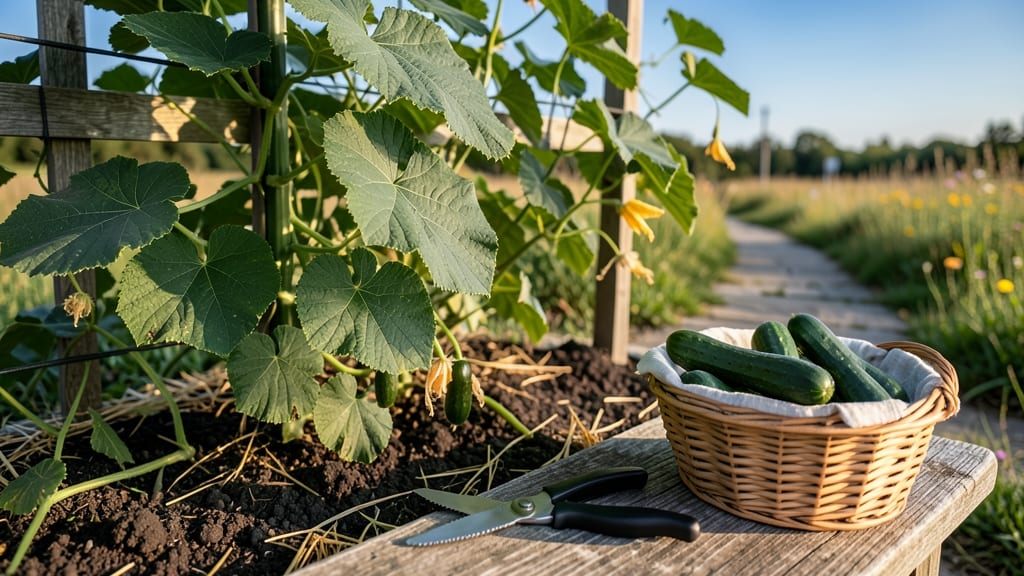
To pick cucumbers for pickling at the perfect stage, look for small, firm 🥒 varieties between 2 and 4 inches—any longer, and they’ll turn bitter.
Picture this: you’ve spent all summer nurturing your cucumber plants, and now the moment of truth arrives. The difference between crisp, tangy pickles and sad, mushy jars comes down to when you harvest. Too early, and your pickles lack flavor; too late, and they lose their signature crunch.
Most gardeners focus on size alone, but the real secret lies in a mix of firmness, color, and even the time of day you pick.
A cucumber that’s bright green, resists gentle pressure, and snaps cleanly at the stem is your golden ticket to homemade pickles that taste like they came from a jar at the grocery store—except way better.
In this guide, I’ll walk you through three foolproof tests to nail the harvest window, plus pro tips for avoiding common mistakes that turn your pickling batch into a science experiment gone wrong.


3 Key size tests to harvest cucumbers for perfect pickles
When it comes to pickling cucumbers, size isn’t just a detail—it’s everything. The smaller the cucumber, the crunchier and tangier your pickles will be. I’ve learned the hard way that harvesting too early gives you mushy, underdeveloped pickles, while waiting too long results in bitter, seedy disasters.
The secret lies in these three simple size tests that guarantee perfect pickles every time.
First, focus on length measurements. For most pickling varieties like 'Boston Pickling' or 'National Pickling', aim for cucumbers between 2 to 4 inches long. This is the golden window where texture and flavor align perfectly.
Heirloom varieties might need slightly more time, but never exceed 5 inches—that’s when bitterness creeps in.
| Variety Type | Ideal Size Range | Why It Matters |
|---|---|---|
| Standard Pickling | 2-3 inches | Crisp texture, minimal seeds |
| Heirloom Varieties | 3-4 inches | Balanced flavor profile |
| Slicing Types | 5+ inches | Not ideal for pickling |
The second test involves circumference. Wrap your fingers around the cucumber—if it feels thicker than a golf ball (about 1.5 to 2 inches in diameter), it’s time to pick.
Thinner cucumbers are still developing, while thicker ones start losing that firm, crisp quality we crave in pickles. Pro tip: Use a measuring tape if you’re unsure—precision matters!
Don’t overlook the stem end test. Gently bend the cucumber near where it connects to the vine. If it snaps cleanly with a slight resistance, that’s your cue to harvest.
A cucumber that bends without snapping is still too young, while one that feels spongy or hollow at the stem end has passed its prime. This test reveals the internal maturity better than any other method.
For heirloom varieties, like 'Lemon Cucumber' or 'Armenian Cucumber', you might need to adjust slightly. These often need an extra day or two to develop their signature flavor compounds.
I’ve found that waiting until they reach 3.5 to 4.5 inches gives them that perfect balance of sweetness and tang. Always check the seed packet guidelines—they’re your best friend for variety-specific advice.
Timing is everything when it comes to pickling cucumbers. If you harvest too early, your pickles will lack that satisfying crunch and bite. Too late, and you’ll end up with mealy, bitter cucumbers that ruin your jar.
I’ve made both mistakes—trust me, you don’t want to repeat them! The key is consistency: check your plants every other day during peak harvest season (usually July through August in most climates).
One common mistake I see is mixing varieties. If you’re growing both pickling and slicing cucumbers, keep them separate. Slicing types like 'Straight Eight' can grow up to 12 inches long and develop large seeds, making them terrible for pickling.
Always label your plants or grow them in different sections of your garden to avoid confusion.
Remember, the earlier you pick, the more productive your plants will be. Cucumbers left on the vine too long signal the plant to stop producing new flowers.
By harvesting at the right size, you encourage continuous fruiting throughout the season. It’s a win-win for both your pickle jars and your garden’s yield!
For container gardeners, size matters even more. Limited space means you need to harvest frequently to prevent overcrowding. I’ve seen cucumbers in pots twist and deform when left too long, making them unusable.
If you’re growing in containers, aim to pick even smaller cucumbers (around 2 inches) to maintain plant health and maximize your harvest.
Finally, store your freshly picked cucumbers properly if you can’t pickle them immediately. Place them in a single layer on a tray in the fridge—never stack them, as this causes rotting and bruising.
They’ll stay fresh for up to 5 days, giving you time to prep your brine. The fresher the cucumber, the better your pickles will turn out—crisp, vibrant, and full of flavor!
Color and texture clues: how to spot ready-to-pick cucumbers
When harvesting cucumbers for pickling, color and texture are just as important as size. A vibrant green hue and glossy skin indicate peak ripeness, while dull or yellowing skin means the cucumber has passed its prime.
I always check for these visual cues before making my final decision—it’s the difference between crisp, tangy pickles and sad, mushy ones.
Start by examining the skin texture. Ready-to-pick cucumbers should feel firm and slightly crisp when gently squeezed. If the skin gives slightly or feels soft, the cucumber is still maturing. Overripe cucumbers develop a waxy or leathery texture, which is a dead giveaway that they’re past their pickling window.
Next, look at the stem end. This is where many gardeners make mistakes—ignoring the stem can lead to uneven pickles or even rot. A dry, slightly hardened stem end means the cucumber is ready. If the stem is still green and fresh, the cucumber needs more time to ripen.
⚠️ Warning: Avoid These Pickling Pitfalls
Overripe cucumbers (yellowing or spongy) will turn bitter and mushy in brine. Underripe cucumbers (pale or too small) lack flavor and crunch. Always check the stem end—a dry, slightly browned area signals readiness. Never pick cucumbers with blemishes or soft spots, as they’ll spoil quickly in the jar.
Pay attention to the color consistency. The best pickling cucumbers have an even, deep green color from stem to tip. Uneven coloring or patches of yellow mean the cucumber is overripe.
I also look for a slight shine on the skin—this indicates proper hydration and sweetness, which translates to better flavor in your pickles.
One trick I’ve learned is to bend the cucumber slightly near the stem. If it snaps cleanly with a slight crack, it’s ready for picking. A cucumber that bends without snapping is still too young, while one that feels rubbery or breaks easily is past its prime.
This simple test saves me from ending up with a jar of disappointing pickles.
Finally, consider the seed development. While size is key, the seeds inside should be small and firm. If you can see or feel large, soft seeds, the cucumber is overripe.
For the best pickles, aim for cucumbers where the seeds are barely visible through the skin—this ensures maximum crunch and minimal bitterness.
By mastering these color and texture clues, you’ll consistently harvest cucumbers at their peak for pickling. The next time you’re in your garden, take a moment to really examine your cucumbers—your future jar of pickles will thank you! 🥒