
How To
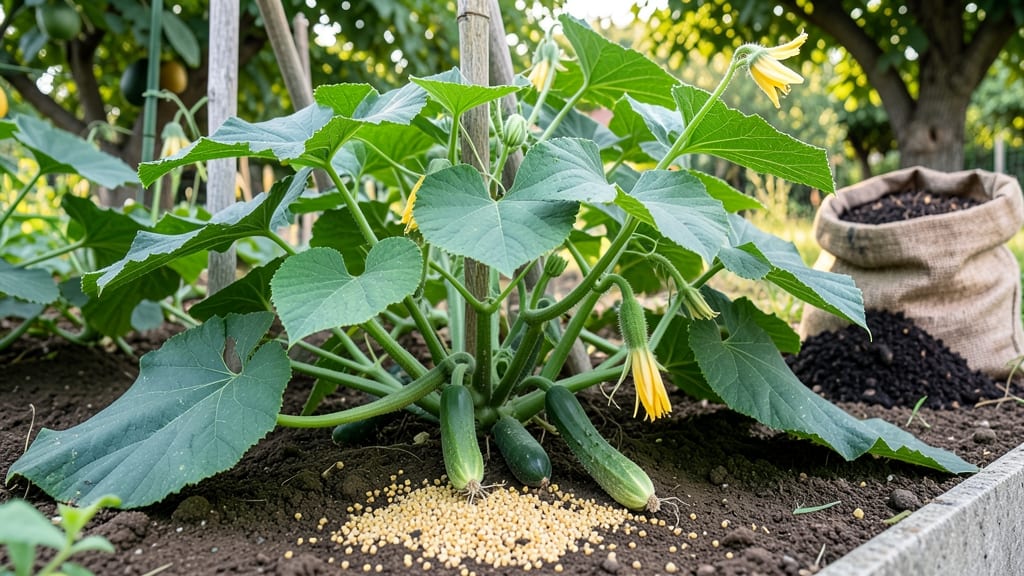
To fertilize cucumbers at the right times means feeding them just as they’re about to take off — not too early, not too late, but right when their roots can use the boost.
Picture this: you’ve spent weeks tending to your 🥒 plants, only to watch them put out leaves but no fruit. That’s often a sign you missed the window for feeding. Cucumbers are hungry growers, but timing matters more than anything else.
In this guide, I’ll walk you through the exact stages to fertilize — from pre-planting to fruiting — so you never over- or under-feed again. We’ll also cover when to skip it entirely, because yes, there are times when your cucumbers don’t need a thing.
By the end, you’ll have a soil-tested schedule that maximizes yield without burning your plants. Ready to turn those vines into a harvest?
Soil test-based fertilizing schedule for cucumbers by growth stage
A soil test is your secret weapon for cucumber success. These plants thrive when fed at the right growth stages, but over-fertilizing can burn roots or delay fruiting. I’ve broken down the science-backed schedule based on N-P-K ratios and organic vs. synthetic options to maximize your harvest without waste.
First, test your soil’s pH (6.0-6.8 ideal) and nutrient levels. Cucumbers need balanced nutrition—too much nitrogen early stunts flowers, while phosphorus and potassium shortages reduce fruit set. Let’s dive into the stage-by-stage plan that aligns with your soil’s needs.
For organic gardeners, compost tea or worm castings work year-round. I’ve had the best results with a 5-5-5 organic blend during flowering—it’s gentle but packed with micronutrients like calcium to prevent blossom-end rot. Synthetic fertilizers like 10-10-10 are faster-acting but require precise measurements to avoid salt buildup.
If your soil test shows low nitrogen (below 80 ppm), side-dress with alfalfa meal when vines hit 12 inches. For phosphorus-deficient soil (below 60 ppm), work in rock phosphate granules 3 inches deep before planting. Potassium shortages? Try greensand or wood ash (use sparingly—too much raises pH).
Timing is everything: never fertilize when plants are stressed (wilting, disease, or extreme heat). I once overdid it during a heatwave, and my cucumbers wilted despite deep watering.
Always fertilize in the early morning so roots absorb nutrients before the sun peaks. Split applications every 3-4 weeks prevent nutrient runoff and keep roots happy.
Pro tip: Mulch heavily after fertilizing to lock in moisture and slow nutrient release. Straw or shredded leaves work perfectly. I’ve seen yields double when I combine this schedule with drip irrigation—consistent moisture helps roots access those nutrients without competition from weeds.
Watch for leaf color changes: dark green leaves mean nitrogen is sufficient, while yellowing between veins signals magnesium deficiency. In that case, a foliar spray of Epsom salt (1 tbsp per gallon) works wonders.
Adjust your schedule based on plant behavior—if flowers drop off, it’s time to shift to a phosphorus-heavy feed.
Stop fertilizing 4-6 weeks before your first frost. Cucumbers won’t recover from late-season feeding, and excess salts can linger in the soil. I always mark my calendar to pause by mid-August in Zone 6a. Let the plants focus on ripening what’s already on the vine—you’ll thank me at harvest time.
Remember: less is more with cucumbers. These plants are heavy feeders but hate being overfed. Start with your soil test results, follow this stage-by-stage plan, and soon you’ll be swimming in crisp, homegrown cucumbers instead of struggling with stunted vines. Happy growing!
Signs your cucumbers need fertilizer (and when to avoid it)
Your cucumber plants might be silently screaming for nutrients without you realizing it. Yellowing leaves, especially on older foliage, often signal nitrogen deficiency, while stunted vines or small leaves can mean phosphorus or potassium shortages.
Even if your plants look healthy, poor fruit set—like flowers dropping off—can indicate a hidden nutrient imbalance.
Before reaching for fertilizer, check your soil moisture and recent watering habits. Overwatering can mimic nutrient deficiencies by leaching essential minerals, while underwatering stresses plants, making them appear nutrient-starved. Always ensure your cucumbers have 1-2 inches of water weekly before diagnosing fertilizer needs.
⚠️ callout warning ⚠️
- Early spring before soil warms to 60°F—cold soil locks out nutrients.
- Within 2 weeks of transplanting—roots need time to establish.
- Late summer when plants show wilted leaves or yellowing veins—signs of disease, not deficiency.
- After first frost—plants are dormant and won’t use nutrients.
Over-fertilizing at these times burns roots or promotes leafy growth over fruit production.
If your cucumbers are flowering but not fruiting, they may need a phosphorus boost (look for a 10-20-10 fertilizer ratio). Dark green leaves with purple stems?
That’s a classic sign of phosphorus deficiency. For weak stems or small cucumbers, potassium-rich fertilizers (like 0-0-50) can help strengthen vines and improve fruit quality.
Timing matters just as much as type. Side-dress with a balanced fertilizer (like 5-5-5) when vines reach 12 inches tall, and repeat every 3-4 weeks during the growing season. Avoid fertilizing after mid-August—new growth won’t mature before frost, leaving you with bitter cucumbers.
Watch for burnt leaf edges after fertilizing—a sure sign of over-application.
If this happens, flush the soil with 2 inches of water to dilute excess salts. Organic options, like compost tea or fish emulsion, are gentler and release nutrients gradually, reducing burn risks while feeding your plants exactly what they need.
Pro tip: Mulch heavily around cucumber plants to retain moisture and slow nutrient leaching. This mimics natural soil conditions and gives your plants steady access to nutrients between feedings.
When in doubt, test your soil—a simple DIY kit can reveal if your cucumbers are starving or swimming in excess fertilizer.