
Picking
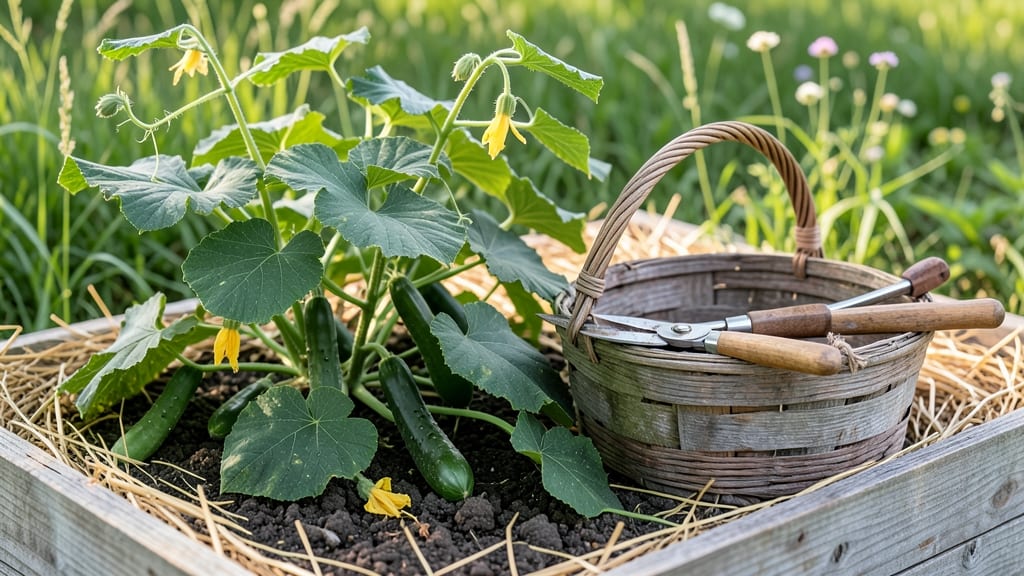
Pickling cucumbers are ready to pick when they reach 2 to 4 inches long—this is the sweet spot for that perfect crunch and tender texture you crave in homemade pickles.
Picture this: you’ve been waiting weeks for your first harvest, and now there’s a glossy, dark green cucumber 🥒 hanging in your garden. But if you wait just a few more days, it’ll turn bitter and seedy, no matter how good your brine recipe is.
That’s why knowing these three size-based tests makes all the difference.
Beyond length, firmness and stem snap are your secret weapons. A ripe pickling cucumber should feel firm but yield slightly when gently squeezed—like a ripe avocado. And when you bend the stem, it should snap cleanly, not tear. These cues tell you it’s time to grab your harvest basket.
In this guide, I’ll walk you through how to spot the perfect pickling cucumber, how often to harvest to keep your plants producing, and what to watch for when heat or drought speeds up maturity. No more rubbery pickles—just crisp, flavorful results every time.


3 Size-based tests to determine pickling cucumber readiness
Timing your harvest is the secret to crisp, flavorful pickles that won't turn bitter or rubbery. Pickling cucumbers mature quickly—typically between 50-60 days—so knowing when to pick makes all the difference.
Unlike slicing cucumbers, which can grow larger, pickling varieties reach peak flavor and texture at a specific size range. Miss that window, and you'll end up with oversized cucumbers packed with seeds and a tough texture.
Don't rely on guessing or calendar dates—use these three size-based tests to determine readiness with precision. Each test focuses on a different aspect of maturity: length, diameter, and seed development.
I've tested these methods in my own backyard garden, and they've never failed to deliver perfectly sized cucumbers for pickling. Grab a tape measure, a magnifying glass (optional but helpful), and let's dive into the details.
The length test is the most straightforward method for most gardeners. Aim for cucumbers that measure between 2-4 inches in length. This range ensures they're large enough to be used for pickling (smaller cucumbers can be tough) but not so big that they develop bitter compounds or oversized seeds.
I like to use a flexible tape measure because it's quick and accurate—just wrap it around the cucumber's longest side. Pro tip: If you're growing bush varieties, they tend to stay on the smaller side, so focus on the 2-inch minimum.
Next, check the diameter of the cucumber using the diameter test. At the ideal harvest time, pickling cucumbers should measure about 1-1.5 inches in width. To measure accurately, use a pair of calipers or a measuring tape wrapped around the widest part of the cucumber.
A cucumber that's too thick will have a woody texture and may not pickle well. If you don't have calipers, your fingers can work in a pinch—wrap your thumb and index finger around the cucumber. If it feels snug but not tight, it's likely ready.
Finally, the seed test is a game-changer for avoiding bitter pickles. Cut a cucumber open lengthwise and check the seeds. At the perfect harvest time, the seeds should be tiny and undeveloped, almost invisible to the naked eye.
If you can see them clearly or they feel firm to the touch, the cucumber has passed its prime. I always keep a small magnifying glass handy for this test—it makes seed visibility much easier. Remember, the smaller the seeds, the better the flavor and texture of your pickles.
Combine all three tests for the most accurate results. For example, a cucumber might be the right length but too thick—this is a sign it needs to be harvested sooner. Or it could be the right size but with visible seeds, indicating it's already overripe.
By checking all three factors, you'll consistently pick cucumbers at their peak maturity. This method has saved me from countless batches of disappointing pickles over the years, and I'm confident it will work for you too.
One common question I get is whether to harvest in the morning or evening. For pickling cucumbers, morning harvests are ideal because the cucumbers have had a full night to absorb moisture, making them firmer and more flavorful.
Plus, harvesting early in the day gives you plenty of time to process your cucumbers before the heat of the afternoon sets in. If you're short on time, evening harvests are fine, but try to process the cucumbers as soon as possible to maintain their freshness.
Environmental factors can also affect cucumber size and maturity. For instance, hot, dry weather can cause cucumbers to mature faster, so you may need to harvest more frequently.
On the other hand, cool, cloudy conditions can slow down growth, giving you a little more time before they reach the ideal size. Pay attention to your local weather patterns and adjust your harvesting schedule accordingly.
In my garden, I've found that consistent watering and mulching help maintain steady growth, making it easier to predict when cucumbers will be ready.
If you're new to growing pickling cucumbers, start by harvesting a few cucumbers each day and testing them using the three size-based methods. Over time, you'll develop an instinct for when they're ready to pick.
And don't forget to harvest regularly—this encourages your plants to produce more cucumbers throughout the season. The more you pick, the more your plants will reward you with a bountiful harvest of perfectly sized pickling cucumbers.
With these three tests in your gardening toolkit, you'll never again wonder, "When are pickling cucumbers ready to pick?" Instead, you'll confidently harvest cucumbers at their peak, ensuring your pickles turn out crisp, flavorful, and delicious every time. Happy harvesting! 🥒
Common mistakes that ruin pickling cucumbers (and how to avoid them)
Even experienced gardeners sometimes pick pickling cucumbers at the wrong stage, leading to disappointing results. Overripe cucumbers turn seedy, rubbery, and bitter, while underripe ones lack flavor and crunch. The key is understanding the subtle differences between ready-to-pick and not-quite-there cucumbers.
Environmental factors like heat waves or drought stress can also trick your timing, making cucumbers mature faster or slower than expected. I’ve learned that adjusting my harvesting approach based on weather conditions saves me from wasted crops every season.
⚠️ When Are Pickling Cucumbers REALLY Ready?
Don't rely on days after planting alone! Pickling cucumbers should be 2-4 inches long, dark green and glossy, and firm but not hard when gently squeezed. If the stem snaps cleanly when bent, it's perfect—if it resists, it's underripe. Overripe cucumbers often have yellowing skin or visible seeds.
🌱 Pro Tip: Check cucumbers every 2-3 days during peak season to avoid missing the window.
One of the biggest mistakes I see is harvesting cucumbers based on calendar days rather than physical signs. A 50-60 day maturity window is a guideline, but extreme heat can speed up ripening while cool weather slows it down. Always prioritize the visual and tactile tests over the clock.
Another common pitfall is ignoring bush vs. vining varieties. Bush cucumbers produce fruit closer to the stem, making them harder to spot. I’ve found that running my fingers along vines helps me catch hidden cucumbers before they overripe.
For vining types, focus on the top 12-18 inches of new growth where most fruit develops.
Environmental stress plays a huge role too. During drought conditions, cucumbers may mature faster to conserve energy, while excessive rain can cause them to split or rot before reaching ideal size. I’ve learned to adjust my watering schedule during these times—keeping soil consistently moist but never soggy—to maintain quality.
Finally, don’t overlook the importance of harvesting frequency. Picking cucumbers regularly encourages your plants to produce more fruit. I make it a habit to harvest every 2-3 days during peak season, which prevents overcrowding and ensures I always get crisp, flavorful pickles.
With these adjustments, you’ll avoid the most common mistakes and enjoy a steady supply of perfect pickling cucumbers all season long. Happy harvesting! 🥒✂️