
Companion Plants
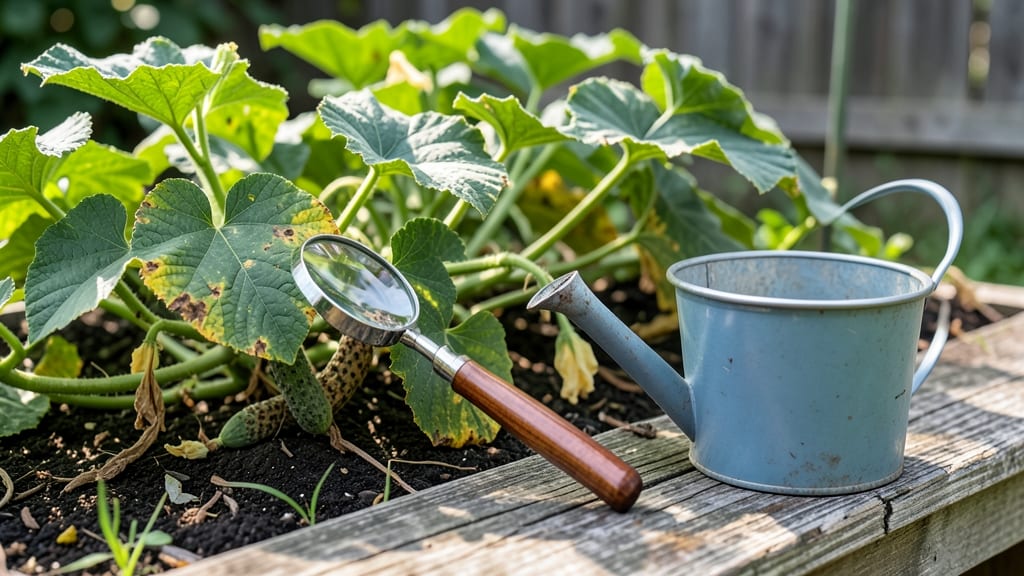
Cucumber plants communicate their struggles through subtle visual cues—yellowing leaves often signal overwatering or nitrogen deficiency, while powdery white spots confirm fungal infections like mildew. 🌱 I’ve found that aphids and spider mites thrive in dry conditions, so inspect the undersides of leaves for tiny webs or clusters of insects.
The key is acting fast: prune affected areas, apply neem oil for pests, and ensure proper drainage to prevent root rot.
For nutrient deficiencies, a balanced organic fertilizer or compost tea can work wonders. If your soil feels compacted, aerate it to improve root health. Remember, cucumbers are heavy feeders—consistent care prevents most issues before they start.
💡 In This Article
- Identifying Cucumber Plant Problems by Leaf Symptoms
- Step-by-Step Fixes for Sick Cucumber Plants
Identifying cucumber plant problems by leaf symptoms
Cucumber leaves act like a diagnostic chart for plant health, where color and texture reveal the root cause. Yellowing leaves, for example, often start between the veins—a classic sign of iron or magnesium deficiency.
This happens when soil pH exceeds 7.0, locking out these nutrients. 🌿 The yellowing spreads from older leaves first because the plant prioritizes feeding new growth. In contrast, uniform yellowing across all leaves suggests overwatering, where roots suffocate in soggy soil and can't absorb nutrients efficiently.
Powdery white spots on upper leaves are unmistakable signs of powdery mildew, a fungal infection that thrives in humid conditions (above 75% humidity and temperatures between 60-80°F). The fungus spreads via wind and water droplets, creating a chalky texture that blocks sunlight and stunts photosynthesis.
Dark brown or black spots with yellow halos, however, indicate bacterial leaf spot, often spread by splashing water during irrigation. Both conditions require immediate action to prevent systemic infection.
Wilting leaves during hot afternoons may signal underwatering, but check the soil first—cucumbers need 1-1.5 inches of water per week, delivered at the base to avoid fungal splashes.
If the soil feels dry only at the surface but moist below, roots may be struggling due to compacted soil or poor drainage. A simple test is to gently tug on a leaf; if it resists but the stem feels mushy, root rot from overwatering is likely the culprit.
Pests like aphids and spider mites leave distinct clues too. Aphids cluster on new growth, excreting sticky honeydew that attracts sooty mold, while spider mites create fine webbing on leaf undersides.
These pests thrive in dry, dusty conditions, so increase humidity with mulch or overhead misting (early morning only) to deter them. 🌱 The key is matching symptoms to their specific triggers—like how powdery mildew loves crowded plants with poor airflow, while aphids prefer stressed, nutrient-deficient hosts.
For accurate diagnosis, examine leaves under bright light and compare symptoms to a cucumber plant health chart. For instance, magnesium deficiency causes interveinal yellowing that progresses to brown, while nitrogen deficiency turns leaves uniformly pale green.
The location of symptoms—older leaves vs. new growth—narrows down the issue to nutrient transport patterns within the plant.
Don't overlook environmental factors like sudden temperature drops or wind damage, which can cause physical leaf tears or bruising. Cucumbers are sensitive to cold snaps below 50°F, where leaves may develop a glassy, translucent appearance.
Always rule out abiotic stresses (non-living causes) before assuming biotic problems like disease or pests.