
Planting
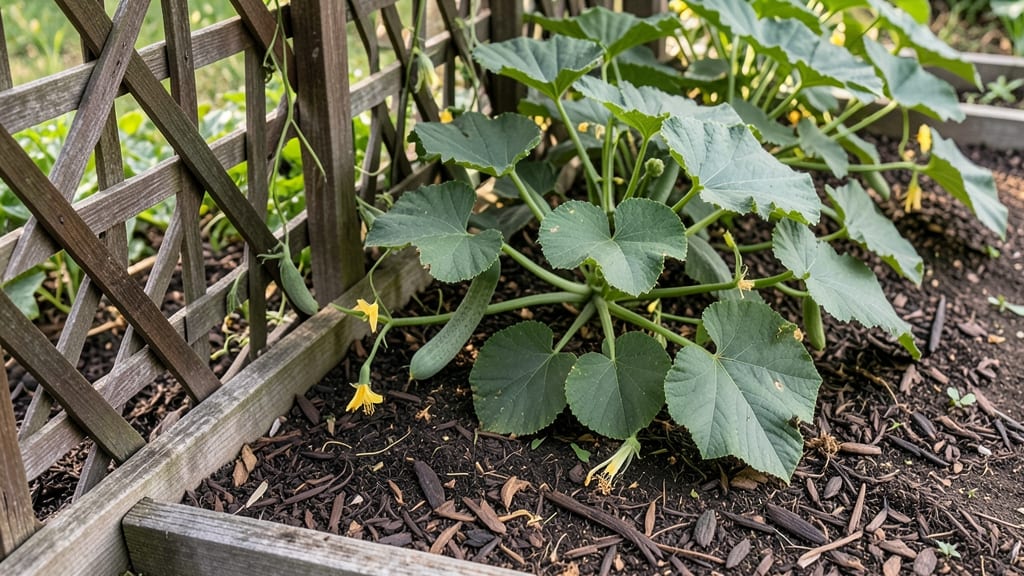
Growing cucumber plants transform from tiny seedlings into sprawling vines that look like nature’s own jungle gym. 🌱 The first leaves are round and fuzzy, but as they mature, you’ll spot the classic jagged, lobed leaves that make cucumbers instantly recognizable—each one a perfect fingerprint of the plant’s identity.
By the time flowers appear, you’ll notice delicate yellow blossoms that look like tiny trumpets, signaling it’s time to watch for fruit.
The vines themselves are sturdy but flexible, climbing or sprawling depending on support, with tendrils that curl around anything they can grab—like a plant version of a curious toddler.
When fruit starts forming, you’ll see small green bumps that grow into the cucumbers you know and love. Healthy plants have glossy leaves, strong stems, and flowers that open wide in the morning—anything wilting or yellowing means it’s time to check for pests or water issues.
This visual journey from seed to harvest happens faster than you think, especially in warm weather. With the right care, your cucumber plants will go from "what’s that?" to "where did all these cucumbers come from?" in just a few short weeks.
📚 In This Guide
- What you need
- Instructions
- Tips and common mistakes
- Wrapping up and next steps
What you need
- ● Cucumber Seeds: 3–5 seeds (or 1–2 starter plants if transplanting). Choose heirloom or hybrid varieties like 'Straight Eight,' 'Lemon Cucumber,' or 'Marketmore.'
- ● Containers or Garden Space: Containers: 5-gallon pots or larger (at least 12" deep) with drainage holes. Quantity: 1 per plant (or 1 large container for multiple plants).
- ● Garden Beds: Full sun (6–8+ hours daily), well-draining soil, and space 12–24" apart (vines spread!).
- ● Potting Mix: 1–2 bags of high-quality, sterile seed-starting mix or well-draining garden soil (avoid heavy clay).
- ● Fertilizer: Balanced Fertilizer: 10-10-10 or 5-5-5 (organic or synthetic). Use: 1 tbsp per plant at planting, then every 3–4 weeks.
- ● Compost: 1–2 cups mixed into soil for nutrients.
- ● Watering Tools: Watering can with a rose attachment (for gentle watering).
- ○ Drip irrigation or soaker hose (optional but highly recommended for consistent moisture).
- ● Support Structures: Trellis: 4–6 ft tall (bamboo, metal, or netting). Quantity: 1 per plant (or shared for bush varieties).
- ● Cage or Stakes: 3–4 ft tall (for compact varieties).
- ● Mulch: Straw, shredded leaves, or black plastic (to retain moisture and suppress weeds).
- ● Grow Lights: LED clip lights for seedlings if natural light is <12 hours/day.
- ● Pruning Shears: For trimming excess vines or yellow leaves.
- ● Plant Tags: To label varieties and track progress.
- ● Insect Nets: To protect from pests like cucumber beetles.
- ● pH Test Kit: Ideal soil pH for cucumbers: 6.0–6.8.
How to identify healthy cucumber vine development at each stage
Cucumber plants transform dramatically from seed to harvest—here's what to watch for at every growth checkpoint.
🌱 Step 1: Germination and Seedling Emergence
New cucumber seedlings pop through the soil in 5-10 days at 70-80°F soil temperatures. You'll see tiny round cotyledons (the first leaves) unfurling first—these look like fat, rounded baby leaves, not the familiar vine leaves. The stem will be thin and pale green, often bending toward the light immediately.
Don't be fooled by the delicate appearance—cucumber seedlings are tougher than they look. If you see yellowing cotyledons, it's usually from overwatering or poor drainage. Wait until true leaves (the second set, shaped like tiny cucumbers) appear before handling the plants. This usually happens 7-14 days after germination.
🌿 Step 2: Vegetative Growth Phase
Once true leaves appear, the plant enters its rapid growth phase. You'll notice 5-7 inch vines within 2-3 weeks, with leaves growing 3-5 inches wide. Healthy cucumber leaves have rough, jagged edges and a deep green, slightly waxy surface. The stems thicken noticeably and develop hairy texture—this is normal and helps identify them.
Watch for main vines (the thickest stems) and side shoots (thinner growths from leaf axils). The main vine should be at least 1 inch thick by flowering time. If you see yellowing lower leaves, it's often from powdery mildew—spray with neem oil immediately. This phase lasts 3-4 weeks before flowering begins.
☀️ Step 3: Flowering and Pollination
Male flowers appear first—small, single-stemmed with no swelling at the base. Female flowers follow 7-10 days later and have a tiny cucumber-shaped bump where fruit will develop. Both flower types are yellow, about 1 inch wide, and open in the morning.
For best fruit set, hand-pollinate if bees are scarce. Gently touch male flowers to female flowers with a paintbrush. You'll know pollination worked when the tiny cucumber swells within 3-5 days. Healthy plants produce 5-10 flowers per node—if you see fewer than 3 flowers per vine section, the plant may need more sunlight or fertilizer.
🍉 Step 4: Fruit Development and Maturity
Immature cucumbers start as 1-2 inch green bulbs attached to female flowers. Healthy fruit grows 1-2 inches per week and develops smooth, bumpy, or ridged skin depending on the variety. The stem end remains slightly swollen while the blossom end stays pointed.
Harvest when cucumbers reach full size (check variety tags) and before seeds turn hard. Overripe cucumbers develop yellow patches or woody texture. You'll see new fruit forming at the same time—this means the plant has 2-3 weeks of continuous production ahead. Prune side shoots beyond the first 5-7 nodes to direct energy to fruit production.
⏰ Step 5: Late Season and Vine Decline
As the plant matures, you'll notice older leaves yellowing and new growth slowing. The main vine may develop brown spots or mushy stems near the base—this is normal aging. However, if entire sections wilt suddenly, it could be cucumber mosaic virus or bacterial wilt. Remove infected plants immediately to prevent spread.
In cool climates, vines may produce smaller fruit late in the season. This is normal—harvest any remaining cucumbers before the first frost. You'll know it's time to stop when all new flowers drop and no new fruit sets for 7-10 days. Save seeds from the healthiest cucumbers for next year by fermenting them in a jar for 3-5 days before drying.
Tips & tricks for identifying healthy cucumber vine growth
Here's what nobody tells you about spotting cucumber plant health at each stage—these details make all the difference.
Seedling Survival: Those first 5-10 days after planting are critical. Keep soil consistently moist (not soggy) during this window—cucumber seedlings can't handle dry spells. I've lost count of how many times I nearly gave up when seedlings looked weak, only to realize they just needed patience. The true leaves (tiny cucumber-shaped ones) are your green light to handle plants gently—they're more resilient than they appear.
Leaf Texture Matters: Healthy cucumber leaves have that signature rough, jagged edge and deep green color. If you notice leaves developing a powdery white coating during the 3-4 week vegetative phase, that's powdery mildew—act fast with neem oil. I've seen plants recover completely when caught early, but neglected cases can spread like wildfire. The hairy stems are normal, but if they feel slimy, you're dealing with bacterial wilt.
Flowering Clues: When male flowers appear first, count 7-10 days until female flowers show their tiny cucumber-shaped bumps. This timing tells you exactly when to expect fruit. I always mark my calendar when I see the first male flowers—it's my cue to start checking for female flowers. If you see fewer than 3 flowers per vine section, boost sunlight or add a balanced fertilizer. The 3-5 day swelling after pollination is your confirmation the process worked.
Harvest Timing: The 1-2 inch weekly growth is your guide for harvest readiness. I check cucumbers when they reach full size (as noted on seed packets) and before seeds harden. The stem end's swollen look while the blossom end stays pointed is a foolproof way to tell when they're perfect. Waiting too long means woody texture and bitter flavor—trust me, I've learned this the hard way!
Pro Tips for What Does A Growing Cucumber Plant Look Like
- Here's what nobody tells you about spotting cucumber plant health at each stage—these details make all the difference.
- Seedling Survival: Those first 5-10 days after planting are critical.
- Leaf Texture Matters: Healthy cucumber leaves have that signature rough, jagged edge and deep green color.
Frequently asked questions
Got questions about your cucumber plant’s growth stages?
Here are answers to the most common ones—from curious seedlings to lush vines ready for harvest!
How long does it take for a cucumber plant to go from seed to harvest?
A cucumber plant typically takes 50–70 days from seed to harvest, depending on the variety. Fast-maturing types (like ‘Straight Eight’) may produce fruit in as little as 45 days, while heirlooms can take up to 80 days. Warm soil and consistent moisture speed up growth—so keep those seeds cozy!
Why are my cucumber leaves turning yellow?
Yellowing leaves (a condition called chlorosis) usually mean overwatering, nutrient deficiency (like nitrogen or magnesium), or poor drainage. Check the soil—it should stay moist but not soggy. If the problem persists, test your soil’s pH (ideal: 6.0–6.8) and feed with a balanced fertilizer.
Should I prune my cucumber vines? And how?
Pruning isn’t always necessary, but it helps improve airflow and fruit production. For bush varieties, trim leggy vines back by 1/3 to encourage bushier growth. For vining types, remove suckers (side shoots) and yellow leaves. Use clean, sharp shears and avoid cutting more than 20% of the plant at once!
When is the best time to harvest cucumbers?
Harvest cucumbers when they’re firm, bright green, and 6–8 inches long (or per your variety’s ideal size). Waiting too long turns them bitter or seedy. Use a sharp knife or pruners to cut stems—never pull the fruit, or you might damage the vine. Check daily for ripe picks; frequent harvesting encourages more production!
Can I grow cucumbers in containers? What size pot do I need?
Cucumbers thrive in containers if given enough space. For bush varieties, a 5-gallon pot works; for vining types, aim for 10+ gallons or a trellis to save space. Use well-draining soil, fertilize regularly, and place the pot in full sun (6+ hours/day). Just watch for pests—containers dry out faster!
Wrapping up and next steps
Watching a cucumber plant transform from a tiny seedling to a thriving vine is one of the most rewarding gardening experiences! 🌱 From delicate sprouts to sprawling vines and finally juicy fruits, each stage is a testament to nature’s magic.
Now that you know what a growing cucumber plant looks like, you’re ready to nurture your own green treasure.
Ready to take the next step? Start with a seed or seedling—your garden (and future salads) will thank you! 🥒💚