
Companion Plants
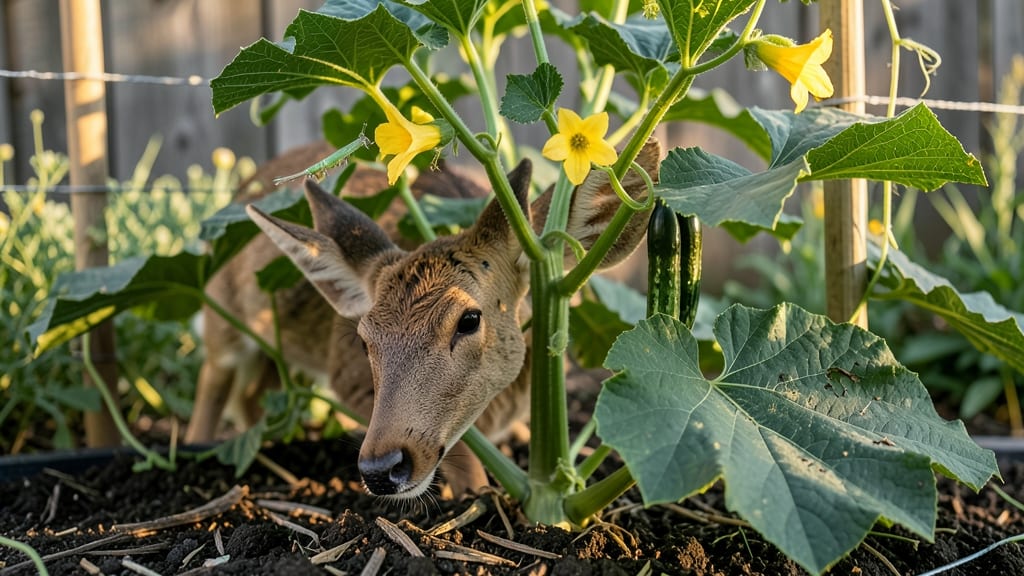
Animals that eat cucumber plants include deer, rabbits, squirrels, slugs, and cucumber beetles, which can devastate foliage, vines, and fruits. Physical barriers, companion planting, and organic sprays help deter them effectively.
Cucumber plants face threats from both large mammals and tiny pests, each targeting different parts of the plant. Deer and rabbits often strip entire vines down to the ground, while cucumber beetles lay eggs that hatch into larvae capable of tunneling into fruits.
Slugs, on the other hand, leave behind ragged holes in leaves and soft stems, creating entry points for disease. 🌱 The key to protecting your garden lies in understanding these behaviors—whether it's using floating row covers for beetles or creating physical barriers for rabbits, proactive measures save your harvest before damage becomes irreversible.
What makes this especially frustrating is how quickly these pests multiply once they find a food source. A single cucumber beetle can lay hundreds of eggs in a season, and slugs thrive in moist conditions, making them particularly aggressive after rain.
That's why I always recommend combining multiple defense strategies—like planting marigolds to repel beetles and setting up beer traps for slugs—rather than relying on just one method.
For gardeners dealing with deer, a simple fence can be surprisingly effective, but be sure to bury it at least 12 inches deep to prevent digging underneath.
Organic sprays like neem oil work well for beetles and other insects, but timing is everything—apply them in the early morning or evening when beneficial insects are less active. The goal is to protect your plants without harming the ecosystem.
💡 In This Article
- Common Cucumber Plant Predators and Their Damage Patterns
- Natural and Organic Protection Methods for Cucumber Gardens
Common cucumber plant predators and their damage patterns
Deer and rabbits are the heavyweights in cucumber garden destruction, capable of stripping entire plants down to the stems in a single night. Deer, with their 30-inch reach, can easily access garden beds, while rabbits use their sharp incisors to chew leaves and tender shoots at ground level.
The damage appears as large, jagged holes in foliage and completely defoliated vines, which weakens the plant's ability to photosynthesis and produce fruit. 🦌 What's worse is their timing—spring and early summer are peak feeding seasons when young plants are most vulnerable.
Cucumber beetles, both striped and spotted varieties, target cucumbers at every growth stage. Adult beetles chew on leaves, creating shotgun-like holes and leaving behind a foul-smelling sap that attracts more pests.
Their larvae, known as cucumber rootworms, burrow into the soil to feed on roots, while others tunnel into developing fruits, causing them to rot from the inside. A single beetle can lay upstrong>300 eggs during its lifespan, creating a rapid infestation that can wipe out an entire crop in weeks.
The beetles are most active during late spring and early summer, aligning with cucumber planting seasons.
Slugs may be small, but their damage adds up quickly, especially after rain when they emerge from hiding. These nocturnal pests leave behind silver slime trails and create irregular holes in leaves, often targeting the softer new growth.
They also feed on young fruits, leaving behind ragged, uneven bites that make produce unmarketable. The worst part? Slugs thrive in moist, shaded conditions, making them particularly aggressive in cucumber patches where vines create natural cover.
A single slug can consume up to 50 square inches of leaf surface in one night. 🐌
Squirrels, though less common, can be particularly destructive when they discover a thriving cucumber patch. They'll gnaw on both leaves and fruits, often carrying off entire cucumbers to eat elsewhere. The damage appears as clean, precise bite marks around the fruit's circumference, making it easy to identify their handiwork.
Unlike other pests, squirrels are opportunistic feeders that may only target your garden when other food sources are scarce, typically in late summer when natural food supplies dwindle.
The lifecycle stages of these pests create predictable windows of vulnerability. Cucumber beetles overwinter in garden debris, emerging in spring to lay eggs on cucumber plants. Slugs hatch from eggs laid in soil, becoming active when conditions are moist.
Deer and rabbits, meanwhile, are year-round threats but focus on tender new growth in spring. Understanding these patterns allows gardeners to time their protective measures most effectively—like applying row covers before beetle emergence or setting up slug traps after rain. 🌱
What most gardeners don't realize is how these pests work together to create compounded damage. For example, deer browsing can stress plants, making them more susceptible to beetle infestations. Similarly, slug damage creates entry points for fungal diseases that can further weaken cucumber plants.
This interconnected damage is why comprehensive pest management requires addressing multiple threats simultaneously rather than treating each one in isolation.