
Pruning
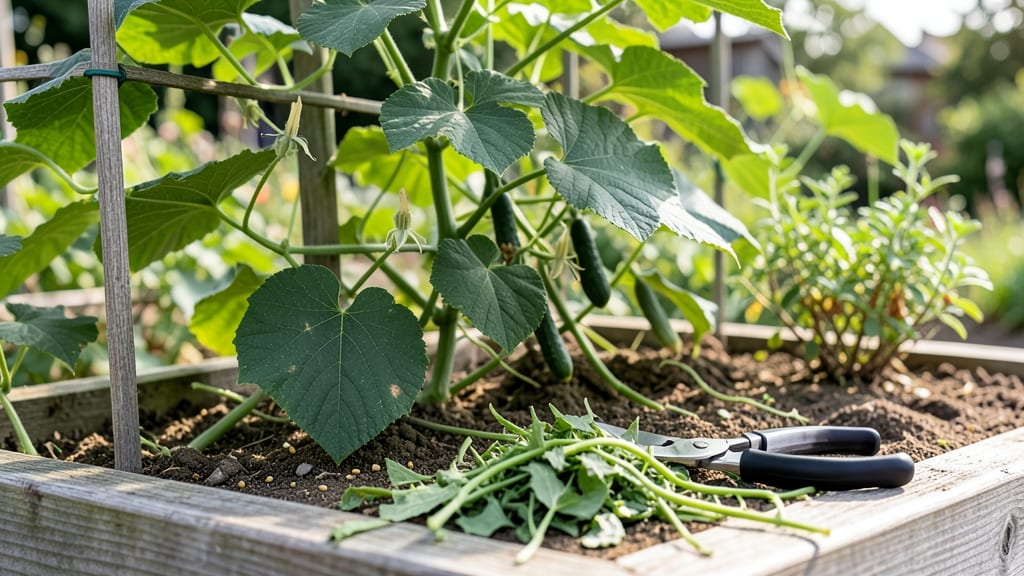
Pruning cucumber plants turns floppy vines into productive powerhouses. 🌱 I used to think trimming cucumbers was counterintuitive—why cut when you want more fruit?—until I learned how strategic pruning actually boosts yields by directing energy to the best stems and flowers.
The secret lies in shaping the plant early, before it gets overwhelmed by its own growth.
You’ll need just three basic tools: sharp pruning shears, clean gardening gloves, and a small spray bottle of diluted bleach for sterilizing cuts. The best time to start is when vines reach about 12 inches tall, removing any weak or crossing stems that compete for sunlight and nutrients.
This isn’t about hacking back growth—it’s about sculpting the plant to focus its energy where it counts.
Within 2-3 weeks, you’ll notice thicker, stronger vines with more flowers and fruit. The plant invests less energy in maintaining weak growth and more in producing the cucumbers you actually want to harvest. Plus, improved airflow keeps diseases like powdery mildew at bay, so your plants stay healthy longer.
This method works for both bush and vining cucumbers, whether you’re growing in the ground or containers. The key is consistency—prune regularly throughout the season to maintain that bushy, productive shape. Here’s how to do it right without sacrificing your harvest.
📚 In This Guide
- What you need
- Instructions
- Tips and common mistakes
- Wrapping up and next steps
What you need
- ● Pruning shears or sharp bypass pruners – Look for stainless steel blades (4-6 inches long) to avoid crushing stems.
- ● Clean, sharp scissors or garden knife – For smaller cuts or delicate vines (backup option).
- ○ Gloves (optional but recommended) – Thick gardening gloves protect against thorns and sap.
- ● Disinfectant (70% isopropyl alcohol or bleach solution) – 1 part bleach to 9 parts water—sterilize tools between cuts to prevent disease.
- ● Compost bin or bucket – For trimmings (avoid leaving them near plants to deter pests).
- ● Healthy, established cucumber plants – Wait until vines are 12+ inches tall (usually 3–4 weeks after planting).
- ● Sunny, dry day – Avoid trimming after rain or in extreme heat to reduce stress on plants.
- ● Patience and a keen eye – Spend 10–15 minutes observing growth patterns before cutting!
Step-by-Step guide to pruning cucumber plants for maximum growth
Here’s how I transform leggy, unproductive vines into bushy, fruit-loaded powerhouses.
✂️ Step 1: Identify and Remove Suckers for Better Airflow
Suckers are the small shoots that grow between the main stem and leaf branches. These energy vampires drain your plant instead of fueling fruit production. Using clean, sharp pruning shears, snip them off at the base—never leave a stub, or it’ll regrow. I always start with the lowest suckers first, working my way up the vine every 5-7 days.
Watch for new suckers emerging from the leaf axils (the spot where a leaf meets the stem). If left unchecked, they’ll create a tangled mess that blocks sunlight and invites disease. The goal is to keep only 2-3 main vines per plant—this forces energy into fewer, stronger branches that produce more fruit.
🌿 Step 2: Prune Leggy Growth to Encourage Bushier Structure
If your cucumber vines stretch tall and thin, they’re desperate for light and struggling to support fruit. Pinch back the tips of the main stems when they reach 12-18 inches tall—this triggers branching. I like to do this in the morning so wounds have all day to heal before evening moisture sets in.
Leggy growth often happens when plants are crowded or don’t get enough light. After pruning, you’ll see new side shoots emerge within 3-5 days. These lateral branches are where most of your fruit will develop, so encourage them by tying the main stem to a trellis or stake for vertical support.
☀️ Step 3: Thin Foliage for Sunlight and Air Circulation
Overly dense leaves create a humid microclimate that breeds powdery mildew and bacterial spots. Remove 25-30% of the oldest, yellowing leaves from the bottom of the plant, starting with those closest to the soil. Use your fingers to gently twist leaves off—no need for shears here.
Focus on leaves that block sunlight from reaching the lower fruit. You’ll know you’ve done enough when you can see light filtering through the canopy and air moving freely around the vines. This simple step can double your yield by letting more sunlight reach developing cucumbers.
⏰ Step 4: Maintain Regular Pruning Through the Season
Cucumbers grow aggressively, so pruning isn’t a one-time task. Every 7-10 days, inspect your plants for new suckers, leggy growth, or crowded foliage. I set a reminder on my phone—skipping even one pruning cycle lets problems spiral out of control.
As fruit develops, prune any leaves directly above clusters of cucumbers to improve airflow and reduce rot. Stop pruning 2-3 weeks before your first frost, as new growth won’t harden off in time. By then, your plants should be covered in fruit, not leaves.
🌱 Step 5: Harvest and Prune for Continuous Production
Harvest cucumbers when they’re 6-8 inches long and firm to the touch—this encourages the plant to produce more. After picking, check the same vine for any remaining suckers or overgrown leaves and trim them immediately. I keep a small bucket nearby to avoid dropping fruit on the soil.
Regular harvesting is the final pruning step. When you remove ripe cucumbers, you’re also signaling the plant to redirect energy into new growth. This creates a feedback loop: more pruning = more sunlight = more fruit. By season’s end, you’ll have a vine that looks like a bush, not a tangled vine.
Tips & tricks for pruning cucumber plants like a pro
Transforming those sprawling cucumber vines into productive powerhouses takes more than just snipping—it’s about strategic timing and technique that most gardeners miss.
Timing is Everything: The 5-7 day cycle for removing suckers (Step 1) might seem frequent, but cucumbers grow fast—skipping this schedule lets those energy-sapping shoots take over. I’ve learned the hard way that waiting even a week too long means battling tangled vines by midseason. For best results, set a recurring reminder on your phone or garden journal to avoid missing a cycle. Morning pruning is ideal because it gives wounds time to heal before evening moisture sets in, reducing disease risk.
Visual Cues for Pruning Success: In Step 3, you’ll know you’ve thinned foliage properly when sunlight filters through the canopy like a dappled forest floor. Aim to remove 25-30% of the oldest leaves—these are the ones blocking light from reaching developing fruit. Look for leaves that are yellowing or touching the soil; these are prime candidates. I always start with the bottom leaves because they’re the most likely to harbor pests and diseases. Pro tip: If you can see the sky through your plant’s leaves, you’ve done enough.
Equipment Matters: While fingers work for leaf removal, invest in a pair of clean, sharp pruning shears for suckers and stems. Dull blades crush plant tissue and leave jagged edges that invite infection. I sterilize my shears with rubbing alcohol between plants to prevent spreading disease. For trellising (mentioned in Step 2), use soft plant ties or old T-shirts cut into strips—they’re gentler than wire and won’t damage the delicate vines as they grow.
Seasonal Adjustments: The 2-3 week pause before frost (Step 4) is critical—new growth won’t harden off properly in cooler weather. However, if you’re in a mild climate, you can extend pruning until the first hard freeze. Watch your local forecast and adjust accordingly. I’ve seen plants produce right up until a surprise early frost, but the fruit quality suffered because the vines couldn’t mature properly. When in doubt, err on the side of stopping pruning earlier rather than later.
Pro Tips for Trimming Cucumber Plants
- Transforming those sprawling cucumber vines into productive powerhouses takes more than just snipping—it’s about strategic timing and technique that most gardeners miss.
- Timing is Everything: The 5-7 day cycle for removing suckers (Step 1) might seem frequent, but cucumbers grow fast—skipping this schedule lets those energy-sapping shoots take over.
- Visual Cues for Pruning Success: In Step 3, you’ll know you’ve thinned foliage properly when sunlight filters through the canopy like a dappled forest floor.
Frequently asked questions
Got questions about trimming cucumber plants? You’re not alone! Here are some of the most common queries—plus expert answers to help you grow like a pro.
When is the best time to trim cucumber plants?
Trim cucumber plants early in the morning when the vines are still turgid (full of water). This reduces stress on the plant and gives it time to recover before the heat of the day. Focus on trimming before flowering to encourage bushier growth, but avoid heavy pruning once fruits start forming.
How much should I trim off at once?
Start small! Remove only 10-20% of the plant’s foliage in the first pruning session. Over-trimming can shock the plant and reduce yields. For bush cucumbers, pinch off side shoots near the base, while vining types benefit from trimming lateral branches to 12 inches long. Think of it like a haircut—gradual adjustments work best!
What do I do if my cucumber plant looks sad after trimming?
If your plant wilts or drops leaves post-pruning, it’s likely just adjusting to stress. Water deeply and avoid fertilizing for a few days. Keep an eye out for pests (like spider mites) that thrive on stressed plants. If yellowing persists, check for overwatering or nutrient deficiencies—trimmed plants need extra care to bounce back!
Should I trim cucumber plants if they’re already producing fruits?
Yes, but lightly! Once fruits appear, focus on removing yellow or diseased leaves and overcrowded vines to improve airflow. Avoid cutting main stems or large branches, as this can reduce fruit production. Think of it as maintenance, not renovation—keep the plant healthy, not overworked.
Can I use pruned cucumber vines for anything else?
Don’t toss those clippings
—they’re great for compost (if pest-free) or mulch. You can also regrow cucumbers from cuttings by placing healthy stems in water until roots form, then transplanting. Just avoid using diseased or pest-ridden vines in your garden. Waste not, want not!
Wrapping up and next steps
Trimming your cucumber plants isn’t just about tidiness—it’s a game-changer for healthier vines and a bountiful harvest! 🌱 By mastering the right techniques, you’ll encourage bushier growth, prevent disease, and maximize your yield.
Whether you’re a seasoned gardener or just starting out, these pruning secrets will help you grow like a pro.
Now that you’re armed with the know-how, roll up your sleeves and get pruning! Grab your shears, pick a sunny day, and watch your cucumber plants thrive. Happy gardening—and here’s to a harvest full of crisp, delicious cucumbers! 🥒✨