
Pests
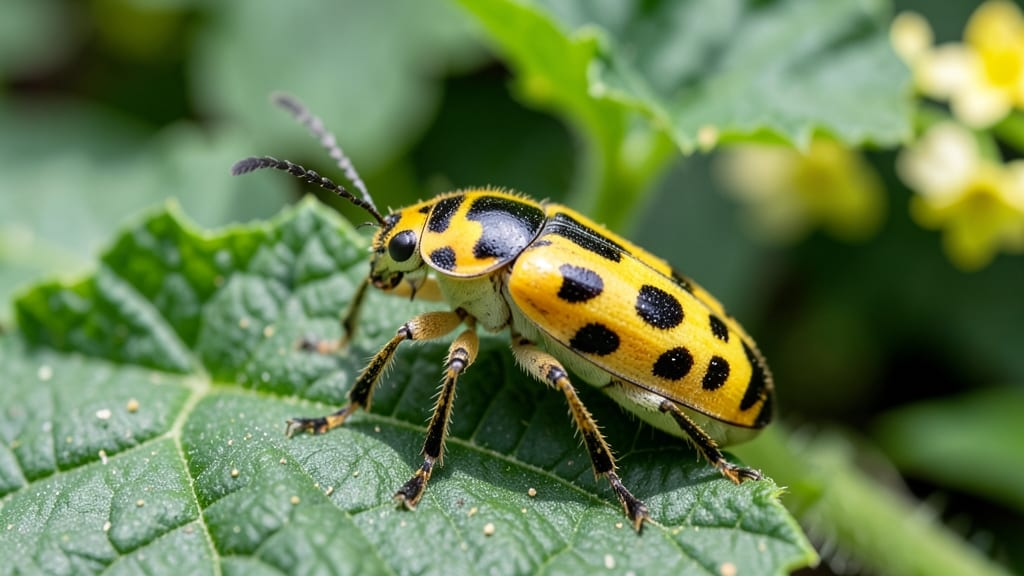
Spotted cucumber beetles are not poisonous to humans but can cause skin irritation or allergic reactions in sensitive individuals. Their saliva and feeding habits, however, make them dangerous to plants like cucumbers and squash by spreading harmful bacteria and viruses.
While these beetles won't poison you directly, their presence in your garden is a bigger threat than you might think. 🌱 The real danger lies in their feeding habits—when they chew on plant leaves, their saliva introduces Erwinia tracheiphila, the bacteria responsible for bacterial wilt, which can devastate entire crops.
Even if you don't experience direct harm, the damage to your plants could be costly.
For gardeners, the key is prevention: removing them early and protecting vulnerable plants. I always recommend checking your cucumber and squash plants weekly during growing season, as these beetles thrive in warm weather.
The good news? They're easy to spot with their distinctive black bodies and yellow stripes, so you can act fast before they cause serious damage.
💡 In This Article
- How Spotted Cucumber Beetles Harm Plants and Gardens
- Safety Measures for Handling Spotted Cucumber Beetles
How spotted cucumber beetles harm plants and gardens
The real danger of spotted cucumber beetles lies in their role as agricultural pests, not their direct toxicity to humans. When these beetles feed on plants like cucumbers, squash, and melons, their mouthparts inject Erwinia tracheiphila, a bacteria that causes bacterial wilt.
This disease clogs a plant's vascular system, cutting off water and nutrient flow within 3-5 days of infection. The result? Wilting leaves, yellowing stems, and ultimately, plant death—often before you even notice the beetles.
These beetles also spread the cucumber mosaic virus, a plant pathogen that distorts leaves, stunts growth, and reduces fruit quality. A single beetle can carry the virus from infected plants to healthy ones, creating a chain reaction in your garden. The damage isn't just cosmetic—it directly impacts yield.
For example, infected cucumber plants may produce 50-70% fewer fruits, and the remaining produce often has poor flavor and texture. 🌱 The beetles' larvae, which burrow into soil, further weaken plants by feeding on roots.
Lifecycle timing is critical. Adult beetles emerge in early spring, coinciding with planting season, while larvae thrive in warm, moist soil during summer. This means your plants are most vulnerable when they're young and establishing roots.
The beetles' feeding patterns create a vicious cycle: weakened plants attract more beetles, accelerating the spread of disease. Without intervention, a single infestation can spiral into a full-blown garden crisis within weeks.
What makes this especially frustrating is how subtle the early signs can be. Initial feeding damage appears as small, irregular holes along leaf edges—easily mistaken for other pests or environmental stress. By the time you notice wilting or yellowing, the bacteria may already be systemic.
This is why gardeners often underestimate the threat until it's too late. The key to protection starts with early detection and preventative measures, like row covers or targeted insecticides.
Consider this: A single beetle can lay up to 500 eggs in its lifetime, with larvae capable of surviving in soil for months. This reproductive rate means what starts as a small problem can quickly become uncontrollable.
The economic impact alone is staggering—farmers lose millions annually to bacterial wilt alone. For home gardeners, the emotional toll of watching hard-worked plants die is often the hardest part to quantify.
Here's what's actually happening at the cellular level: The bacteria Erwinia tracheiphila produces enzymes that break down plant cell walls, creating a slime that blocks xylem vessels. This physical obstruction prevents water transport, causing the rapid wilting symptoms.
The beetles' role isn't just about feeding—they're essentially disease delivery systems, turning your garden into a battleground between plants and pathogens. 🦟