
Pruning
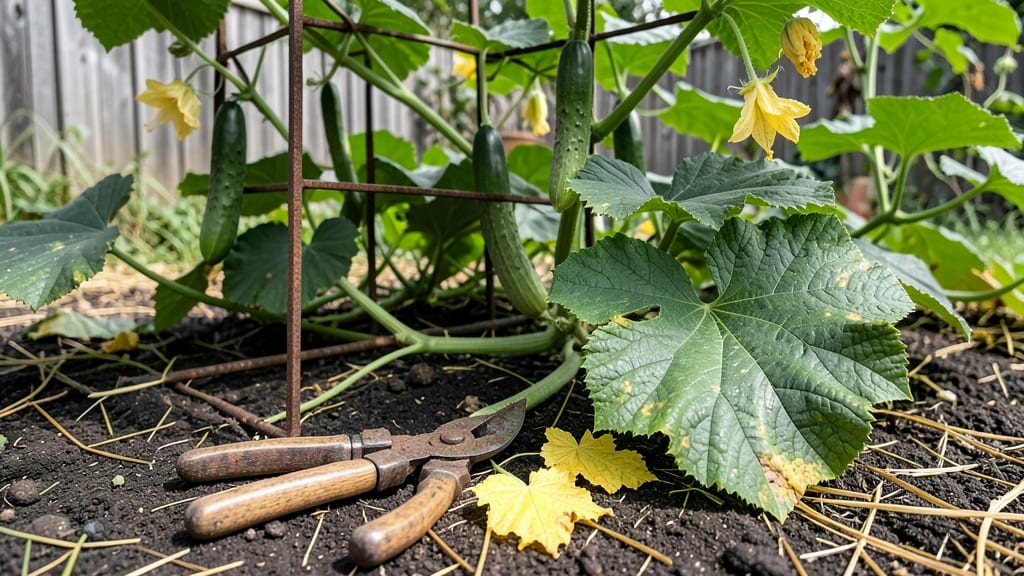
Should I cut off yellow cucumber leaves—it’s not always the right move, and here’s how to tell whether those leaves need to go or if we should leave them be. focus on fixing the real problem first. Yellow leaves often signal disease, pests, or nutrient issues—not just age.
Fungal infections like powdery mildew or bacterial spots can spread if you remove infected leaves without proper care. But if the yellowing is just from old age or shade stress, pruning could actually help the plant redirect energy.
Here's the key: always sanitize your tools before cutting, and only remove leaves that are 50%+ yellowed or diseased. Healthy green leaves keep photosynthesizing, so don't overdo it—just target the worst offenders while addressing the root cause.
Prevention is easier than cleanup: rotate crops yearly, water at the base (not overhead), and pick cucumbers regularly to encourage new growth. When in doubt, snap a photo and compare it to common cucumber diseases online before pruning.
Root Causes Of Yellowing Cucumber Leaves
Yellowing leaves on your cucumber plants aren’t just a random quirk of nature—they’re often your plant’s way of signaling distress. Understanding the why behind this issue helps you take precise, effective action.
Below, we break down the most common culprits, backed by science, so you can diagnose—and fix—the problem like a pro.
Cucumbers thrive in consistently moist but well-drained soil. When roots sit in soggy conditions, they struggle to absorb oxygen, leading to root rot—a fungal infection that chokes your plant. Yellowing leaves, especially on older foliage, are a classic sign of this stress.
Why it happens:
- Excess water displaces oxygen in the soil, suffocating roots.
- Compacted or clay-heavy soil holds water like a sponge, preventing drainage.
- Overpotting or containers without drainage holes trap moisture, accelerating rot.
Actionable clue: Check the soil—if it’s damp two days after watering, you’re likely overdoing it. Yellow leaves paired with mushy stems or a foul odor confirm root rot.
Cucumbers are sun worshippers but can sunburn if exposed to harsh afternoon rays without acclimation. Conversely, shady conditions weaken the plant, making it prone to pests and diseases—both of which trigger yellowing.
Why it happens:
- Direct, intense sunlight (especially in hot climates) causes chlorophyll breakdown, leading to bleached or yellow patches.
- Insufficient light (<6–8 hours/day) weakens the plant, reducing its ability to photosynthesize efficiently. Leaves turn yellow as the plant prioritizes energy for fruit production over foliage.
Actionable clue:
- Sunburn? Look for white or brown scorch marks on leaves.
- Light deficiency? New leaves are pale, and growth slows dramatically.
Yellowing leaves often scream "feed me!"—but the type of yellowing reveals exactly what’s missing. Cucumbers are heavy feeders, especially in nitrogen, potassium, and micronutrients like magnesium and iron.
| Symptom | Likely Deficiency | What’s Happening |
|---|---|---|
| Yellowing between veins (older leaves) | Nitrogen (N) deficiency | The plant can’t produce enough chlorophyll, so leaves lose their green pigment first. |
| Yellowing with green veins (young leaves) | Magnesium (Mg) deficiency | Chlorophyll production stalls; veins stay green because they’re the last to degrade. |
| Yellowing + purple stems | Phosphorus (P) or Potassium (K) deficiency | The plant struggles with energy transfer, causing stress symptoms. |
| Yellowing + small, curled leaves | Iron (Fe) deficiency | Iron is crucial for chlorophyll; deficiency turns leaves pale yellow (chlorosis). |
Why it happens:
- Poor soil quality (sandy or depleted soil) lacks essential nutrients.
- Over-fertilizing with nitrogen (without balancing other nutrients) creates imbalances.
- pH issues (soil too alkaline or acidic) lock out nutrients like iron or manganese.
Actionable clue: Test your soil’s pH (ideal: 6.0–6.8 for cucumbers). If it’s off, amend with sulfur (to lower pH) or lime (to raise it).
Pests like aphids, spider mites, and cucumber beetles suck sap from leaves, causing yellowing, stippling, or holes. Diseases like powdery mildew or downy mildew also drain a plant’s energy, leading to weakened, yellowing foliage.
Why it happens:
- Aphids excrete honeydew, fostering sooty mold, which blocks sunlight and stresses the plant.
- Cucumber beetles transmit bacterial wilt, a fatal disease that causes sudden wilting and yellowing.
- Fungal diseases thrive in humid, stagnant air, clogging leaf pores and disrupting photosynthesis.
Actionable clue:
- Sticky leaves? Check for aphids or mites.
- White powdery coating? That’s powdery mildew.
- Wilting + yellowing in hot weather? Could be bacterial wilt—act fast!
Cucumbers are tender annuals—they hate extremes. Sudden temperature swings, frost, or heatwaves can shock the plant, causing leaves to yellow as it diverts energy to survival.
Why it happens:
- Cold stress (below 50°F/10°C) slows metabolism, leading to chlorosis (yellowing from poor chlorophyll function).
- Heat stress (above 90°F/32°C) causes protein breakdown, including enzymes needed for photosynthesis.
- Windburn (dry, gusty conditions) dries out leaves, making them brittle and yellow.
Actionable clue:
- Morning yellowing that fades by afternoon? Likely transient cold stress.
- Afternoon wilting + yellowing? Heat shock—provide shade cloth if possible.
When cucumber vines compete for resources (water, nutrients, light), they canibalize each other’s energy. Overcrowded plants also trapped moisture, creating a breeding ground for diseases.
Why it happens:
- Too many plants per square foot (cucumbers need 1–2 square feet per plant).
- Weeds or grass stealing nutrients and water.
- Trellis overloading—vines shading each other instead of climbing upward.
Actionable clue: If leaves yellow only on the lower stems, the plant is starving for light or space. Thin out plants or prune competing vines.
Fixing Yellow Cucumber Leaves: Step-by-Step Solutions
Now that you know why your cucumber leaves are turning yellow, let’s tackle the fixes—tailored to each cause. These solutions are practical, garden-tested, and designed to keep your plants thriving while minimizing stress. Remember: Act fast for the best results, but always prioritize the plant’s overall health over aggressive pruning.
Problem: Yellowing leaves from soggy roots or excess moisture.
How to Fix It:
- 🔥 Pause Watering Immediately Stop adding water until the soil dries out 1–2 inches deep. Stick your finger in the soil—if it’s damp past your first knuckle, wait.
- 👨🍳 Improve Drainage
- For pots: Add a layer of perlite, vermiculite, or coarse sand to the bottom before repotting.
- For garden beds: Amend the soil with compost or organic matter to loosen it up. Avoid compacted clay.
- ⏰ Check the Roots (If Severe) Gently lift the plant and inspect the roots. Healthy roots are firm and white; mushy or black roots mean rot. Trim away any dark, squishy roots with sterilized scissors, then replant in fresh, well-draining soil.
- 🥘 Adjust Your Watering Routine
- Water deeply but infrequently—aim for 1–1.5 inches per week (including rain).
- Water at the base (not the leaves) in the morning to reduce fungal risks.
- Use drip irrigation or soaker hoses to deliver water slowly and evenly.
💡 Prevention Tips:
- Use pots with drainage holes (even for cucumbers!).
- Group plants with similar water needs together.
- Mulch around the base to retain moisture without suffocating roots.
Problem: Crispy, yellowing edges or wilting from thirst or scorching sun.
How to Fix It:
- 💦 Water Thoroughly Soak the soil until water runs out the drainage holes (for pots) or seeps 6–8 inches deep (for garden beds). Repeat every 2–3 days in hot weather.
- 🌡️ Provide Shade (Temporarily)
- Use shade cloth (30–50% coverage) if temps exceed 90°F (32°C).
- Place pots in partial shade during peak afternoon sun.
- Pro tip: A white umbrella or sheet draped overhead can reduce heat stress instantly.
- 🥗 Boost Humidity (For Container Plants)
- Mist leaves early in the day (avoid evening to prevent fungal growth).
- Place a tray of water near the plant or use a pebble tray under the pot.
- Group plants together to create a microclimate.
- 🌱 Trim Only the Worst If leaves are completely crispy or brown, snip them off at the base. Avoid pruning healthy green leaves—they’re photosynthesizing for the plant!
💡 Prevention Tips:
- Mulch with straw or grass clippings to lock in moisture.
- Water before 10 AM to reduce evaporation.
- Choose heat-tolerant varieties like ‘Straight Eight’ or ‘Lemon Cucumber’ if you live in a hot climate.
Problem: Yellowing leaves with purple stems (nitrogen deficiency) or yellow veins (magnesium/iron issues).
How to Fix It:
- 📊 Test Your Soil (Cheap & Easy) Grab a DIY soil test kit (or send a sample to your local extension office) to check pH and nutrient levels. Cucumbers thrive in pH 6.0–6.8.
- 🌿 Fix Nitrogen Deficiency (Yellow Leaves, Stunted Growth)
- Quick fix: Sprinkle blood meal or fish emulsion around the base (follow package rates).
- Long-term: Mix compost or well-rotted manure into the soil before planting next season.
- 🍎 Fix Magnesium/Chlorosis (Yellow Between Veins)
- Epsom salt spray: Mix 1 tbsp Epsom salt in 1 gallon of water and spray leaves weekly until new growth appears.
- Side-dress: Work kelp meal or greensand into the top 2 inches of soil.
- ✨ Avoid Overfertilizing Too much nitrogen = soft, yellow leaves (and fewer cucumbers!). Stick to a balanced 10-10-10 fertilizer or organic alternatives like worm castings.
💡 Prevention Tips:
- Rotate crops every 2–3 years to prevent nutrient depletion.
- Side-dress with compost mid-season for a slow-release boost.
- Avoid synthetic fertilizers if your soil tests show high salts (they can burn roots).
Problem: Yellowing from aphids, spider mites, powdery mildew, or bacterial wilt.
How to Fix It:
- 🔍 Identify the Culprit
- Pests: Check undersides of leaves for tiny bugs, webs, or sticky residue.
- Fungus: Look for white powder (mildew) or black spots.
- Bacterial wilt: Leaves yellow suddenly, and the plant wilts even when watered.
- 🚫 Isolate Infected Plants Move the cucumber 6+ feet away from healthy plants to prevent spread.
- 💦 Treat Pests Naturally
- Aphids/Spider Mites: Spray with neem oil (1 tsp + 1 tsp dish soap per quart of water) or soapy water.
- Earwigs/Slugs: Set out beer traps or copper tape around the base.
- 🌡️ Fight Fungal Diseases
- Powdery Mildew: Spray baking soda mix (1 tsp baking soda + 1 quart water + a drop of soap) weekly.
- Prevent spread: Water only the soil, not leaves, and prune for airflow.
- 🔪 For Bacterial Wilt (No Cure—Remove Plant) If the plant is suddenly wilting with yellow leaves, it’s likely bacterial wilt. Pull it up immediately and sterilize tools with rubbing alcohol. Do not compost—dispose of the plant in the trash.
💡 Prevention Tips:
- Rotate crops to break disease cycles.
- Space plants 2–3 feet apart for airflow.
- Use resistant varieties like ‘Armenian’ cucumbers for powdery mildew-prone areas.
Not every yellow leaf needs to go—follow these pruning do’s and don’ts:
- ✅ DO prune:
- Leaves completely yellow/brown (dead tissue).
- Leaves with severe pest/disease damage.
- Lower leaves touching the soil (to prevent rot).
- ❌ DON’T prune:
- Healthy green leaves (they feed the plant!).
- More than 1/3 of the foliage at once (shocks the plant).
- During hot afternoons (stresses the plant further).
🔪 How to Prune Properly:
- Use clean, sharp scissors or pruners (sterilize with rubbing alcohol).
- Cut just above a leaf node (where new growth emerges).
- Avoid tearing—make clean cuts to prevent infection.
Frequently asked questions about yellow cucumber leaves
When should I cut off yellow cucumber leaves?
Only remove leaves that are 50%+ yellowed or show signs of disease like spots or powdery residue. Healthy green leaves keep photosynthesizing, so preserve them! Cut just above a leaf node with clean, sterilized scissors to avoid infection.
What if the yellowing is from pests like aphids?
First isolate the plant and treat with neem oil or soapy water to kill pests. Remove heavily infested leaves, but leave green ones—they're vital for recovery. Check undersides of leaves for tiny bugs or sticky residue.
Can I save my cucumber plant if the yellowing is from root rot?
Act fast! Gently lift the plant and trim any mushy black roots. Repot in fresh, well-draining soil with perlite. Reduce watering immediately—roots need oxygen. If the stem is soft, the plant may not recover.
Why are my cucumber leaves yellowing but still green at the edges?
This classic pattern often signals magnesium deficiency (chlorosis). Fix it by spraying leaves with Epsom salt solution (1 tbsp per gallon) weekly. Test your soil pH—cucumbers need 6.0-6.8 for proper nutrient uptake.
Should I prune cucumber leaves in hot weather?
Never prune during peak heat—it stresses the plant further. Wait for cooler morning hours. Focus on removing only completely dead leaves or those touching the soil. The remaining foliage helps shade the fruit from scorching.