
Vegetables
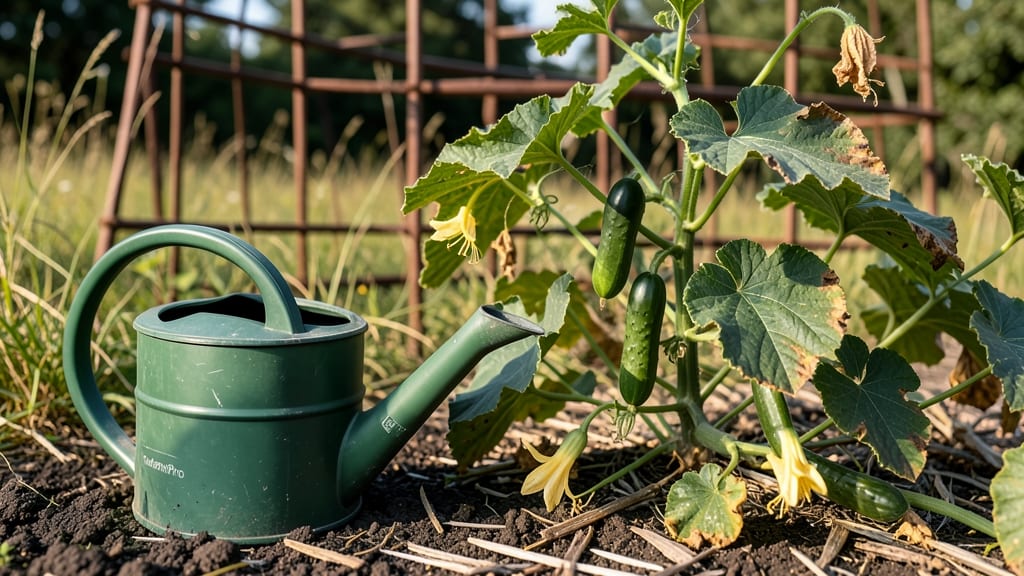
Your cucumbers are begging for help—those crisp, brown-edged leaves scream heat stress, and the good news is, you can turn this around in 24 hours. 🌿 I’ve nursed back scorched cucumbers before by fixing just three things: watering, shade, and timing.
The key? Acting fast before the plant throws in the towel.
Scorched leaves usually mean either too much sun (especially in afternoon heat) or uneven watering (dry soil + hot air = instant leaf burn). Even pests like cucumber beetles can mimic scorching with their feeding marks—so check the undersides of leaves first.
The fix starts with a deep watering at dawn and temporary shade cloth if your cucumbers are in full sun.
Within days, you’ll see new growth pushing through, and those crispy edges will soften as the plant recovers. The secret weapon? Morning watering keeps roots cool, while afternoon shade prevents further damage. For extra insurance, mulch heavily to lock in moisture—this combo works even in 90°F+ heat.
Once the leaves perk up, keep an eye out for preventive habits: drip irrigation, afternoon shade, and consistent moisture. Your cucumbers will bounce back stronger—and you’ll spot scorching early next time. No more wilting drama in your garden! 🌱
Root Causes Of Leaf Scorch
Understanding why your cucumber leaves develop those unsightly brown, crispy patches is the first step to saving your plants. Scorched cucumber leaves rarely happen by accident—they’re usually a cry for help from your plants. Let’s break down the most common culprits and the science behind them.
Cucumbers are shade-loving plants, and when they’re exposed to intense, direct sunlight—especially during peak afternoon hours (12 PM–4 PM)—their leaves can overheat. This causes oxidative stress, where sunlight triggers a chain reaction that damages cell membranes, leading to rapid dehydration and browning.
Why it happens:
- Excessive UV radiation disrupts the plant’s chlorophyll production, making leaves lose their green pigment and turn yellow or brown.
- High temperatures (above 90°F/32°C) cause stomatal closure—the tiny pores on leaves that regulate water loss—shutting down to prevent further water evaporation. This traps heat inside the leaf, cooking it from within.
- Reflective surfaces (like light-colored soil, concrete, or metal) can amplify sunlight, turning your garden into a greenhouse.
Actionable fix:
- Provide 30–50% shade during the hottest part of the day using shade cloth, row covers, or dappled shade from taller plants (like corn or sunflowers).
- Mulch heavily with straw or wood chips to keep roots cool and retain moisture.
- Avoid planting cucumbers in full sun—opt for morning sun + afternoon shade instead.
Cucumbers have delicate leaves, and watering them incorrectly can lead to sunburn-like scorching. Two main watering mistakes cause this:
- Overhead Watering in Sunlight 🌞💦
- When water droplets sit on leaves and evaporate under the sun, they act like tiny magnifying glasses, focusing heat and causing localized burns.
- This is especially common with early morning watering (before 8 AM) or late afternoon splashes (after 4 PM).
- Inconsistent Watering (Drought Followed by Flooding) 🏜️🌊 - Cucumbers have shallow roots and need consistent moisture.
When soil dries out, leaves wilting makes them more vulnerable to sun scorch. - Then, when you overwater suddenly, the roots can’t absorb enough H₂O fast enough, leading to oxidative damage in leaves.
Why it happens:
- Cuticular damage: The waxy layer on leaves (cuticle) cracks under dehydration, making them more permeable to heat and light.
- Osmotic stress: Rapid water fluctuations cause cell membrane damage, leading to necrotic (dead) spots.
Actionable fix:
- Water deeply at the base (using drip irrigation or soaker hoses) to avoid wetting leaves.
- Keep soil consistently moist (1–2 inches deep) but not soggy—aim for 60–70% moisture retention.
- Water early in the morning (5–7 AM) so leaves dry before peak sun.
While cucumbers aren’t wind-lovers, strong breezes or poor airflow can accelerate transpiration (water loss), leading to heat stress and scorching.
Why it happens:
- Wind desiccates leaves faster than they can regulate moisture, causing premature wilting and heat buildup.
- Stagnant air (in greenhouses or crowded gardens) traps humidity near leaves, creating a greenhouse effect—where heat gets trapped, cooking the undersides of leaves.
- Salt buildup from evaporated water can crust on leaf surfaces, blocking stomata and worsening heat retention.
Actionable fix:
- Plant cucumbers in sheltered spots (near fences or trellises) to break up wind.
- Space plants 2–3 feet apart for better airflow—crowding = more humidity = more scorch risk.
- Use a fan in greenhouses to circulate air and prevent heat pockets.
Sometimes, brown, crispy leaves aren’t from heat—they’re from pathogens that thrive in hot, humid conditions. Two common culprits:
- Powdery Mildew (Oidium spp.) 🍄
- Causes white, powdery patches that turn leaves brown and brittle over time.
- Spreads faster in high humidity + poor airflow.
- Bacterial Leaf Spot (Xanthomonas campestris) 🦠
- Creates water-soaked brown spots that crisp up like scorched paper.
- Worsens in wet, warm conditions (ideal for bacterial growth).
Why it happens:
- Fungi/bacteria exploit stressed plants (already weakened by heat or drought).
- Overhead watering splashes pathogens onto leaves, speeding up infection.
Actionable fix:
- Remove infected leaves immediately (don’t compost them—burn or trash).
- Spray with neem oil or copper fungicide (preventative measure).
- Water at soil level to avoid spreading spores.
Pro Tip: 💡 If your cucumber leaves feel rough or leathery to the touch, it’s likely heat scorch. If they’re soft, slimy, or have white powder, it’s a fungal/bacterial issue—treat differently!
Revive Your Cucumber Plants Now
When your cucumber leaves look like they’ve been kissed by the sun—crispy, brown, or wilted—don’t panic! With the right approach, you can nurse them back to health and even prevent future damage.
Below are practical, step-by-step solutions tailored to the most common causes of scorched cucumber leaves, plus tips to keep your plants thriving.
If your cucumber leaves are yellowing at the edges or feel soggy, overwatering (or compacted soil) might be the culprit. Too much moisture suffocates roots, leading to wilting and scorched-looking foliage.
How to Fix It:
- 🌱 Check the Soil Moisture Stick your finger 1–2 inches deep into the soil. If it’s damp, hold off on watering. Cucumbers prefer consistently moist (not soggy) soil.
- 💧 Adjust Your Watering Routine
- Water deeply but less frequently—aim for 1–1.5 inches per week (including rain).
- Water early in the morning to reduce evaporation and fungal risks.
- Use a soaker hose or drip irrigation to deliver water directly to the roots.
- 🔄 Improve Soil Drainage
- Amend heavy clay soil with compost or perlite to loosen it.
- If potted, ensure the container has drainage holes and use a well-draining mix (e.g., 60% potting soil + 30% compost + 10% perlite).
- 🌿 Prune Damaged Leaves Use sterilized scissors to trim any leaves that are mushy, black, or severely crispy—this prevents disease spread.
💡 Prevention Tip:
- Mulch around plants (with straw or shredded leaves) to retain moisture without over-saturating the soil.
If leaves are brown, papery, or curled (especially on the upper sides), your cucumbers are likely sunburned or struggling with extreme heat.
How to Fix It:
- 🌳 Provide Temporary Shade
- Use shade cloth (30–50%) or a lightweight row cover during peak sun (10 AM–4 PM).
- Place a white umbrella or old sheet over plants if heat waves hit suddenly.
- 💦 Boost Hydration
- Water deeply at the base daily during heatwaves (early morning is best).
- Consider mulching with straw to lock in moisture.
- 🌿 Adjust Plant Placement
- If growing in containers, move them to a slightly shadier spot (e.g., under a tree or trellis).
- For in-ground plants, plant near taller crops (like corn or sunflowers) to provide natural shade.
- 🍃 Trim Exposed Leaves Remove severely scorched leaves to redirect energy to healthier growth.
💡 Prevention Tip:
- Choose heat-tolerant varieties like ‘Straight Eight’ or ‘Lemon Cucumber’ if you live in a hot climate.
- Avoid fertilizing during heatwaves—plants focus on survival, not growth.
If leaves have irregular brown spots, holes, or a powdery coating, pests (like aphids or spider mites) or diseases (like powdery mildew) may be to blame.
How to Fix It:
- 🔍 Inspect for Pests
- Aphids/spider mites? Spray with neem oil (1 tsp per quart of water) or insecticidal soap.
- Cucumber beetles? Handpick them or use row covers to block adults.
- 🧼 Treat Fungal Issues
- For powdery mildew, spray a baking soda mix (1 tsp baking soda + 1 quart water + a drop of dish soap).
- Improve air circulation by spacing plants 12–24 inches apart.
- 🌱 Strengthen Plant Health
- Fertilize lightly with a balanced 10-10-10 or compost tea to boost immunity.
- Remove infected leaves immediately to stop spread.
💡 Prevention Tip:
- Rotate crops yearly to prevent soil-borne diseases.
- Water at the base (not overhead) to keep foliage dry.
Yellowing leaves with brown edges (especially on older leaves) may signal a potassium or magnesium deficiency, while pale green leaves could mean nitrogen lack.
How to Fix It:
- 📊 Test Your Soil Use a DIY soil test kit (or send a sample to a local extension office) to identify deficiencies.
- 🍽️ Apply Targeted Fertilizers
- Potassium deficiency? Use potassium sulfate or banana peel tea.
- Nitrogen deficiency? Add compost, fish emulsion, or blood meal.
- Magnesium deficiency? Sprinkle Epsom salt (1 tbsp per gallon of water) every 2 weeks.
- 🌿 Use Organic Amendments
- Crushed eggshells (for calcium)
- Wood ash (for potassium)
- Worm castings (for slow-release nutrients)
💡 Prevention Tip:
- Side-dress plants with compost every 4–6 weeks for steady nutrition.
- Avoid over-fertilizing—too much salt can burn roots!
If your cucumber plant is beyond revival (e.g., most leaves are crispy, stems are mushy), it’s time to start fresh.
How to Fix It:
- 🌱 Prune Back Severely Cut the plant down to 6–12 inches from the base to encourage new growth.
- 🔄 Repot or Replant
- If in a pot, replace the soil with fresh, nutrient-rich mix.
- If in-ground, dig out the plant, rinse roots, and replant in amended soil.
- 🌿 Start Over (If Needed) If the plant is completely dead, pull it and plant new seeds or seedlings in a different spot.
💡 Prevention Tip:
- Keep a backup plant ready in case of total failure!
- Monitor daily—catch issues early!
- Rotate crops to prevent soil fatigue.
- Harvest regularly to encourage new leaf growth.
- Use a trellis to improve airflow and reduce stress.
With these fixes, your cucumber plants should bounce back in 1–2 weeks—and you’ll be enjoying crisp, homegrown cucumbers in no time! 🥒✨
Frequently asked questions
Why do cucumber leaves get scorched even with regular watering?
Scorched cucumber leaves often happen when water evaporates too quickly from leaves during peak sun (12 PM–4 PM), acting like tiny magnifying glasses. Even with regular watering, overhead sprinkling or inconsistent soil moisture can cause dehydration stress. Focus on morning watering at the base and use mulch to retain moisture.
Can I save a cucumber plant if most leaves are already scorched?
Yes! Prune the damaged leaves immediately to redirect energy to healthy growth. Provide 30–50% shade cloth during peak sun and water deeply at dawn. Within 1–2 weeks, new leaves should emerge if the roots are still healthy. Avoid fertilizing until recovery.
How do I tell if scorched leaves are from sunburn or disease?
Sunburned leaves feel rough and papery with crispy edges, often on upper leaves exposed to direct sun. Disease (like powdery mildew) shows as white powder or slimy spots on leaf undersides. Check for pests too—aphids or spider mites leave sticky residue or tiny webs.
Will shade cloth work for container-grown cucumbers?
Use 30% shade cloth draped over containers during afternoon heat. For extra protection, move pots to a dappled shade spot (like under a tree). Water containers daily in heatwaves, as they dry out faster than in-ground plants.
Can I prevent scorching in future cucumber plants?
Start with heat-tolerant varieties like ‘Straight Eight’ and plant in morning sun + afternoon shade. Use drip irrigation and mulch heavily. Space plants 2–3 feet apart for airflow, and avoid overhead watering. Rotate crops yearly to prevent soil-borne stress.