
Watering
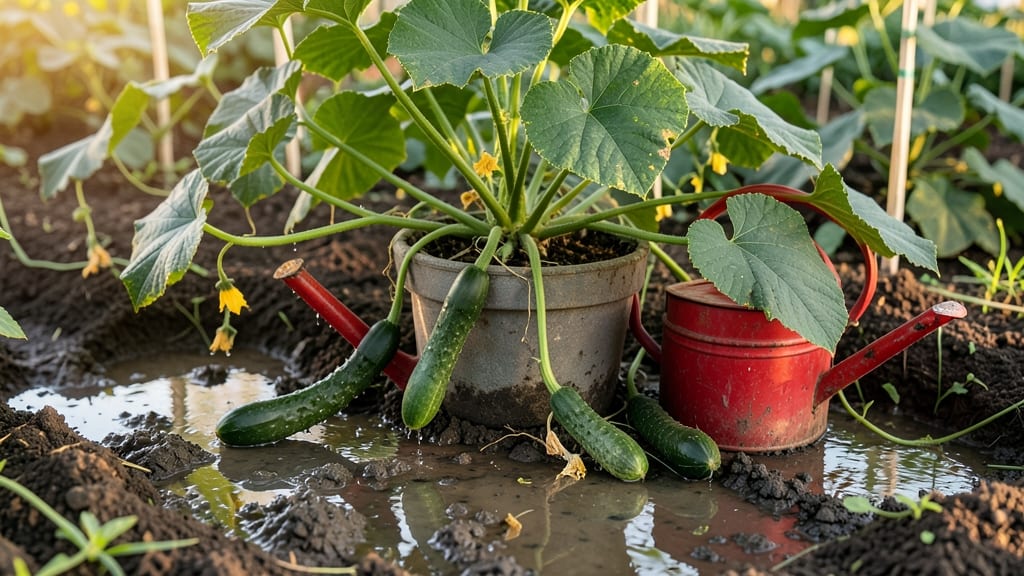
Your cucumbers are drowning, not growing—yellow leaves, mushy stems, and that dreaded fungal smell. 🌱 I’ve pulled overwatered cucumbers back from the brink more times than I’d like to admit, and the fix is simpler than you’d think: stop the water, improve airflow, and let the roots breathe again.
The first sign of overwatering is usually wilted leaves that don’t perk up, even when the soil feels damp. Roots suffocate without oxygen, and fungal diseases like powdery mildew or root rot move in fast.
My biggest mistake? Waiting until the stems turned black before acting—don’t let that happen to you.
Within 48 hours of adjusting your watering, you’ll see new green growth pushing through. The key is watering deeply but less often—aim for 1-1.5 inches per week—and making sure containers or beds have drainage holes. Add a handful of perlite to heavy soil to keep it loose.
Once you’ve revived them, keep an eye out for crusty soil or mold—those mean you’re still overdoing it. Mulch helps retain moisture without drowning roots, and a fan on low can improve airflow around the plants. Your cucumbers will bounce back faster than you expect.
Common Causes Of Excess Moisture
Overwatering cucumbers is a classic case of "too much of a good thing"—and it can quickly turn your garden into a soggy mess. 🌧️😬 Understanding why this happens is the first step to saving your plants.
Below, we break down the key reasons behind excess moisture, from soil behavior to human habits, so you can adjust your approach before it’s too late.
Cucumbers thrive in well-draining soil, but if your garden beds or containers lack proper drainage, water pools at the roots instead of flowing away. This creates a suffocating environment where roots can’t breathe, leading to root rot and fungal infections.
Why it happens:- Compacted soil: Heavy clay or tightly packed soil repels water, preventing it from seeping down. Test your soil by digging a 6-inch hole—if water sits for more than 30 minutes, drainage is likely poor.
- No gravel or sand layers: Raised beds or pots without a 2–3 inch layer of coarse gravel or perlite at the bottom trap water like a sponge.
- Clogged drainage holes: In containers, roots and debris can block holes over time, turning your pot into a waterlogged prison.
Skipping a day or two between waterings might seem harmless, but cucumbers have shallow, sprawling root systems that need consistent moisture. When you overcompensate after a dry spell, you risk drowning the roots before they can adjust.
Why it happens:- Overzealous watering after drought: If your plants wilt from thirst, a sudden deep soak can overwhelm their ability to absorb water efficiently.
- Automatic timers set too long: Drip irrigation or sprinklers left running for hours (e.g., overnight) deliver far more water than cucumbers need.
- Ignoring weather changes: Heavy rain followed by cloudy days tricks growers into thinking plants need extra water—when in reality, the soil is already saturated.
Potted cucumbers are especially vulnerable because containers heat up faster, evaporate moisture quicker, and offer limited root space. But when combined with improper care, they become a recipe for disaster.
Why it happens:| Issue | Why It Drowns Roots |
|---|---|
| Small pot size | Roots fill the space quickly, leaving no room for excess water to escape. A 5-gallon pot is the minimum for one cucumber plant. |
| No saucers or trays | Water spills onto patios or balconies but pools around the pot’s base, seeping back into the soil. |
| Plastic pots without breathability | Plastic traps heat and moisture, accelerating rot. Fabric or terracotta pots allow better airflow but require more frequent watering. |
Cucumbers send clear distress signals when they’re overwatered, but many gardeners mistake wilting for thirst instead of suffocation. Yellowing leaves, mushy stems, and a foul odor are red flags.
Why it happens:- Misinterpreting wilting: Overwatered plants wilt because roots can’t uptake oxygen. Underwatered plants wilt from dehydration. Both look the same—until you check the soil!
- Ignoring leaf color: Dark, yellowing leaves (especially lower ones) indicate root rot, while crispy edges suggest underwatering. Confusing the two leads to overcorrecting.
- Delaying action: Fungal diseases like powdery mildew thrive in wet conditions. Once visible, the damage is often irreversible.
Revive Your Plants Fast
Overwatered cucumbers can feel like a hopeless cause, but with the right steps, you can nurse them back to health—even if they’re already wilting or turning yellow. The key is acting quickly, adjusting your watering habits, and giving your plants the support they need to bounce back.
Below, we’ll break down the most common causes of overwatering and the practical fixes to save your cucumber crop.
If your cucumbers are sitting in soggy soil, the first step is to stop watering immediately and let the roots recover. Overwatering suffocates roots by cutting off oxygen, leading to rot and disease.
How to fix it:
- Pause watering for 2–3 days to let excess moisture evaporate.
- Check soil moisture by sticking your finger 1–2 inches deep—if it’s damp, wait longer.
- Improve drainage by adding a layer of perlite, sand, or compost to heavy clay soil.
- Repot if necessary (for container-grown cucumbers) into a pot with drainage holes and fresh, well-draining potting mix.
Prevention tip: 🌡️ Water only when the top inch of soil is dry—morning watering reduces evaporation and fungal risks.
Yellowing leaves (especially lower ones) are a classic sign of root rot or nutrient leaching from overwatering. The plant struggles to absorb nutrients, leading to weak growth.
How to fix it:
- Trim damaged leaves with clean scissors to redirect energy to healthy growth.
- Fertilize lightly with a balanced, water-soluble fertilizer (like 10-10-10) to replenish lost nutrients.
- Aerate compacted soil by gently loosening the top 2–3 inches with a fork (avoid disturbing roots).
- Add organic matter like well-rotted compost or worm castings to improve soil structure.
Pro tip: ✨ Mulch with straw or grass clippings to regulate moisture and prevent soil splashing (which spreads disease).
Overwatered cucumbers may produce blossom-end rot (black spots) or soft, mushy fruit due to inconsistent moisture and poor calcium uptake.
How to fix it:
- Harvest overwatered fruit immediately to prevent further spoilage.
- Apply calcium-rich amendments like crushed eggshells or lime to the soil (follow package instructions).
- Water deeply but less frequently—aim for 1–1.5 inches per week, adjusting for rain.
- Use drip irrigation (instead of overhead watering) to keep foliage dry and reduce disease risk.
Prevention tip: 🎯 Prune excess leaves to improve airflow—crowded plants hold moisture and attract pests.
Once your cucumbers are recovering, focus on preventing future overwatering by improving soil health and your watering routine.
How to fix it long-term:
- Test your soil (a simple pH kit helps) to ensure it’s 6.0–6.8—ideal for cucumbers.
- Rotate crops next season to avoid compacted, waterlogged spots.
- Plant in raised beds if your garden has poor drainage.
- Monitor weather forecasts—adjust watering during heavy rain or humidity spikes.
Bonus tip: 💡 Group cucumbers with drought-tolerant companions like beans or marigolds to share nutrients and improve soil structure.
By following these steps, your cucumbers should show signs of recovery within 1–2 weeks—think firmer stems, perky leaves, and new growth. Stay patient, and soon you’ll be harvesting crisp, healthy cucumbers again! 🥒🌿
Frequently asked questions
How do I tell if my cucumber plant is overwatered vs. underwatered?
Check the soil first—stick your finger 1-2 inches deep. If it's damp but leaves are yellow and mushy, it's overwatered. If soil is dry and leaves wilt but feel crispy, it's thirsty. Overwatered plants also have a foul smell from root rot. Press a leaf: soft = overwatered, brittle = underwatered.
Can I save a cucumber plant with black, mushy stems?
Act fast! Trim away all blackened stems with clean scissors, then repot in fresh, well-draining soil. Stop watering for 3 days to let roots recover. If roots are healthy underneath, new growth should appear in 1-2 weeks. If stems are completely hollow, the plant may not survive.
Why do my container cucumbers get overwatered so easily?
Containers heat up faster and have limited drainage. Plastic pots trap moisture, while small pots fill up quickly with roots. Always use pots with drainage holes and elevate them on pot feet. Add a 2-inch layer of perlite at the bottom to absorb excess water. Water only when the top 1 inch of soil is dry.
Will overwatered cucumbers still produce fruit?
Possibly, but quality suffers. Overwatered plants may develop blossom-end rot (black spots) or soft, waterlogged fruit. Harvest any existing cucumbers immediately, then focus on reviving the plant. New growth will produce better-quality fruit once roots recover.
How often should I water cucumbers after they recover?
Aim for 1-1.5 inches per week, adjusting for rain. Water deeply in the morning so foliage dries quickly. Use drip irrigation or soaker hoses to keep leaves dry. Mulch with straw to retain moisture without drowning roots. Check soil moisture daily during hot weather.