
Companion Plants
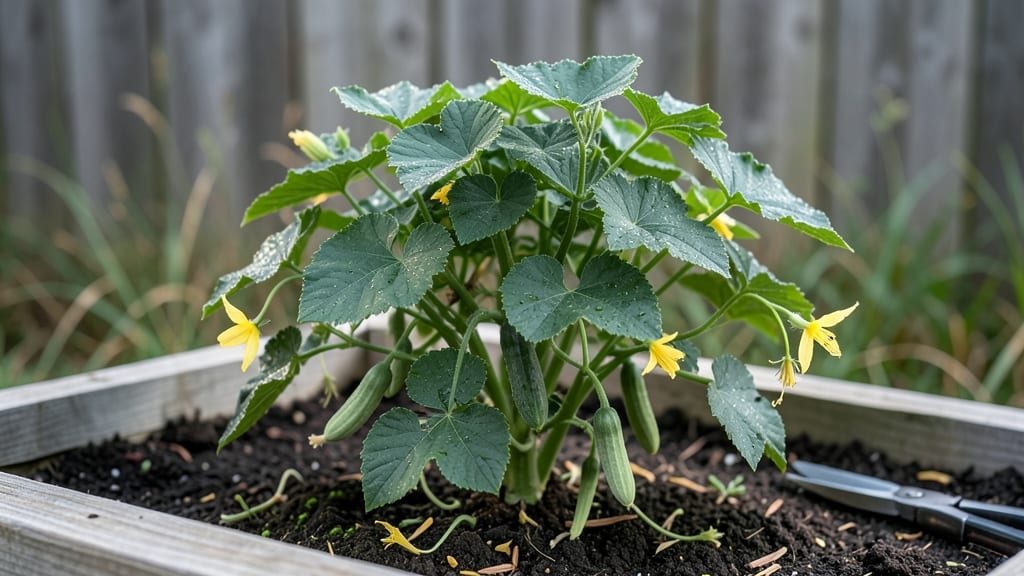
Growing Mini Me cucumber plants means fresh, crisp cucumbers without sacrificing your patio or balcony space. 🌱 I’ve grown these compact varieties for years, and they’ve never failed to deliver—even in my tiny urban garden where every square inch counts.
The secret lies in their bushy growth habit and quick production, turning small containers into productive mini-farms.
These cucumbers thrive in 5-gallon containers with well-draining soil and a sturdy trellis to support their vines. They need 6-8 hours of sunlight daily and consistent moisture—never soggy soil, but never let them dry out either.
The best part? You’ll harvest sweet, 4-6 inch cucumbers just 50-60 days after planting, with continuous production all season long.
Pruning isn’t necessary, but removing yellow leaves keeps the plant focused on fruiting. Watch for pests like cucumber beetles—cover young plants with row fabric for the first few weeks to give them a fighting chance. When harvesting, pick regularly to encourage more production; overripe cucumbers mean fewer new fruits.
Perfect for balconies, rooftops, or even sunny windowsills, Mini Me cucumbers prove that big harvests don’t require big gardens. With the right setup, you’ll be enjoying homegrown cucumbers in salads, snacks, or pickles—without the space trade-off. Let’s get those seeds in the ground!
📚 In This Guide
- What you need
- Instructions
- Tips and common mistakes
- Wrapping up and next steps
What you need
- ● Seeds or seedlings: Choose a compact variety like Bush Champion, Spacemaster, or Sweet Success. (1–2 plants per container is ideal!)
- ● Containers: 5-gallon pots or fabric grow bags (at least 12–18 inches deep) with drainage holes.
- ● Potting mix: Lightweight, well-draining soil blend (avoid garden soil—it compacts too much!).
- ● Fertilizer: Balanced organic fertilizer (10-10-10 or compost tea) to kickstart growth.
- ● Trellis or stakes: Small cages (6–12 inches tall) or bamboo stakes to support vines.
- ● Watering can or hose: With a gentle spray nozzle to avoid disturbing seedlings.
- ● Gloves & pruners: For handling plants and trimming excess foliage.
- ○ Mulch (optional): Straw or shredded leaves to retain moisture.
- ● Plant markers: To label varieties if growing multiple types.
- ○ Shade cloth (optional): For hot climates to protect young plants.
How to grow mini Me cucumber plants in small spaces
These compact varieties pack big flavor into tiny footprints—here's how to coax perfect vines from seed to harvest.
🌱 Step 1: Select and Prepare Containers for Optimal Growth
Mini Me cucumbers need 5-gallon containers minimum—I use fabric grow bags because they prevent root circling and wick moisture evenly. Drill 4-6 drainage holes in the bottom if your containers don't have them. The key is depth: roots need 12+ inches to support fruiting vines without binding.
Fill containers with a blend of 60% potting mix and 40% compost. Press the soil down gently to remove air pockets but don't compact it—you want roots to push through easily. Add a handful of worm castings at the bottom to boost microbial activity, which these compact varieties rely on for nutrient uptake.
☀️ Step 2: Plant Seeds at Proper Depth and Temperature
Sow 2-3 seeds per container at 1 inch deep—any deeper and germination slows dramatically. Space seeds 2 inches apart in a triangle formation to prevent overcrowding later. Use a pencil to make small holes; pressing seeds in by hand often buries them too deep or unevenly.
Cover with ¼ inch of soil and mist gently until the surface looks damp but not wet. Place containers in a warm spot (75-85°F) where they'll stay consistently moist. A seedling heat mat speeds germination to 5-7 days—without one, expect 10-14 days in cooler homes.
💧 Step 3: Provide Support and Train Vines Early
Once seedlings show 2 true leaves, install a 3-foot tall trellis inside each container. I use spiral cucumber supports because they guide vines upward naturally without tying. Gently weave the main stem around the spiral as it grows—this prevents leggy growth and directs energy into fruit production.
Water at the base daily, keeping soil evenly moist but never soggy. Mini Me varieties are drought-sensitive; let the top inch dry slightly between waterings. You'll see the first tendrils appear in 2-3 weeks—this is your cue to start training immediately. Untrained vines sprawl and produce bitter fruit.
✂️ Step 4: Prune and Harvest for Maximum Compact Production
When vines reach the top of the trellis, pinch off the main stem just above the 4th leaf. This forces energy into lateral branches where fruit develops. Remove any male flowers (they have long stems) to redirect nutrients to female blooms (they appear at leaf axils). You'll harvest your first cucumbers in 45-55 days from seed.
Pick fruit when 4-6 inches long—longer cucumbers trigger the plant to stop producing. Use pruning shears to cut stems cleanly; never pull fruit. After harvest, trim back any overgrown leaves that block sunlight from lower vines. This keeps air circulating and prevents powdery mildew, which thrives in dense foliage.
🌿 Step 5: Extend the Season with Simple Care
As temperatures drop below 60°F at night, cover containers with frost cloth after sunset. Mini Me varieties tolerate cooler temps better than standard cucumbers but still need protection. Remove the cloth by 10 AM to prevent heat buildup. Fertilize weekly with fish emulsion (diluted to ½ strength) to maintain production.
When harvests slow in fall, flush the soil with 2 gallons of water to leach salts. Add a fresh layer of compost and prune back any diseased leaves immediately. With proper care, a single container can produce 12-15 cucumbers over a 3-month season—enough for fresh eating and pickling.
Tips & tricks for perfect mini Me cucumber plants
Here's what nobody tells you about maximizing your small-space harvest—these tricks make all the difference.
Container Depth Matters: The 12+ inches of root space in Step 1 isn't just about depth—it's about creating a strong anchor for vines that will support 12-15 cucumbers each. I've seen plants in shallower containers produce half as many fruits because the roots can't stabilize properly. If you're using repurposed containers, measure depth before planting—anything less than 10 inches will struggle.
Germination Hack: That 5-7 day germination window with a heat mat is gold, but here's the secret: pre-soak your seeds for 8-12 hours before planting. This jumpstarts the process, and I've seen germination cut to just 3-5 days in ideal conditions. Just wrap seeds in a damp paper towel and keep them in a warm spot overnight. The trade-off? You'll need to plant them immediately after soaking—they won't keep.
Training Timing: The 2-3 week window for tendril appearance in Step 3 is your golden opportunity to shape growth habits. I start training vines when they're just 6-8 inches tall—earlier than most guides suggest. This prevents the "sprawling" habit that leads to bitter fruit. Use your fingers to gently guide the main stem around the trellis spiral; don't wait for tendrils to grab on their own.
Harvest Precision: Those 4-6 inch cucumbers in Step 4 are the sweet spot, but here's what to watch for: the color should be deep green all the way through, not pale at the stem end. I harvest every morning because the fruit grows fastest during the day—waiting until afternoon means you're always playing catch-up. And never pull fruit—always cut with clean shears to prevent damage that invites disease.
Pro Tips for Mini Me Cucumber Plants
- Here's what nobody tells you about maximizing your small-space harvest—these tricks make all the difference.
- Container Depth Matters: The 12+ inches of root space in Step 1 isn't just about depth—it's about creating a strong anchor for vines that will support 12-15 cucumbers each.
- Germination Hack: That 5-7 day germination window with a heat mat is gold, but here's the secret: pre-soak your seeds for 8-12 hours before planting.
Frequently asked questions
How long does it take for mini cucumber plants to produce fruit?
Mini me cucumbers are fast growers! With proper care, expect tiny fruits (about 2–4 inches long) in 50–60 days from planting seeds. Dwarf varieties like 'Bush Champion' or 'Spacemaster' mature even faster—sometimes in as little as 45 days. Patience pays off, but the wait is short!
Can I grow mini cucumbers indoors or in containers?
These compact varieties thrive in 5-gallon containers or larger with good drainage. Place them near a sunny window (6+ hours of light) or under grow lights. Just ensure they get warmth (70°F+) and support (like a trellis or cage) to climb—even in small spaces!
What pests or diseases should I watch for with mini cucumber plants?
Mini cucumbers face the same foes as their larger cousins: aphids, cucumber beetles, and powdery mildew. Prevent issues with:
- Neem oil sprays for pests
- Good airflow between plants
- Removing yellowed leaves promptly
Can I harvest mini cucumbers and still get more?
Yes! The key is consistent harvesting. Pick fruits when they’re small (2–3 inches) to encourage more production. Overlooking them can slow growth or lead to bitter taste. Think of it like pruning—the more you harvest, the more your plant gives back!
Are there any companion plants that help mini cucumbers grow better?
Pair your mini cucumbers with:
- Bush beans or peas (fix nitrogen in the soil)
- Nasturtiums (repel pests like aphids)
- Avoid planting near potatoes or sage (they compete for nutrients).
Wrapping up and next steps
Growing mini me cucumber plants is a fantastic way to enjoy fresh, homegrown produce—even in tight spaces! These compact varieties prove that you don’t need a sprawling garden to harvest crisp, delicious cucumbers.
Whether you’re a balcony gardener or just love the thrill of nurturing tiny greens, these plants offer big rewards with minimal effort. 🌱
Ready to dive in? Start by picking your favorite variety, gathering your supplies, and giving these little powerhouses the love they need. Before you know it, you’ll be savoring homegrown cucumbers straight from your own mini garden—what’s next?
Why not share your harvest with friends or experiment with other space-saving veggies? Happy growing! 🌟