
Container Gardens
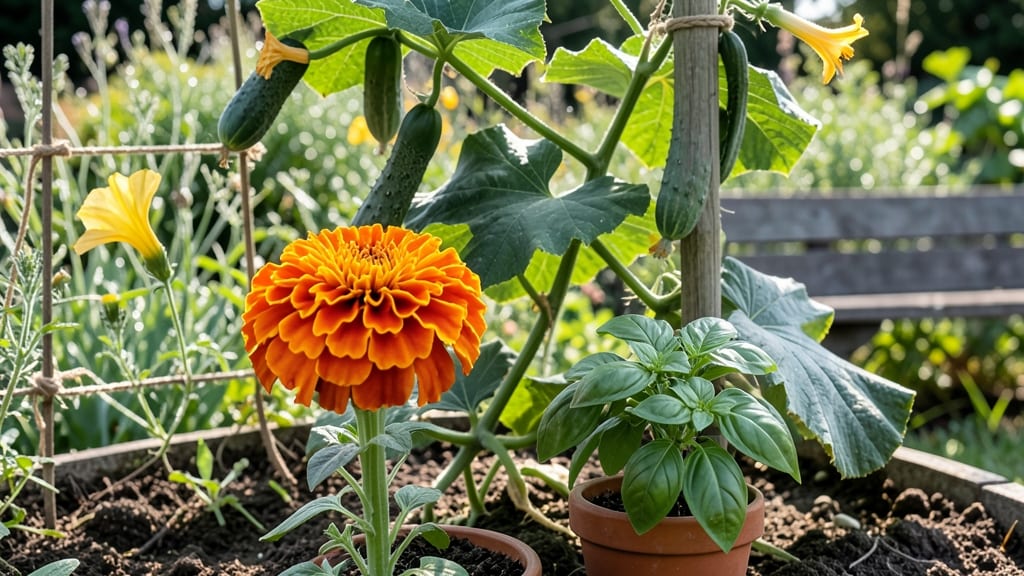
The right companion plants for cucumbers in containers can transform your tiny garden into a thriving, pest-resistant ecosystem—just like my first try with basil and marigolds did. 🌱 The secret isn’t just aesthetics; it’s about sharing nutrients, repelling bugs, and maximizing every inch of space.
Herbs like basil and dill are the obvious stars, but don’t overlook bush beans or nasturtiums—they work just as well. My 5-gallon containers fit 2-3 cucumber plants with 1-2 companions, and the soil mix stays rich longer because the plants support each other.
You’ll see fewer aphids, healthier vines, and more fruit without extra effort.
By mid-summer, your container will look lush and productive, with cucumbers trailing down and fragrant herbs filling the air. The key is spacing: keep companions close enough to interact but not so crowded the cucumbers struggle. Prune regularly to encourage airflow, and you’ll avoid the common trap of fungal issues.
This works for any container size—balcony pots, hanging baskets, or even stacked grow towers. The same principles apply whether you’re in a small apartment or a sunny patio. Once you try it, you’ll never grow cucumbers alone again.
📚 In This Guide
- What you need
- Instructions
- Tips and common mistakes
- Wrapping up and next steps
What you need
- ● Container: At least 5-gallon capacity (bigger is better for vining plants). Ensure it has drainage holes.
- ● High-quality potting mix: 10-12 quarts (lightweight, well-draining, and rich in organic matter). Avoid garden soil—it compacts in containers!
- ● Companion plants (select 2-3): 🥔 Radishes (fast-growing, deter pests)
- ● 🌿 Basil (improves flavor, repels flies)
- ● 🌻 Marigolds (natural pest repellent)
- ● 🥕 Nasturtiums (traps aphids, edible flowers)
- ● Cucumber seeds or seedlings: 1-2 plants per container (choose bush or dwarf varieties like 'Bush Champion' or 'Spacemaster').
- ● Slow-release fertilizer: 1-2 tablespoons (balanced 10-10-10 or organic options like fish emulsion).
- ● Mulch: 1-2 inches (straw or shredded leaves to retain moisture).
- ● Gloves (to protect your hands from soil and thorns).
- ● Trowel or small shovel (for planting and mixing soil).
- ● Watering can or hose with gentle spray nozzle (containers dry out fast!).
- ○ Trellis or cage (optional but highly recommended for cucumbers—supports vines and saves space).
- ● Pruning shears (for trimming companion plants as needed).
- ○ pH testing kit (optional but useful—cucumbers prefer pH 6.0-6.8).
How to pair cucumber plants with container companions
Smart container pairings maximize small-space yields while protecting cucumbers from pests and diseases.
🌱 Step 1: Select the Right Container and Base Pairings
Start with a 5-gallon container minimum for each cucumber plant—these vining varieties need room to sprawl. I recommend black plastic pots (they absorb heat) with at least 3 drainage holes to prevent root rot. The best foundational companions are bush beans or radishes, which deter cucumber beetles naturally. Plant one cucumber per container alongside 4-6 bean seeds or 8-10 radish seeds—the radishes mature quickly, repel pests, and get harvested before competing for space.
Here's the thing—marigolds are my secret weapon for containers. Tuck 3-4 marigold seedlings around the container's edge; their strong scent confuses cucumber beetles while attracting beneficial predatory wasps. The key is spacing: keep marigolds 6 inches away from cucumber vines to avoid root competition. You'll notice fewer beetle eggs on leaves within a week of planting marigolds.
🌿 Step 2: Layer in Pest-Repelling Herbs
Add dill or basil as your second companion layer—these herbs mask cucumber plant odors that attract pests. Plant 2-3 basil plants or 3 dill plants around the container's perimeter, ensuring their leaves brush against cucumber foliage. The volatile oils in basil deter spider mites, while dill attracts parasitic wasps that prey on cucumber beetles. I always use purple basil because its stronger scent works better than green varieties.
This is the moment that matters: avoid mint in containers with cucumbers. While mint repels pests, its aggressive roots will strangle cucumbers within weeks. Instead, opt for thyme or oregano—these ground covers suppress weeds and deter slugs without competing for nutrients. Sprinkle 1 teaspoon of crushed thyme around the container's base at planting time for an extra pest-deterring boost.
🪴 Step 3: Implement the Three-Tiered Container System
Create vertical space by training cucumbers on a trellis or tomato cage (install before planting). This frees up container floor space for shallots or garlic, which release sulfur compounds that repel aphids. Plant 3-4 shallot sets around the container's edge, ensuring they're 4 inches away from cucumber roots. The shallots will mature in time to deter pests while cucumbers vine upward.
For maximum efficiency, add nasturtiums as a trailing companion. These edible flowers deter whiteflies and attract aphids away from cucumbers. Plant 2-3 nasturtium seeds near the container's edge where they can trail down. You'll see whiteflies clustering on nasturtiums instead of your cucumbers within 10-14 days—it's like having a built-in pest magnet.
✂️ Step 4: Maintain Balance Through the Season
Monitor companion health weekly—harvest radishes and dill before they bolt, and prune marigolds to maintain their bushy form. Remove any yellowing leaves immediately; diseased foliage spreads faster in containers. I always rotate containers quarter-turn weekly to ensure even sun exposure for all plants. You'll notice more uniform growth and fewer pest hotspots when containers receive balanced light.
This prevents overcrowding: thin seedlings to maintain proper spacing (cucumbers need 12 inches of air circulation). If you see companion plants struggling, replace them immediately—a stressed plant attracts more pests than a healthy one. The goal is harmony: all plants should look vigorous, not competitive. Real talk: I've lost entire container harvests to root competition when I skipped this step.
Tips & tricks for perfect container cucumber pairings
These space-saving strategies will transform your cucumber harvests while keeping pests at bay.
Container Size Matters: Never skimp on container volume—those 5-gallon pots are non-negotiable for vining cucumbers. I've learned this the hard way after watching cucumbers struggle in 3-gallon pots, producing stunted vines and poor yields. The extra space prevents root competition with companions and allows cucumbers to sprawl properly. For larger varieties like 'Straight Eight,' consider 7-gallon containers to accommodate their vigorous growth.
Pest Prevention Timeline: The 10-14 day window for nasturtiums to attract whiteflies is your early warning system. Start monitoring cucumber leaves around day 7—you'll notice whiteflies clustering on nasturtiums first. This gives you time to intervene before they reach your cucumbers. I keep a spray bottle of neem oil handy during this critical period as a backup defense.
Root Competition Watch: That 4-inch spacing between shallots and cucumbers is crucial—any closer and you'll see cucumber vines yellowing as roots compete for nutrients. I always check root growth by gently loosening soil around the edges after 3 weeks. If roots are intertwining, it's time to thin one of the plants immediately. The goal is harmony, not competition.
Seasonal Maintenance: The quarter-turn weekly rotation isn't just about even growth—it's also a pest disruption tactic. Cucumber beetles and spider mites get confused by changing light exposure patterns. Pair this with your weekly health checks to create a double defense. I mark container positions with colored stakes to track rotation patterns and avoid disorientation.
Pro Tips for Companion Plants For Cucumbers In Containers
- These space-saving strategies will transform your cucumber harvests while keeping pests at bay.
- Container Size Matters: Never skimp on container volume—those 5-gallon pots are non-negotiable for vining cucumbers.
- Pest Prevention Timeline: The 10-14 day window for nasturtiums to attract whiteflies is your early warning system.
Frequently asked questions
Got questions about pairing cucumbers with the perfect container companions?
You’re not alone! Here are answers to the most common queries to help you grow like a pro—no guesswork required.
What are the best companion plants for cucumbers in small containers?
Stick to space-efficient, fast-growing pals like bush beans, radishes, lettuce, or marigolds. Avoid heavy feeders (like corn) or sprawling vines (like pumpkins) that’ll crowd your cucumbers. A 5-gallon container can comfortably fit cucumbers + 1–2 companions if pruned regularly.
When should I plant companion plants with cucumbers?
Plant companions 2–4 weeks after transplanting cucumbers (or sow seeds 1–2 weeks earlier for fast growers like radishes). This gives cucumbers a head start while preventing competition. Pro tip: Use succession planting—swap out radishes or lettuce mid-season to extend harvests!
Why are my cucumbers struggling even with companions?
Check for these red flags:
- Overcrowding: Too many plants = poor airflow ( Thin seedlings or upgrade container size).
- Pests: Aphids or cucumber beetles? Marigolds repel them—but if infested, isolate plants and use neem oil.
- Nutrient theft: Heavy feeders (like tomatoes) outcompete cucumbers. Solution: Fertilize cucumbers with balanced 10-10-10 monthly.
Can I grow herbs as companions for container cucumbers?
Basil, dill, or mint (in separate containers!) deter pests and boost flavor. Warning: Mint is invasive—keep it contained in its own pot. Avoid oregano or thyme; they’re drought-tolerant and may dry out cucumbers.
What if I don’t have traditional companions?
No problem! Try these low-maintenance swaps:
Instead of...
Try...
Marigolds (pest control)
Nasturtiums (edible, repel aphids)
Lettuce (shade tolerance)
Spinach or arugula (cut-and-come-again)
Bush beans (nitrogen fixers)
Peas (trellis-friendly) or clover (cover crop)
Bonus: Comfrey (deep roots) in a corner container improves soil fertility—just avoid harvesting it near edibles!
Wrapping up and next steps
Growing cucumbers in containers just got easier—and more rewarding—with the right companion plants! 🌱 From pest-repelling herbs like basil to space-saving climbers such as beans, these allies help maximize your harvest while keeping your garden thriving.
With a little planning, you can turn even the smallest balcony into a productive oasis.
Ready to get started? Pick your favorite combo, gather your supplies, and watch your container garden flourish! Next, sketch a simple layout of your container setup—this will help you visualize the best pairings for your space. Happy gardening! 🌿