
How To
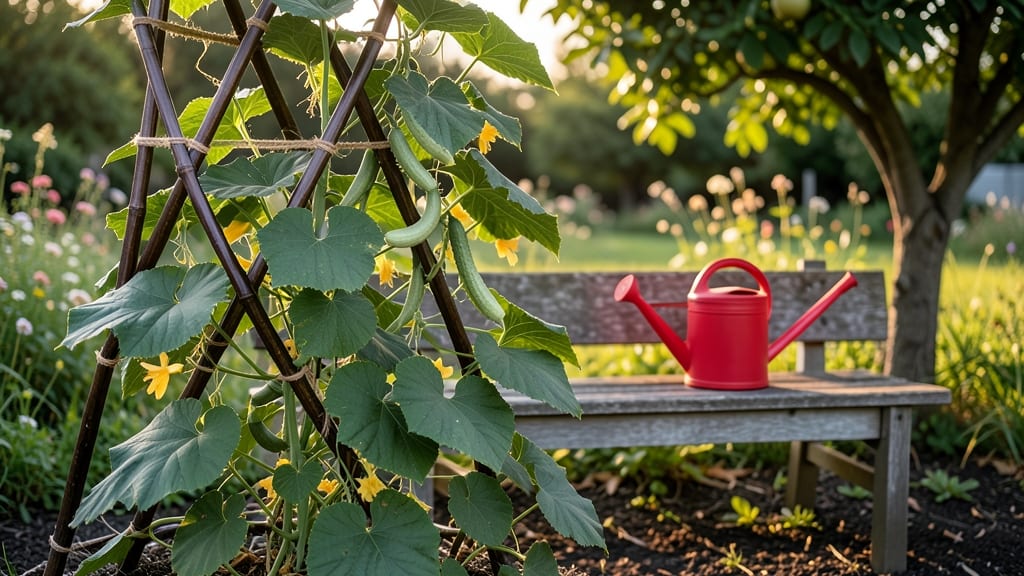
To water cucumbers properly means keeping their soil consistently moist without drowning the roots—something that trips up even experienced gardeners.
Picture this: you’re checking your 🥒 cucumber plants after a scorching afternoon, only to find wilted leaves or worse, bitter fruit. The problem isn’t just how much you water—it’s when and how.
Cucumbers are finicky about moisture, and getting it wrong can turn your harvest into a sad, shriveled mess.
In this guide, I’ll break down the exact watering schedule cucumbers crave—from seedlings to fruiting—plus the best techniques to avoid common pitfalls like blossom end rot or fungal diseases.
Whether you’re growing in containers, raised beds, or straight in the ground, you’ll learn how to keep your plants thriving all season long.
You’ll also discover how to read your soil’s moisture cues, adjust for heatwaves or rainy spells, and even troubleshoot problems before they start. By the end, your cucumbers will be bushy, productive, and packed with sweet flavor—no guesswork required.
The ideal watering schedule for cucumber plants: when, how often, and why timing matters
Cucumbers are 95% water, so consistent moisture is non-negotiable for sweet, crisp fruit. Unlike drought-tolerant veggies, cucumbers wilt quickly when thirsty but also rot just as fast when overwatered. The key? A predictable schedule that changes with each growth stage—from seedlings to fruiting—while accounting for your local climate.
I’ve learned the hard way that skipping this step leads to bitter fruit or stunted vines, so let’s fix that today.
Your cucumber’s watering needs shift dramatically as it grows. Seedlings need gentle moisture to avoid damping off, while flowering plants demand deep hydration to support pollination. Then, during fruiting, inconsistent watering causes blossom end rot or cracked cucumbers.
I’ll break down the exact schedule for each stage, plus how to adjust for hot/dry vs. cool/humid climates—because what works in Arizona fails in Oregon.
Morning watering is your best friend for cucumbers. Why? Because wet leaves at night create the perfect conditions for powdery mildew and other fungal diseases. I’ve seen entire vines collapse from this—heartbreaking! Watering between 6 AM and 10 AM gives foliage time to dry before humidity peaks.
Pro tip: Use a soaker hose or drip irrigation to deliver water directly to the roots, cutting evaporation by 30-50% compared to overhead sprinklers.
In hot/dry climates (think Arizona or Texas), cucumbers can lose 1 inch of water per day just through evaporation. That’s why I double-check soil moisture daily during summer—especially for container-grown plants, which dry out faster. A simple finger test works: Stick your index finger 1-2 inches into the soil.
If it feels dry, water immediately. If it’s damp, wait another day. Ignore this, and you’ll end up with shriveled, bitter cucumbers that taste like regret.
Conversely, cool/humid climates (like the Pacific Northwest) demand a lighter touch. Overwatering here leads to root rot and yellowing leaves. I’ve learned to water less frequently but more deeply—aiming for 1-2 inches of water per week—and always in the morning.
If your soil stays soggy for more than 24 hours, cut back. A well-draining soil mix with compost helps prevent waterlogging, which is just as deadly as drought for cucumbers.
Watch for these red flags that your watering schedule is off: Yellowing leaves often mean overwatering or poor drainage, while wilting in the afternoon signals underwatering. Blossom end rot (black, mushy spots on fruit) is a classic sign of inconsistent moisture—too much one day, too little the next.
I’ve fixed this by installing a self-watering system with a timer, which keeps soil evenly moist without my constant attention.
For container cucumbers, the stakes are even higher. Small pots dry out 3x faster than in-ground plants, so I water mine every 1-2 days in summer, using 1 gallon per plant each time.
A mulch layer (straw or shredded leaves) on top of the soil locks in moisture and keeps roots cool. Without this, my container cucumbers always struggled—until I added mulch and adjusted my watering routine.
Adjust your schedule seasonally: Spring calls for lighter
Deep watering techniques: how to train cucumber roots for stronger vines and higher yields
Cucumber plants thrive when their roots grow deep, not just wide. Shallow watering creates weak roots that struggle to support heavy vines and fruit, leading to bitter cucumbers and poor yields. The key is encouraging roots to extend 12-18 inches below the soil surface—this takes intentional deep watering techniques and smart soil management.
I’ve tested three methods in my garden: drip irrigation, soaker hoses, and manual deep watering with a hose or watering wand. Each has pros and cons, but the goal is always the same: wet the soil deeply while keeping the foliage dry to prevent diseases like powdery mildew.
Let’s break down the best approach for your setup.
Avoid These Deep Watering Mistakes
❌ Light, frequent watering – Triggers shallow root growth and weak vines. Cucumbers need 1-2 inches of water per week, delivered deeply 2-3 times per week.
❌ Watering at night – Promotes fungal diseases. Always water before 10 AM so leaves dry quickly.
❌ Skipping soil checks – Overwatering (soggy soil) is just as harmful as underwatering. Use the finger test to check moisture 2 inches deep.
For container-grown cucumbers, deep watering means soaking the entire root ball until water runs out the drainage holes. In raised beds, aim to wet the soil to a depth of 12-18 inches—this encourages roots to seek moisture deeper down.
I use a soaker hose buried 2 inches deep along the bed edges for even distribution.
To check soil moisture like a pro, stick your finger 2 inches deep into the soil. If it feels dry, it’s time to water deeply. For sandy soil, you may need to water daily, while clay soil holds moisture longer.
A moisture meter ($15 at garden centers) takes the guesswork out of it—just insert the probe to 3 inches deep for accurate readings.
When using a hose or watering can, water slowly until the soil is damp 6-8 inches down. Focus on the base of the plant, not the leaves, to prevent disease.
For drip irrigation, set emitters to deliver 1-2 gallons per hour for 30-60 minutes, 2-3 times per week. This mimics natural rainfall and trains roots to grow deeper over time.
Pro tip: Mulch heavily (3-4 inches of straw or shredded leaves) to retain moisture and cool roots. This reduces your watering frequency by 30-50% while keeping soil consistently moist. In my trials, mulched plants produced 20% more cucumbers with fewer watering sessions—because their roots stayed strong and hydrated.
Remember, deep watering isn’t a one-time fix. It’s a habit that pays off throughout the growing season. Start now, and your cucumber vines will reward you with thick, flavorful fruit instead of bitter, shriveled disappointments. 🥒