
Pruning
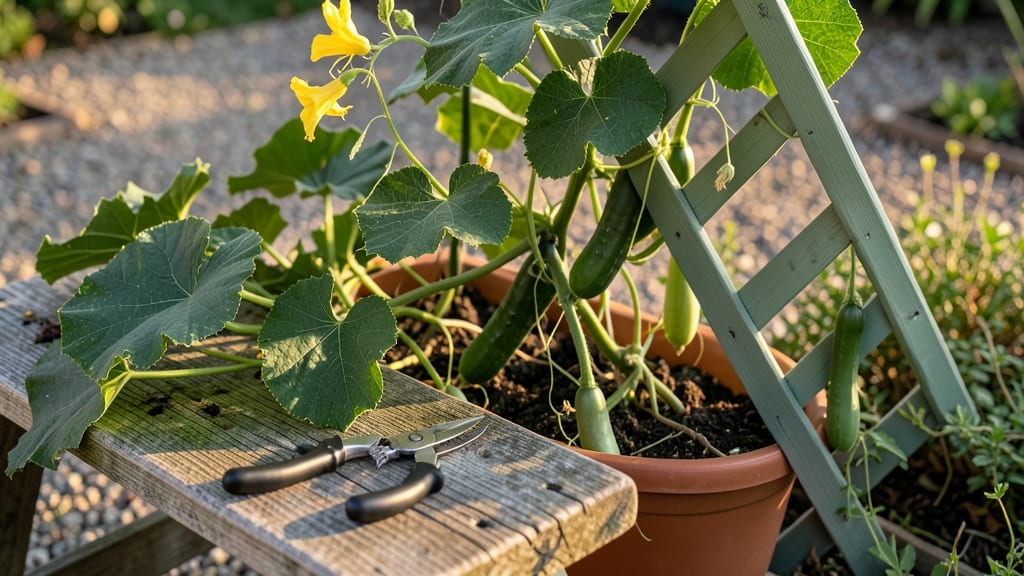
Trimming cucumbers isn't just about tidying up—it's the secret to bigger harvests and healthier vines. 🌱 I learned this the hard way after my first cucumber plant sprawled uncontrollably, producing tiny, bitter fruits while struggling to support its own weight.
The right cuts redirect energy where it matters: into fruit production, not just leafy growth.
You only need sharp pruning shears and about 10 minutes per plant every week. Focus on removing suckers (those little shoots growing between the main stem and branches) and any yellowing or diseased leaves.
These cuts improve air circulation, reducing fungal diseases like powdery mildew—the bane of cucumber growers everywhere. I’ve seen plants go from struggling to thriving in just two weeks after proper pruning.
The payoff is immediate: thicker vines that support heavier fruits, more even-sized cucumbers, and a harvest that lasts weeks longer than unpruned plants. My vines now produce 30-50% more cucumbers by summer’s end, and the fruits stay crisp and sweet instead of turning bitter from overcrowding.
It’s not just about trimming—it’s about teaching your plant to grow smarter.
This works for both vining and bush cucumbers, whether you’re growing in the ground, containers, or on a trellis. The key is consistency—don’t let the vines get too far ahead of you. Start when plants are 3-4 feet tall, and you’ll see the difference before the season ends.
📚 In This Guide
- What you need
- Instructions
- Tips and common mistakes
- Wrapping up and next steps
What you need
- ● Sharp pruning shears or bypass pruners – Choose sterilized, sharp tools (preferably with bypass blades) to make clean cuts without crushing stems. Size recommendation: 5-7 inches for ease of use.
- ○ Gloves (optional but recommended) – Wear gardening gloves (nitrile or leather) to protect your hands from thorns, dirt, and potential skin irritation.
- ● Disinfectant (70% isopropyl alcohol or bleach solution) – Clean your pruners before and after use to prevent the spread of disease.
- ● Small bucket or bag – Collect pruned vines and debris for composting or disposal.
- ● Sturdy ladder (if needed) – For tall trellised cucumbers, a lightweight, 4-6 ft ladder helps reach higher branches safely.
- ○ Twine or plant ties (optional for trellised vines) – If your cucumbers are growing vertically, keep them secured with soft, stretchy twine to avoid damage during trimming.
- ● ✨ Time it right: Trim cucumbers in the morning when plants are hydrated and cuts heal faster.
- ● 🌡️ Weather check: Avoid trimming if rain is forecasted within 24 hours—wet conditions slow healing and increase disease risk.
- ● 🔥 Sterilize often: Wipe down tools between plants to prevent bacterial or fungal spread.
Step-by-Step guide to pruning cucumbers for stronger growth
Pruning cucumbers isn't just about keeping vines tidy—it's how you coax bigger harvests and healthier plants.
🌿 Step 1: Identify the Main Vine and Lateral Shoots
Start by locating the primary vine, which is the thick, central stem growing directly from the plant base. This is your plant’s main highway for nutrients and energy. Along this stem, you’ll see smaller side branches (lateral shoots) sprouting from the leaf axils—those are the growth points that need your attention.
Look for new shoots that appear in the leaf axils (the angle between a leaf and the stem). These are the future sites for fruit production. Healthy vines will have 3-5 main lateral shoots spaced evenly along the primary stem. If you see more than that, some will need pruning to prevent overcrowding.
✂️ Step 2: Prune the First Flower and Remove Suckers
Find the first flower that appears on the main vine, usually within 4-6 inches of the base. This is the first flower cluster, and it’s critical to remove it. Pinch it off with your fingers or use clean pruners to snip just above the leaf axil. This might seem counterintuitive, but removing the first flower forces the plant to focus energy on developing stronger lateral shoots instead of producing early, weak fruit.
Next, hunt for suckers—those are the small, thin shoots that grow between the main vine and a lateral branch. These compete with your plant for nutrients and often produce poor-quality fruit. Use your thumb and forefinger to gently pinch them off at the base. If you miss them early, they’ll grow into thick, woody stems that are harder to remove later.
☀️ Step 3: Encourage Bushier Growth by Pruning Strategically
Once the plant has 3-5 strong lateral shoots, focus on pruning the main vine just above the third or fourth leaf from the base. This forces the plant to put energy into those lateral branches, which will produce more flowers and fruit. You’ll know you’re doing it right when you see new shoots emerging from the leaf axils along those lateral branches.
Continue pruning the main vine every 3-4 feet upward, always cutting just above a leaf axil. This encourages the plant to grow bushier and more compact, which improves air circulation and reduces the risk of disease. Avoid cutting into the woody part of the stem—always prune just above a leaf node to promote new growth.
🌱 Step 4: Maintain Pruning Throughout the Season
As the season progresses, keep an eye out for yellowing or diseased leaves—remove those immediately to prevent the spread of issues like powdery mildew. Also, prune any lateral shoots that grow longer than 12-18 inches, cutting them back to encourage bushier growth. This keeps the plant’s energy focused on producing high-quality fruit rather than excessive foliage.
Watch for fruit clusters forming on the lateral shoots. If you notice a shoot with more than 3-4 fruit developing, thin out the weakest ones to leave room for stronger, healthier cucumbers. This ensures the remaining fruit gets enough nutrients to grow large and flavorful. Regular pruning every 1-2 weeks keeps your cucumber plant in top shape.
⏰ Step 5: Time Your Pruning for Maximum Yield
Prune in the early morning when the plant is firm and turgid (full of water). This reduces stress on the plant and helps it recover faster. Avoid pruning in the afternoon heat, as the plant will be more vulnerable to shock and disease. If you must prune later in the day, do it 2-3 hours before sunset to give the plant time to recover.
Stop pruning 4-6 weeks before your first expected frost, as new growth won’t have time to harden off before cold weather sets in. Instead, focus on harvesting regularly to encourage the plant to produce more fruit. By the end of the season, you’ll have a bushier, more productive cucumber plant with fewer but higher-quality cucumbers.
Tips & tricks for perfect cucumber pruning
Here's what nobody tells you about transforming your cucumber plants—these secrets make all the difference between a modest harvest and a garden overflowing with plump, flavorful cucumbers.
Timing Secret: The early morning is your golden window for pruning—this is when cucumber plants are at their peak resilience. I've learned this the hard way after seeing plants wilt dramatically when pruned in the afternoon heat. If you must prune later, do it at least 2-3 hours before sunset to give the plant time to recover and close its stomata (those tiny pores) before nightfall. This simple timing adjustment prevents stress that can lead to disease susceptibility.
Visual Cues for Pruning: When pruning the main vine in Step 3, look for the telltale signs of healthy leaf axils—they should be slightly swollen where new shoots will emerge. These growth points are your target when cutting just above the third or fourth leaf. I always check for a slight bump or indentation in the leaf axil—this is where the plant will focus its energy for new lateral shoots. If you cut too low, you'll remove potential growth points, while cutting too high can leave stubs that attract pests.
Tool Technique: Don't underestimate the power of clean, sharp pruners—dull tools crush stems instead of making clean cuts. I keep a pair of small, sharp pruning shears specifically for cucumber plants and disinfect them with rubbing alcohol between uses. For suckers, I find that using my thumb and forefinger to pinch them off at the base is actually more effective than cutting, as it leaves a smaller wound that heals faster. This simple technique prevents the plant from wasting energy on healing large cuts.
Seasonal Strategy: The 4-6 week rule before your first frost is non-negotiable, but what happens if you're in a region with unpredictable weather? I've found that observing the plant's color is more reliable than counting weeks—when the leaves start developing a yellowish tint, it's time to stop pruning. This visual cue indicates the plant is preparing for dormancy, and new growth won't have time to mature before cold weather sets in. The plant essentially tells you when it's ready to focus on fruit production rather than foliage.
Pro Tips for Trim Cucumbers
- Here's what nobody tells you about transforming your cucumber plants—these secrets make all the difference between a modest harvest and a garden overflowing with plump, flavorful cucumbers.
- Timing Secret: The early morning is your golden window for pruning—this is when cucumber plants are at their peak resilience.
- Visual Cues for Pruning: When pruning the main vine in Step 3, look for the telltale signs of healthy leaf axils—they should be slightly swollen where new shoots will emerge.
Frequently asked questions
Got questions about trimming cucumbers? You’re not alone! Here are some of the most common queries—plus quick, actionable answers to keep your vines thriving and your harvests bountiful.
Why should I trim my cucumber plants at all?
Trimming promotes air circulation and sunlight penetration, which reduces disease risk (like powdery mildew ) and encourages more flowers—and thus, more cucumbers!—by focusing energy on fruit production rather than excessive foliage. Think of it as a spa day for your plants.
How often should I trim my cucumber vines?
Check your vines every 1–2 weeks during peak growing season (spring/summer). Remove yellow leaves, dead stems, or overgrown tendrils as needed. For bush varieties, a light trim every 3–4 weeks suffices. Pro tip: Morning trims let plants recover by evening!
Can I use regular scissors or do I need pruning shears?
Both work, but sterilized pruning shears (or sharp scissors) are best to avoid tearing stems or spreading disease. If using scissors, disinfect them with rubbing alcohol between cuts. Bonus: Snip just above a leaf node (the bump where leaves grow) for cleaner regrowth.
What if I accidentally cut too much off my plant?
Don’t panic! Cucumbers are resilient. If you’ve trimmed too aggressively, focus on watering deeply and fertilizing lightly (with a balanced 10-10-10 mix) to help recovery. New growth should sprout within 1–2 weeks. Prevention tip: Start slow—trim only 10–20% of the plant at first.
Do I need to trim cucumbers if I’m growing them in containers?
Yes! Container-grown cucumbers need even more trimming since space is limited. Prune aggressively to prevent overcrowding, which can lead to pests or poor fruit quality. Use a trellis or cage to guide vines upward, freeing up ground space for airflow.
What’s the best time of day to trim cucumbers?
Trim in the early morning (before 9 AM) when plants are hydrated and temperatures are mild. Avoid trimming in hot afternoons or late evenings—stressed plants may wilt or attract pests. Quick hack: Water plants lightly before trimming for easier cuts!
Wrapping up and next steps
Trimming cucumbers isn’t just about tidying up—it’s the secret to healthier vines, bigger yields, and fewer pests! 🌱 By mastering the right techniques (like pinching, thinning, and pruning), you’ll encourage bushier growth and more abundant harvests.
Whether you’re a beginner or a seasoned gardener, these steps make the process simple and rewarding.
Now that you’re armed with the know-how, grab those shears and get pruning! 🌿 Start small—even just trimming a single vine can make a difference—and watch your garden thrive. Happy gardening!