
Vegetables
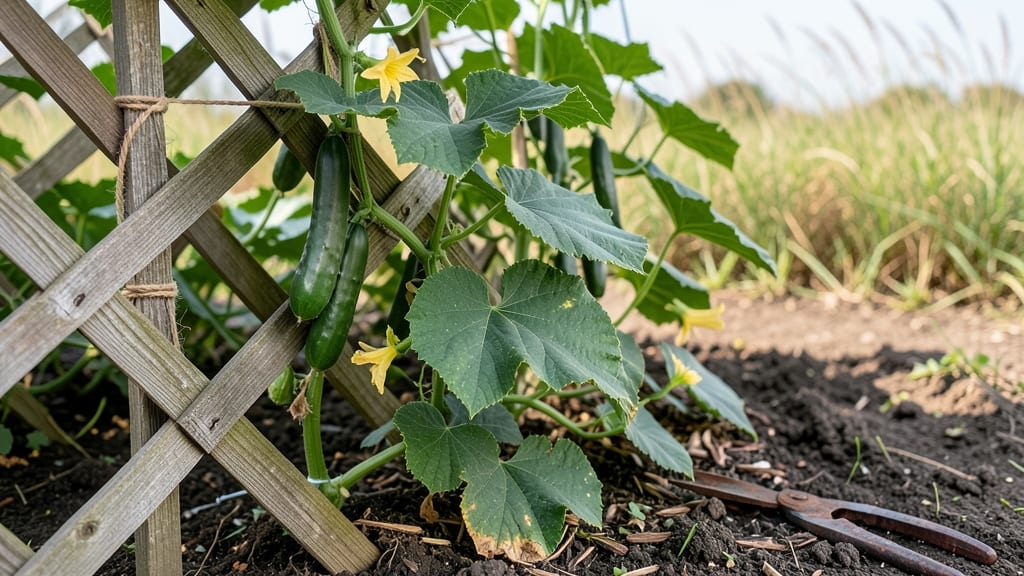
Supporting cucumber plants isn't just about keeping vines off the ground—it's about unlocking bushier growth and pest-free harvests that last all season. 🌱 I've learned that cucumbers left to sprawl produce fewer fruits, attract more bugs, and rot from damp soil, but with the right support, they become a productive, low-maintenance machine.
The secret lies in choosing the right structure: trellises save space and improve air circulation, stakes work for smaller gardens, and cages are perfect for bush varieties. My go-to is a simple A-frame trellis made from bamboo stakes and twine—it's sturdy, cheap, and lasts for years.
You'll see vines climb within days, and those cucumbers stay clean and easy to pick. What you end up with is a vertical jungle of healthy vines producing more cucumbers than you can eat.
The fruits stay dry, ripen evenly, and you avoid the slug and beetle problems that plague ground-hugging plants. Plus, harvesting becomes a breeze—no more bending or searching under leaves. Works for any garden size, from backyard plots to balcony containers. Here's how to set it up right the first time!
📚 In This Guide
- What you need
- Instructions
- Tips and common mistakes
- Wrapping up and next steps
What you need
- ● Trellis or Support Structure: 1–2 bamboo stakes (5–6 ft tall) or wooden posts (6–8 ft tall) per plant (or a permanent trellis frame for larger gardens).
- ● Twine or jute twine (¼-inch thick)—10–15 ft per plant (or soft plant ties to avoid vine damage).
- ● Wire mesh trellis (1-inch grid) or plastic netting (½-inch mesh) for sprawling varieties like vining cucumbers.
- ● Soil & Fertilizer: Well-draining potting mix or garden soil (amended with compost)—enrich with aged manure or balanced fertilizer (10-10-10) at planting.
- ● Mulch (straw or shredded leaves)—2–3 inches to retain moisture and deter weeds.
- ● Watering Supplies: Drip irrigation or soaker hose (to keep foliage dry and reduce disease risk).
- ● Watering can (5-gallon capacity) for seedlings or small gardens.
- ● Pruning Tools: Bypass pruners (sharp, clean) for trimming excess vines or yellow leaves.
- ● Cucumber cages (pre-made wire cages)—great for compact varieties like Bush Champion.
- ● Reflective mulch (aluminum foil or silver plastic) to deter pests like cucumber beetles.
- ● Plant clips or soft Velcro ties for gentle vine attachment (no digging into stems!).
- ● Organic pest control: Neem oil spray or row covers for early-season protection.
Step-by-Step guide to supporting cucumber plants for maximum yield
Here's the method I've used for years to grow cucumbers that climb, thrive, and produce like crazy.
🪴 Step 1: Choose the Right Support Structure
Cucumbers need vertical support to prevent disease, improve air circulation, and keep fruit clean. I recommend either a 5-6 foot tall trellis or strong wire cages (at least 3 feet in diameter). For heavy varieties like 'Lemon Cucumber,' use wooden dowels or heavy-duty plastic lattice—these can support 20+ pounds per plant when fully loaded.
Install your support before planting. Drive stakes 12-18 inches deep for stability, especially in windy areas. If using a trellis, space it 3-4 feet apart in rows to allow easy access. The key is sturdiness—nothing worse than watching a trellis collapse under a sudden cucumber harvest.
☀️ Step 2: Train Vines Properly from Day One
When seedlings reach 4-6 inches tall, gently tie the main stem to the support using soft plant ties or old fabric strips. Never use wire—it can girdle tender vines. I like to wrap the ties in a figure-eight pattern around the stem and trellis to prevent slipping as the plant grows.
Let the vines climb naturally, but prune aggressively to encourage bushier growth. Pinch off any tendrils that form at the base of the plant—these will only produce weak, sprawling vines. Focus on 2-3 main lateral branches per plant, trimming others back to 6 inches long when they appear. This directs energy upward where it belongs.
🌿 Step 3: Maintain and Adjust Support Weekly
Check your supports every 7-10 days to ensure they're still secure. Cucumbers grow 1-2 feet per week, and that weight adds up fast. If the trellis sways when you touch it, reinforce it immediately—a wobbly support means broken vines and lost fruit. I like to add cross-bracing to tall trellises mid-season for extra stability.
Adjust ties as needed—never let them strangle the vine. If a tie digs into the stem, loosen it immediately. You'll know you're doing it right when the vines climb steadily without any signs of stress. Watch for yellowing leaves at the base—this is your cue to check for overcrowding or poor air circulation.
✂️ Step 4: Prune for Airflow and Pest Control
Prune regularly to keep the plant open and airy. Remove any leaves that touch the ground—they'll rot and spread disease. I also trim back overly dense foliage near the base to prevent powdery mildew, a common cucumber killer. Aim for 6-12 inches of space between leaves to maximize airflow.
When fruit appears, tie each cucumber to the trellis with a small loop of twine. This prevents them from dragging on the ground (where they rot) and keeps them clean and blemish-free. Harvest every 2-3 days—overripe cucumbers weigh down the vines and stress the plant. You'll know they're ready when they're firm, bright green, and about 6-8 inches long.
💧 Step 5: Water and Fertilize for Strong Growth
Water deeply 2-3 times per week, aiming for 1-1.5 gallons per plant. Keep the soil consistently moist but never soggy—soggy soil = root rot. I water early in the morning so the leaves dry quickly, reducing fungal risks. If your trellis is in full sun, you may need to water daily during heatwaves—watch for wilting leaves as your signal.
Feed with a balanced liquid fertilizer (10-10-10) every 2 weeks once flowering begins. I also sprinkle compost tea around the base monthly for extra nutrients. Avoid high-nitrogen fertilizers—they produce leafy growth at the expense of fruit. Instead, focus on phosphorus and potassium to encourage bushy vines and heavy yields.
Tips & tricks for supporting cucumber plants like a pro
These battle-tested strategies will help your cucumbers grow stronger, healthier, and more productive than ever.
Support Structure Stability: When installing your 5-6 foot trellis or 3-foot wire cages, use 4x4 wooden posts buried 12-18 inches deep for maximum stability. I've seen too many lightweight supports topple under the weight of a single cucumber harvest. For windy areas, add diagonal cross-bracing between posts to prevent swaying. This simple reinforcement can mean the difference between a thriving plant and a broken vine mid-season.
The Right Time to Train Vines: Don't wait until vines are sprawling everywhere to tie them up—instructions say to start when seedlings reach 4-6 inches tall. This early training prevents tangled vines and makes future pruning easier. Use soft plant ties or even old fabric strips (I save old t-shirts for this), wrapping them in a figure-eight pattern around both the vine and support. This creates a gentle grip that grows with the plant without strangling it as it thickens.
Pruning for Maximum Airflow: The 6-12 inch spacing between leaves mentioned in Step 4 is crucial for preventing powdery mildew. I prune aggressively by removing any leaves touching the ground and thinning dense foliage near the base. For extra airflow, I also make small cuts near the base of lateral branches to encourage upward growth. This creates an open canopy that dries quickly after morning watering, dramatically reducing fungal diseases. Think of it as creating a mini greenhouse effect but with better airflow.
Harvesting Frequency: Those 2-3 day harvest intervals aren't just about getting your cucumbers—they're about plant health. Overripe cucumbers weigh down vines and stress the plant, which can trigger early flowering and fruiting. I harvest first thing in the morning when cucumbers are firmest, and I always tie each new cucumber to the trellis immediately. This prevents them from dragging on the ground where they rot and develop ugly blemishes. A quick loop of twine around each cucumber stem keeps them clean and extends shelf life.
Pro Tips for Support Cucumber Plants
- These battle-tested strategies will help your cucumbers grow stronger, healthier, and more productive than ever.
- Support Structure Stability: When installing your 5-6 foot trellis or 3-foot wire cages, use 4x4 wooden posts buried 12-18 inches deep for maximum stability.
- The Right Time to Train Vines: Don't wait until vines are sprawling everywhere to tie them up—instructions say to start when seedlings reach 4-6 inches tall.
Frequently asked questions
Got questions about keeping your cucumber plants thriving? Here are some of the most common concerns—and expert answers to help you grow like a pro!
How often should I water cucumber plants?
Cucumbers need consistent moisture—about 1 to 2 inches of water per week, especially during flowering and fruiting. Water at the base (not the leaves) to prevent disease, and aim for morning watering to reduce evaporation. Mulch helps retain moisture and keeps soil cool.
When is the best time to trellis cucumber plants?
Install trellises or supports as soon as seedlings are 4–6 inches tall (usually 1–2 weeks after transplanting). This prevents root disturbance and encourages upward growth. For vining varieties, use a 5–7 foot tall trellis; bush types need shorter stakes (3–4 feet). Early support = better airflow and fewer pests!
What do I do if my cucumbers develop yellow leaves?
Yellow leaves often signal overwatering, nutrient deficiency, or pests. Check the soil—it should be moist but not soggy. If leaves curl or have holes, spider mites or aphids may be the culprit. Treat with neem oil or insecticidal soap, and prune damaged foliage. Boost nitrogen with compost tea if leaves are pale.
Can I grow cucumbers without a trellis?
Yes! If space is limited, try bush varieties (like ‘Bush Champion’) or use stakes, cages, or low trellises (2–3 feet tall). Just be prepared for larger fruits on the ground, which may rot or need extra harvesting. For vertical gardens, prune side shoots to focus energy upward.
How do I protect cucumbers from pests naturally?
Start with prevention: Use row covers early in the season, plant companion herbs like basil or dill, and rotate crops yearly. For pests, spray homemade remedies like:
- Soapy water (1 tsp mild soap + 1 quart water) for aphids.
- Garlic/chili spray (blend 2 garlic cloves + 1 tbsp cayenne + 1 quart water) to deter beetles.
- Diatomaceous earth (food-grade) around the base for crawling insects.
Wrapping up and next steps
Growing thriving cucumber plants is all about the right support, patience, and a little know-how!
By using trellises, stakes, or cages—and following the tips for pruning, pest control, and watering—you’ll enjoy bushier vines, healthier fruits, and a bountiful harvest that’s easier to manage. 🌱✨ Whether you’re a seasoned gardener or just starting out, these techniques will set you up for success.
Now that you’re armed with the secrets to supporting your cucumbers like a pro, it’s time to roll up your sleeves and get planting! Start small—try a single trellis or a few plants—and watch your confidence (and cucumbers!) grow. Happy gardening! 🌿💚