
Companion Plants
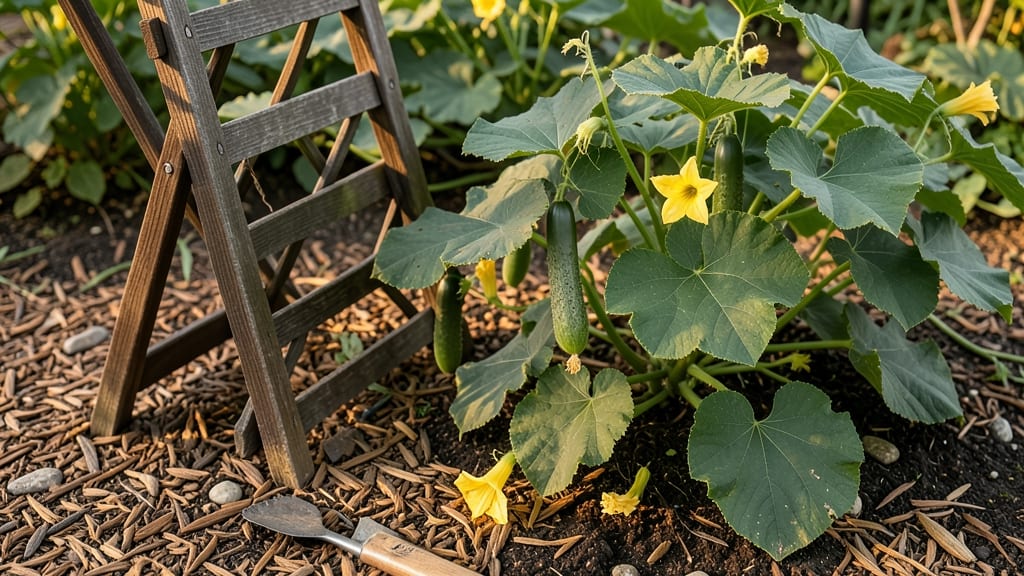
To determine how many cucumber plants you need, plan for 2-4 plants per person in your backyard garden, spacing vines 2-3 feet apart to balance yield and space efficiency.
This range accounts for both bush varieties (which produce more compact harvests) and vining types (which yield more but need more room). 🌱 The key is spacing—crowding plants invites fungal diseases like powdery mildew while proper airflow keeps vines healthy.
For a 10x10-foot garden, you could comfortably fit 4-6 plants, depending on whether you're growing bush types or training vines vertically.
What's interesting is how this math changes with companion planting. Adding fast-growing radishes or beans between cucumber rows creates a living mulch that suppresses weeds while improving soil health.
I've found that staggering plantings—adding new plants every 2 weeks—extends the harvest season by weeks, giving you fresh cucumbers from early summer through fall.
💡 In This Article
- Cucumber Plant Spacing and Yield Math
- Space-Saving Cucumber Planting Strategies
Cucumber plant spacing and yield math
The 2-3 feet spacing between cucumber plants isn't arbitrary—it's rooted in how these vining plants grow. Cucumbers are rapidly expanding vines that spread horizontally, with each plant potentially reaching 6-12 feet in diameter if unchecked.
This sprawling habit explains why crowding plants leads to poor air circulation, creating ideal conditions for fungal diseases like powdery mildew. 🌱 The 2-foot minimum gives each plant enough room to develop strong, healthy leaves for photosynthesis while preventing leaf shade that stunts fruit production.
Here's the yield math: A single well-spaced cucumber plant can produce 5-10 pounds of fruit during a growing season, depending on variety. Bush types (like 'Bush Champion') yield 20-30% less than vining varieties but require half the space.
For example, in a 10x10-foot garden bed, you could fit 4 bush plants (spaced 2 feet apart) or 2 vining plants (spaced 3 feet apart with trellising).
The key is matching plant type to your space constraints while maintaining that critical 2-3 feet spacing for optimal airflow and light penetration.
What most gardeners don't realize is how this spacing affects fruit quality. When plants are too close, competition for nutrients leads to smaller, less flavorful cucumbers.
I've noticed that properly spaced plants develop larger, straighter fruits with better texture—likely because each vine can allocate more energy to fruit development rather than leaf growth.
The 3-foot spacing is particularly important for vining types, as it gives the main stem room to develop strong lateral branches where most fruit forms.
Consider this comparison: A 100-square-foot garden could support 20-30 bush plants or 10-15 vining plants with proper spacing. The difference comes down to growth habit—bush types grow in compact mounds while vining types send out long runners.
This explains why backyard gardens often see better yields per square foot with bush varieties, even though vining types produce more total fruit when given space. The trade-off is yield density versus total production.
Another factor is plant maturity timing. Cucumbers typically reach peak production 50-60 days after planting. In a crowded garden, early producers may exhaust nearby plants before they've reached their full potential.
The 2-4 plants per person guideline accounts for this by ensuring you have enough plants to maintain a steady harvest throughout the growing season, rather than a brief peak followed by decline. 🌿
For those working with limited space, understanding this math helps prioritize high-yield varieties. For instance, 'Straight Eight' produces 10-15 cucumbers per plant when properly spaced, while 'Lemon Cucumber' yields fewer but larger fruits.
The spacing requirements remain the same, but your harvest composition changes based on variety selection and spacing decisions.