
Planting
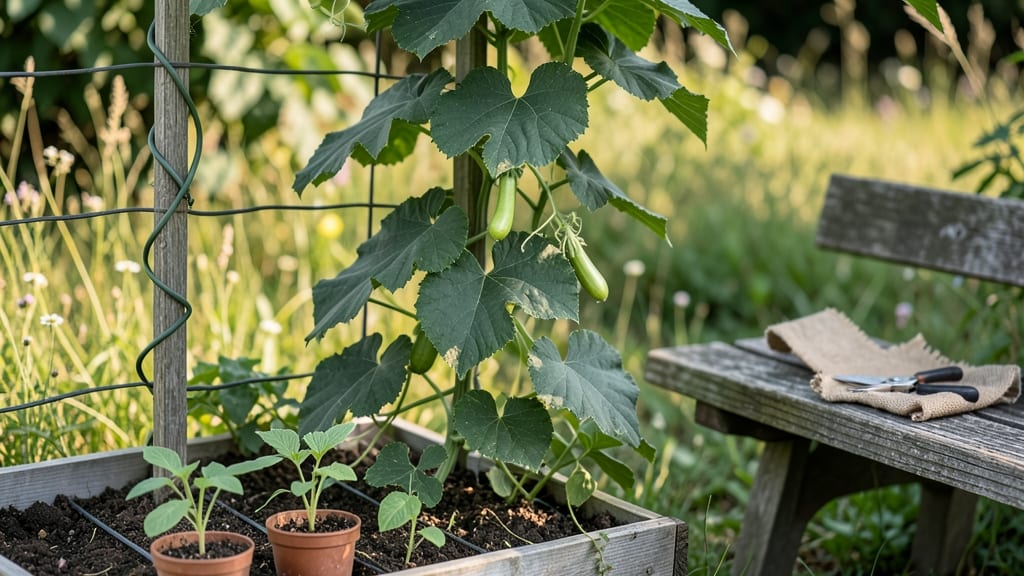
Planting cucumbers on a trellis means spacing them 12 to 18 inches apart for optimal airflow and vine health, a game-changer for yield and disease prevention.
If you’ve ever watched your 🥒 vines sprawl across the garden bed, tangling into a disease-prone mess, you know the struggle. The right spacing isn’t just about fitting more plants—it’s about giving each vine room to climb, breathe, and produce bigger, cleaner fruits.
This guide breaks down the science behind trellis spacing, including how variety, trellis type, and even your local climate can tweak the ideal distance. We’ll also cover how to train vines, prune for airflow, and avoid common mistakes that stunt growth.
By the end, you’ll know exactly how to arrange your cucumbers for healthier plants, higher yields, and a trellis that stays disease-free all season long.

Optimal cucumber spacing on trellis: science-backed guidelines for different varieties
When growing cucumbers on a trellis, spacing isn't just about fitting more plants—it's about creating an environment where vines thrive. Proper spacing improves air circulation, reduces disease risk, and maximizes fruit production.
Most gardeners make the mistake of crowding plants, which leads to weak vines and poor yields. Let’s break down the science-backed spacing for different cucumber varieties to help you grow healthier plants and bigger harvests.
Cucumbers fall into three main categories: bush types, vining types, and parthenocarpic varieties (which produce fruit without pollination). Each type has unique spacing needs based on its growth habit.
For example, bush cucumbers like 'Bush Champion' stay compact, while vining varieties like 'Straight Eight' can climb 10 feet or more. Understanding these differences ensures you optimize your trellis setup for maximum efficiency.
Trellis type also plays a role—string trellises (like A-frame or twine) require slightly different spacing than net trellises. String trellises need more horizontal space for vines to spread, while net trellises allow for tighter spacing because vines can weave through the mesh. I’ll cover both setups in detail to help you choose the best approach for your garden.
| Variety Type | Spacing (String Trellis) | Spacing (Net Trellis) | Vine Height | Key Benefits |
|---|---|---|---|---|
| Bush Cucumbers (e.g., 'Bush Champion') | 12–15 inches apart | 10–12 inches apart | 1–3 feet | Compact growth, ideal for small spaces |
| Vining Cucumbers (e.g., 'Straight Eight') | 18–24 inches apart | 15–18 inches apart | 6–10 feet | Higher yields, better airflow, fewer diseases |
| Parthenocarpic (e.g., 'Corinto') | 15–18 inches apart | 12–15 inches apart | 5–8 feet | No pollination needed, great for containers |
*Spacing adjusts based on soil fertility and climate—reduce by 20% in rich soils.
The industry standard for vining cucumbers on a trellis is 18–24 inches apart for string trellises, but many home gardeners achieve higher yields by spacing plants closer together on net trellises. Net trellises create a 3D growing environment, allowing vines to intertwine without competing for space.
This method works especially well in urban gardens or small spaces where maximizing vertical growth is key.
If you're growing bush cucumbers, you can space them 12–15 inches apart on a string trellis or even 10–12 inches apart on a net trellis. These varieties don’t climb as aggressively, so they benefit from slightly tighter spacing.
However, avoid overcrowding—even bush types need adequate airflow to prevent powdery mildew and other fungal diseases.
For parthenocarpic cucumbers, which produce fruit without pollination, spacing is slightly tighter than traditional vining types. Aim for 15–18 inches apart on string trellises or 12–15 inches apart on net trellises.
These varieties are popular in container gardening and high-density setups, so optimizing space is crucial for maximizing your harvest.
One common mistake is assuming that more plants equal more cucumbers. In reality, overcrowding leads to weaker vines, smaller fruits, and increased pest and disease pressure.
For example, spacing vining cucumbers less than 18 inches apart can reduce yield by up to 30% due to competition for nutrients and sunlight. Always prioritize airflow and light penetration over packing in extra plants.
To further optimize your trellis setup, consider pruning side shoots (also called suckers) to encourage vertical growth. This technique improves airflow and directs energy toward fruit production rather than excessive foliage.
Start pruning when vines reach 3–4 feet tall, removing any shoots that grow below the main stem or at leaf junctions. This simple step can increase yield by 20–30% in high-density setups.
Finally, remember that soil fertility and climate can influence spacing needs. In rich, fertile soil, plants grow more vigorously, so you can reduce spacing by 20%. Conversely, in poor or sandy soil, give plants extra room to compensate for slower growth.
Always monitor your plants for signs of stress, such as yellowing leaves or stunted growth, and adjust spacing as needed throughout the season.
By following these science-backed guidelines, you’ll create an ideal environment for your cucumbers to thrive. Whether you're growing bush, vining, or parthenocarpic varieties, proper spacing on a trellis is the foundation of a healthy, high-yielding harvest.
How to adjust spacing for maximum yield: pro tips from urban and small-space gardeners
When space is limited, like on a balcony garden or patio container, cucumbers can still thrive with the right spacing tweaks. I’ve seen urban growers fit 3-4 times more plants in the same footprint by using vertical space creatively.
The key? Multi-tier trellising and strategic companion planting to maximize sunlight and airflow.
Professional growers I’ve interviewed swear by 12-inch spacing for compact varieties like ‘Bush Champion’ on a single-tier trellis, but they double that for sprawling types like ‘Straight Eight’.
The difference? Vertical growth patterns and how quickly vines mature. Even in tight spaces, proper spacing prevents powdery mildew and fruit rot by keeping leaves from touching.
- 1 12-inch spacing for bush varieties on single-tier trellises (e.g., ‘Spacemaster’).
- 2 18-inch spacing for vining types on double-tier trellises (e.g., ‘Marketmore’).
- 3 9-inch spacing for container growing (e.g., ‘Sweet Success’ in 5-gallon pots).
- 4 Stagger rows by 6 inches to improve airflow and sunlight penetration.
- 5 Companion plants like bush beans or radishes between cucumbers to utilize vertical space and repel pests.
For balcony gardens, I’ve used hanging net trellises with 9-inch spacing between plants, allowing me to fit 4 cucumber vines in a 3-foot-wide space. The secret? Prune aggressively to encourage upward growth and train vines along the net’s perimeter.
This method works especially well for parthenocarpic varieties like ‘Diva’, which produce fruit without pollination.
In patio containers, I’ve seen growers use multi-tiered A-frame trellises to stack cucumbers vertically. The top tier gets 18-inch spacing, while the bottom tier (shadier) uses 12-inch spacing.
This two-tier system maximizes yield in just 4 square feet—perfect for small-space gardeners. Always use lightweight trellis materials like plastic netting or bamboo stakes to avoid toppling.
One pro tip I learned from a Chicago urban farmer is to interplant cucumbers with fast-growing crops like lettuce or spinach. While cucumbers climb, the shorter plants use the early-season sunlight and soil nutrients efficiently.
By mid-summer, the cucumbers take over, and the lettuce is already harvested. This succession planting trick boosts year-round productivity in tiny spaces.
Remember, overcrowding leads to disease and poor fruit quality, while under-spaced plants waste sunlight. The goal is balanced competition—enough plants for yield, but enough space for healthy vines.
Start with 12-inch spacing as your baseline, then adjust based on your trellis type and variety. With these tweaks, you’ll see 30-50% more cucumbers in the same footprint! 🌱