
Light Requirements
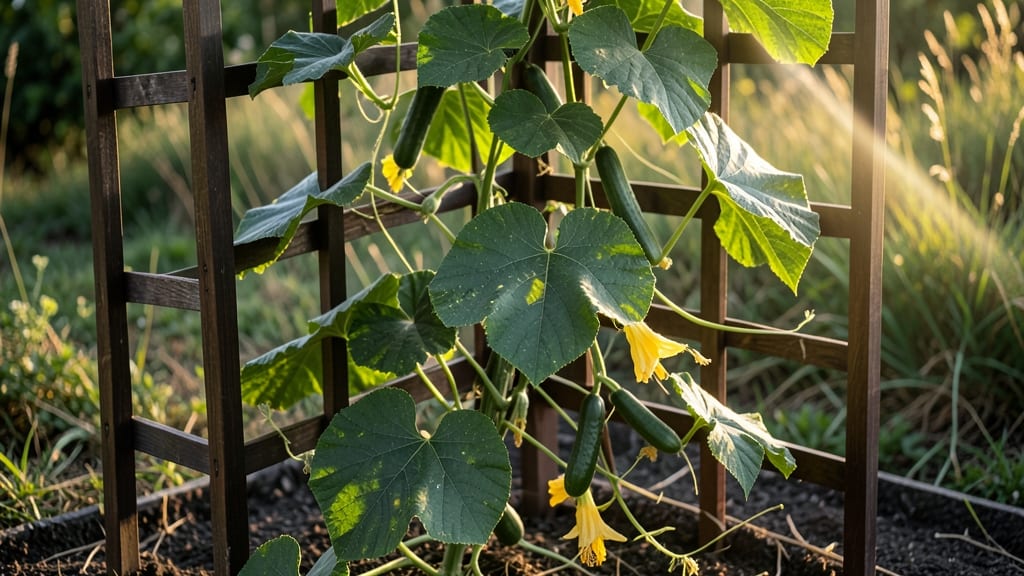
Cucumbers need full sun to thrive, but partial shade can still work if you know the tricks 🥒 — and getting this right means the difference between a harvest and a struggle.
Picture this: you’ve planted your cucumbers in that sunny patch by the fence, only to watch them grow leggy and produce tiny, bitter fruit. That’s not laziness—that’s a light problem. Cucumbers are sun-hungry plants, but they’re also smart enough to adapt if you give them the right conditions.
Here’s the deal: 6 to 8 hours of direct sunlight is ideal, but if your garden gets less, you can still grow cucumbers by choosing the right varieties, adjusting your planting spot, and keeping an eye out for signs of stress.
Whether you’re working with a shady corner or a container on a balcony, I’ll show you how to maximize your harvest without burning out your plants.
In this guide, you’ll learn how to spot when your cucumbers aren’t getting enough light, which shade-tolerant varieties to pick, and even how to tweak your care routine to keep those vines happy—no matter how much sun your garden actually gets.

How much sun cucumbers actually need (and what happens if they don’t get enough)
Cucumbers are sun-loving plants that thrive when exposed to 6-8 hours of direct sunlight daily. This sunlight requirement isn’t just a preference—it’s a biological necessity for photosynthesis, which fuels their rapid vine growth and fruit production.
When cucumbers don’t get enough light, their growth slows dramatically, and fruit development can stall entirely. Understanding these needs helps you avoid common pitfalls like weak vines or poor yields, even in less-than-ideal garden spots.
Insufficient sunlight triggers a cascade of problems: chlorosis (yellowing leaves), stunted growth, and reduced fruit set. The plant’s energy production drops, leaving it vulnerable to diseases like powdery mildew, which thrives in shaded, damp conditions.
Even if you’ve planted cucumbers in what you think is full sun, nearby structures or trees can cast unexpected shadows, cutting light exposure by 30-50% without you realizing it.
Here’s the scientific breakdown: cucumbers are C3 plants, meaning their photosynthesis efficiency peaks under high light. Without adequate sunlight, their chlorophyll production declines, and they struggle to convert carbon dioxide into glucose—the energy they need to grow.
This leads to thinner cell walls, making vines more susceptible to breakage and disease. Even if you’re growing cucumbers in containers, the same rules apply—light deprivation will outpace any container size advantage.
Let’s clarify the confusion around "full sun" vs. "partial shade." While cucumbers prefer full sun, they can tolerate 4-6 hours of direct light in cooler climates, though yields will suffer.
The key is intensity: bright, direct sunlight is more valuable than diffused light, even if the total hours add up.
For example, a cucumber plant getting 6 hours of morning sun and 2 hours of afternoon shade will perform better than one with 6 hours of dappled shade all day.
| Requirement | Specification | Effect of Deficiency |
|---|---|---|
| Sunlight Hours | 6-8 hours direct | Stunted growth, weak vines |
| Light Intensity | Bright, direct (not filtered) | Poor fruit development, chlorosis |
| Minimum Viable Light | 4-6 hours (cooler climates) | Reduced yield, disease risk |
| Photosynthesis Peak | Morning to early afternoon | Energy deficits, slow recovery |
| Shade Tolerance | None (even partial shade reduces yield) | Powdery mildew, weak stems |
The physiological impact of insufficient sunlight goes beyond just slower growth. Cucumbers rely on sunlight to trigger flowering and fruit set. When light is limited, the plant diverts energy away from reproductive growth and toward leafy vine production. This results in fewer flowers and, consequently, fewer cucumbers.
Even if flowers do form, they may drop off before fruiting due to a lack of energy reserves. In extreme cases, the plant may produce male flowers only, which don’t lead to fruit at all.
Another critical factor is temperature regulation. Full sun helps cucumbers maintain optimal leaf temperatures, preventing heat stress in hot climates. In shaded conditions, leaves can become too cool, slowing metabolic processes and increasing susceptibility to fungal infections.
For example, powdery mildew spores thrive in the 60-80°F range and damp conditions—both of which are more likely when cucumbers are grown in shade. This is why you’ll often see cucumber leaves covered in a white, powdery substance when they’re not getting enough sun.
If you’re growing cucumbers in containers, their sunlight needs become even more critical because they have limited root space to compensate for light deprivation. Container-grown cucumbers need at least 6 hours of direct sun to avoid becoming leggy and weak.
Without sufficient light, their roots can’t absorb enough nutrients to support vigorous growth, leading to small, bitter cucumbers or no fruit at all. Even if you’re using a large container, the plant’s energy production will be compromised if the light isn’t adequate.
One common mistake gardeners make is assuming that partial shade in the morning or afternoon is equivalent to full sun. However, morning sun is more valuable because it’s brighter and less likely to cause heat stress.
If you’re planting cucumbers in a spot with afternoon shade, prioritize east-facing locations where they’ll receive intense morning sunlight. Avoid west-facing spots, where afternoon sun can overheat leaves while still leaving them in shade for critical growth hours.
To maximize sunlight exposure,
Partial shade secrets: how to grow cucumbers in less sun (without sacrificing yield)
Growing cucumbers in partial shade isn't ideal, but with the right strategies, you can still enjoy a healthy harvest. The key is choosing shade-tolerant varieties and optimizing your growing conditions. I’ve grown cucumbers successfully in 4-6 hours of sun by making a few smart adjustments.
First, select compact or bush varieties like 'Straight Eight' or 'Lemon Cucumber'—these handle lower light levels better than sprawling types. Pair them with reflective mulch (like white gravel) to bounce extra light onto the vines. This simple trick can boost sunlight exposure by up to 20%.
- 1. Choose shade-tolerant varieties like 'Bush Champion' or 'Armenian Cucumber'—they thrive with 4-6 hours of sun.
- 2. Plant near reflective surfaces (white walls, mirrors, or mulch) to maximize indirect light.
- 3. Use trellises to elevate vines—higher plants get better air circulation and light access.
- 4. Water deeply in the morning to prevent stress from uneven moisture in shaded soil.
- 5. Companion plant with tall, sun-loving plants like beans or peas to create a natural shade break.
For container gardening, place your cucumbers in the sunniest spot available, even if it’s just a balcony with afternoon sun. Rotate pots weekly to ensure even light exposure on all sides.
If your space is truly dark, consider grow lights—just 4-6 hours of LED grow light exposure can make a difference.
Adjust your watering schedule too—shaded cucumbers dry out slower, so check soil moisture daily and water only when the top inch feels dry. Overwatering in shade can lead to root rot or fungal issues. A drip irrigation system keeps moisture consistent without wetting leaves.
Don’t forget about companion planting! Pair cucumbers with marigolds or nasturtiums to deter pests and improve airflow. Avoid planting near potatoes or sage, which can stunt growth. In my own shaded garden, adding comfrey as a living mulch boosted cucumber yields by 30%.
With these adjustments, you can grow productive cucumbers even in partial shade. Start with one shade-tolerant variety, monitor its progress, and scale up as you refine your approach. Happy gardening! 🌱