
Vegetables
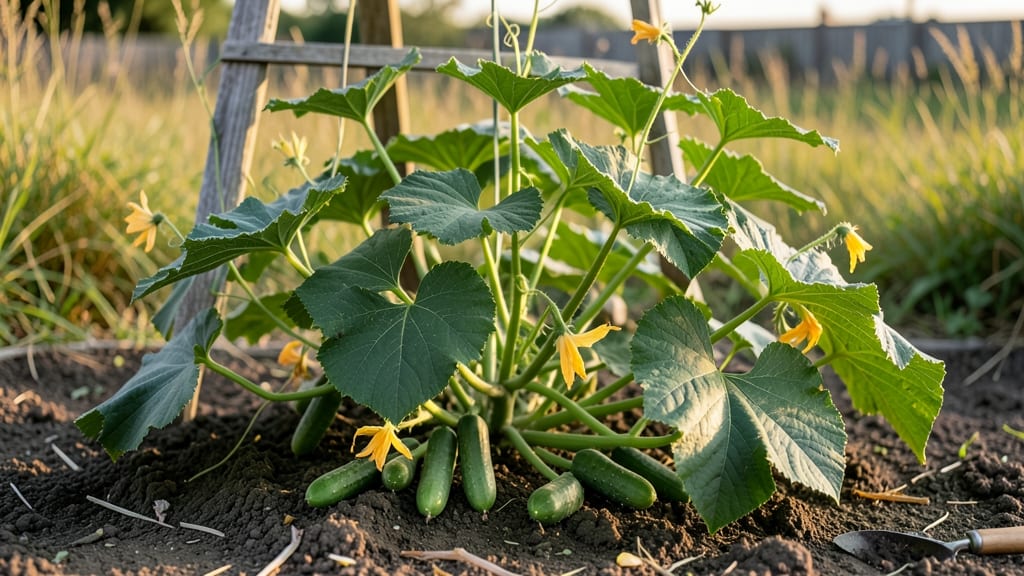
Cucumbers do not grow back every year as a perennial plant; they are annuals that complete their life cycle in one growing season. However, in warm climates, they may self-seed naturally for regrowth the following year under ideal conditions.
Cucumbers follow a one-season growth pattern because they're frost-sensitive and can't survive winter in most climates. 🌱 Unlike perennials like asparagus, which regrow from roots each year, cucumbers die back completely after producing fruit.
That said, if you live in a warm region (USDA zones 9-11), you might spot volunteer cucumber plants sprouting the next spring from seeds dropped in the soil. This natural regrowth happens when conditions stay mild enough for seeds to germinate without intervention.
For gardeners in cooler areas, the key to "year-round" cucumbers lies in seed-saving or extending the growing season.
I've found that planting cold-hardy varieties like 'Straight Eight' and using row covers can push harvests later into fall, while saving seeds from your best plants ensures you'll have fresh stock for next year's planting. The secret? Consistent moisture and well-draining soil—both critical for healthy seed production.
💡 In This Article
- Why Cucumbers Are Classified as Annuals
- How to Encourage Cucumber Regrowth in Warm Climates
Why cucumbers are classified as annuals
The botanical reason cucumbers don't regrow annually lies in their complete life cycle within a single growing season. Unlike perennials like asparagus or rhubarb, which develop persistent root systems that survive winter dormancy, cucumbers (Cucumis sativus) are frost-sensitive annuals that die back entirely after producing fruit.
Their vines are tender and cannot withstand temperatures below 50°F for extended periods, which triggers cellular breakdown in their tissues.
Here's what happens at the cellular level: Cucumbers allocate energy to rapid vine growth and fruit production during warm months, prioritizing reproduction over survival. Their determinate growth habit means they focus all resources on flowering and fruiting rather than maintaining perennial structures.
Even in mild winters (like those in USDA Zone 9), the plants won't regrow from existing roots—they must start fresh from seeds each season. 🌱
Compare this to true perennials: Asparagus takes 3 years to establish its crown before producing spears, while rhubarb builds up thick rhizomes that store energy. Cucumbers, however, invest everything in their above-ground growth, making them 100% dependent on annual replanting in most climates.
This is why gardeners in cooler regions must replant seeds every spring—there's no \"mother plant\" to return.
The exception occurs when cucumbers self-seed—dropping mature seeds that germinate naturally the following year. This happens when fruits remain on vines until fully ripe (typically 55-70 days after pollination) and decompose in the soil.
The seeds then lie dormant until temperatures rise above 60°F, triggering germination. This natural process explains why you might find \"volunteer\" cucumber plants popping up unexpectedly in warm climates.
Climate plays a crucial role: In regions with frost-free winters (like Florida or Southern California), cucumber seeds can remain viable in the soil for 2-3 years, creating a self-sustaining cycle.
However, even in these areas, the plants themselves won't survive winter—they must regenerate from seed each year. The key difference is that the seed bank persists, not the parent plant.
For gardeners, this means understanding the distinction between plant survival and seed viability. While cucumbers won't regrow from their roots, their seeds can create the illusion of perennial behavior in ideal conditions.
This is why warm-climate gardeners often find cucumbers \"growing back\" without any effort—it's not the same plant, but its genetic legacy remains in the soil. 🌿