
Vegetables
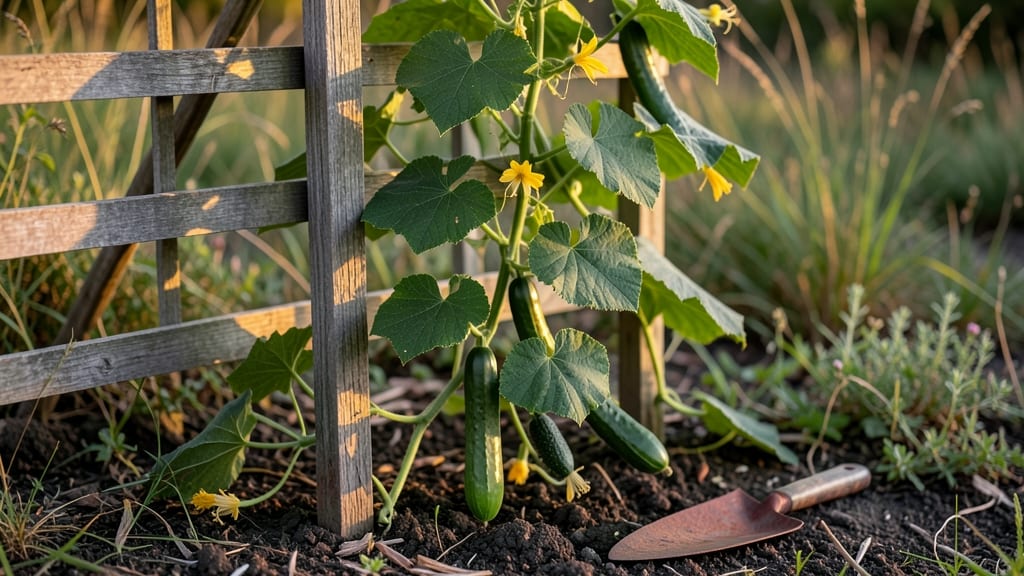
Yes, cucumbers climb using vines and tendrils, though some bush varieties stay low to the ground. Their climbing habit improves fruit quality, air circulation, and space efficiency while reducing disease risk.
Cucumbers belong to the gourd family, where most varieties naturally produce long vines with spiral tendrils that latch onto nearby structures. 🌱 These tendrils wrap around supports like a natural ladder, helping the plant reach for sunlight and spread its leaves.
The climbing habit isn't just about growth—it also creates better airflow around the fruit, which prevents fungal diseases like powdery mildew. Bush cucumbers are the exception, bred to stay compact without trellising, but even they benefit from some vertical support for heavier fruit loads.
For gardeners, this climbing behavior explains why trellising makes such a difference. When vines grow upward instead of sprawling, fruits develop fewer blemishes and ripen more evenly. Plus, vertical growth maximizes small spaces, making cucumbers perfect for container gardens or urban balconies.
The key is choosing the right support—whether it's sturdy bamboo stakes, chicken wire, or a DIY wooden frame—and giving vines room to spread at least 3-4 feet wide.
💡 In This Article
- How Cucumber Vines Climb and Support Themselves
- Best Trellising Methods for Cucumber Vines
How cucumber vines climb and support themselves
Cucumber vines climb using specialized structures called tendrils, which are modified leaf stems that coil around supports like a natural rope. These tendrils grow in a spiral pattern, wrapping tightly around any nearby structure—whether it's a trellis, fence, or even another plant stem.
The process begins when the tendril tip makes contact with a surface; within minutes, it starts to twist and tighten, creating a grip strong enough to lift the entire vine.
This climbing mechanism isn't just for show—it helps the plant reach sunlight more efficiently, which directly impacts fruit production and quality.
The strength of these tendrils is impressive: a single mature tendril can support up to 2-3 pounds of vine weight, and multiple tendrils work together to anchor the plant. 🌿 For comparison, that's roughly the weight of a small cucumber or a handful of leaves.
Climbing varieties like 'Straight Eight' or 'Marketmore' can grow 15-20 feet in a single season if given proper support, while bush varieties like 'Bush Champion' stay compact at 3-4 feet tall.
The difference lies in their genetic makeup—climbing types have been selectively bred to prioritize vine length over bushiness, while bush varieties focus on shorter, more compact growth.
Trellising plays a crucial role in plant health by improving air circulation around the leaves and fruits. When vines sprawl on the ground, they create a humid microclimate that traps moisture, creating ideal conditions for fungal diseases like powdery mildew.
A trellis elevates the plant, allowing air to flow freely and reducing humidity near the foliage. Studies show that trellised cucumbers can have up to 30% fewer disease issues compared to ground-sprawling plants. Additionally, vertical growth prevents soil-borne pathogens from splashing onto leaves during rain, further protecting the plant.
Climbing also affects fruit development. When cucumbers grow upward, they receive more consistent sunlight exposure, leading to more uniform ripening and fewer misshapen fruits. The upward growth pattern also makes harvesting easier—no more bending over or searching through dense foliage.
For gardeners with limited space, vertical growth maximizes yield per square foot. A single trellis can support multiple vines, making it possible to grow 2-3 times more cucumbers in the same footprint compared to bush varieties left untrellised.
Even bush cucumbers benefit from some vertical support. While they don't climb aggressively, their vines can still grow 3-5 feet long if unchecked, leading to sprawling growth that's difficult to manage.
Adding a small trellis or stakes can help support the weight of the fruit, preventing vines from breaking under the load. This is especially important for heavy varieties like 'Lemon Cucumber,' where individual fruits can weigh up to 1 pound each.
The botanical reason behind this climbing behavior traces back to cucumbers' wild ancestors, which grew in dense forests where vertical growth gave them a competitive edge. Over time, domestication led to both climbing and bush varieties, each adapted to different growing conditions.
Today, understanding this natural behavior helps gardeners make informed decisions about support structures and growing methods to maximize their harvest.