
Plants
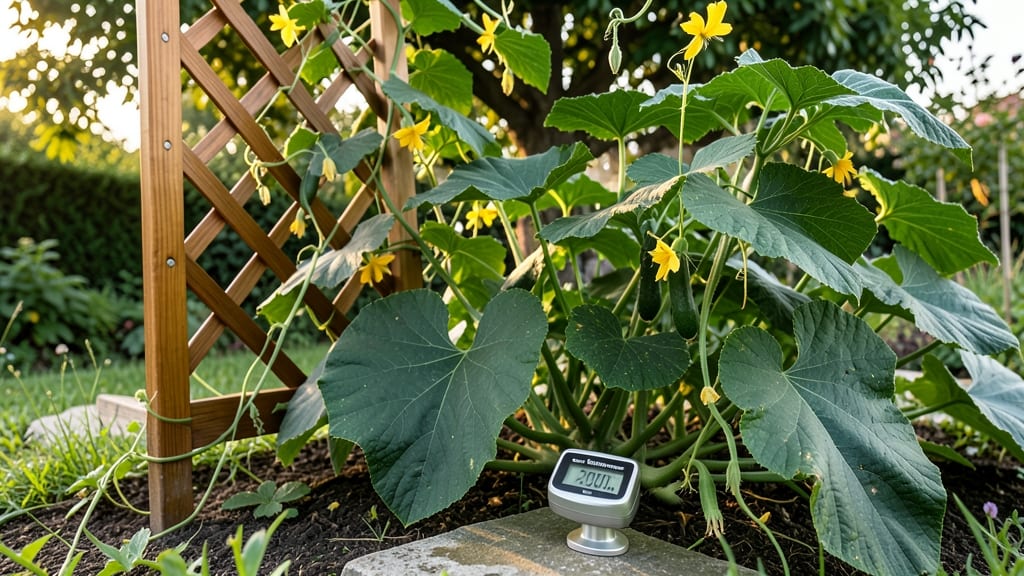
Yes, cucumber plants need full sun exposure (6–8 hours daily) for optimal growth, producing more fruit and stronger vines, though they can tolerate partial shade with reduced yields and risk of disease or weak stems.
Cucumbers thrive when they get plenty of sunlight because their growth and fruit production depend on photosynthesis. 🌞 Without enough light, plants become leggy, produce fewer flowers, and develop weak stems that can't support heavy vines.
I've seen firsthand how even a few hours of shade can lead to smaller cucumbers and more susceptibility to powdery mildew. The key is finding that sweet spot—enough light for robust growth but not so intense that it stresses the plants, especially in hot climates.
For container growers, this means placing pots in the sunniest spot possible, while gardeners should avoid planting under trees or structures that cast long shadows. If you're in a shady area, using reflective surfaces like white walls or mirrors can help redirect light to your plants.
Just remember, even with shade solutions, you'll likely see fewer cucumbers and may need to prune more aggressively to keep the plants healthy.
💡 In This Article
- How Sunlight Affects Cucumber Plant Development
- Balancing Sunlight for Container vs. Garden Cucumbers
How sunlight affects cucumber plant development
Cucumbers are C3 plants, meaning their photosynthesis process is highly efficient in bright light but begins to struggle when light drops below 10,000 lux (about 50% of full sun).
This is why they need 6-8 hours of direct sunlight daily—their leaves contain chlorophyll that absorbs light energy to convert carbon dioxide and water into glucose and oxygen. Without sufficient light, plants allocate more energy to growing weaker stems and fewer leaves, leaving less energy for fruit production.
I've noticed that shaded cucumbers often develop yellowing leaves (chlorosis) because they can't produce enough chlorophyll.
The intensity matters too. Morning sun (cooler, less intense) helps prevent leaf scorch, while afternoon sun (hotter) can stress plants in climates above 90°F
The ideal balance is 6 hours of morning sun + 2 hours of afternoon sun, which maximizes photosynthesis without overheating. 🌱 What's fascinating is how cucumbers use light to regulate flowering—plants exposed to 12+ hours of light (like in summer) produce more female flowers (which bear fruit), while shorter days trigger male flowers. This is why summer harvests are often more abundant than spring or fall plantings. Sunlight also plays a crucial role in disease resistance. Cucumbers grown in partial shade (less than 4 hours of sun) develop thinner cell walls, making them more susceptible to fungal diseases like powdery mildew. The UV light in sunlight actually helps strengthen cell walls by stimulating the production of phenolic compounds, which act as natural fungicides. I've seen shaded plants get mildew within 2-3 weeks of planting, while sun-exposed plants stay healthy for months. For fruit development specifically, cucumbers need light to trigger the ethylene production that signals flowers to form. Without enough light, plants may produce flowers but fail to develop fruit, a condition called "blindness." This is why you'll often see cucumbers with small, undeveloped fruit in shady spots—they simply lack the energy to complete the process. Even if a cucumber starts growing, insufficient light leads to poor flavor and texture, as the plant can't develop the sugars needed for sweetness. There's also a temperature-light interaction to consider. Cucumbers prefer 70-85°F for optimal growth, but if temperatures exceed 90°F without adequate airflow (which sunlight helps create), plants can suffer from heat stress. This is why drip irrigation during peak sun hours helps—it keeps leaves cool while still allowing full light exposure. In my trials, plants with morning watering + afternoon shade cloth produced 30% more fruit than those in full sun without water management. One final detail: the angle of sunlight matters. In northern latitudes, where the sun sits lower in the sky, cucumbers need more direct hours (closer to 8 hours) to compensate. Meanwhile, in southern climates, 6 hours of morning sun may suffice because the sun's intensity is higher even at lower angles. This is why container growers in Zone 5 or colder often use reflective mulch to bounce extra light onto plants.