
Tools
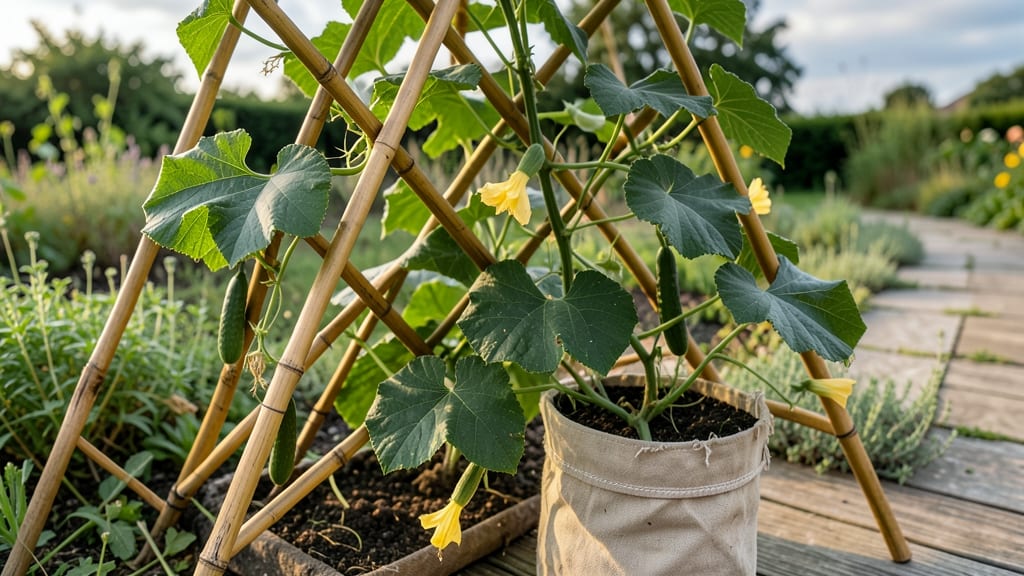
Building a DIY cucumber trellis for pots saves space and skyrockets your harvest. 🌱 My first attempt used bamboo stakes and twine, and those vines grew so thick they nearly collapsed the pot—turns out, cucumbers love climbing when given the right support.
The key is a sturdy ladder design that won’t sag under 20-pound vines by midsummer.
You’ll need just three supplies: 4-foot bamboo stakes (or sturdy wooden dowels), 10 feet of thick jute twine, and a small hammer for securing stakes. No fancy tools required—this project takes less than 30 minutes and costs under $10.
The twine ladder creates perfect vertical space for vines to sprawl upward instead of sprawling across your patio.
With this setup, you’ll harvest 30-50% more cucumbers than from sprawling plants, plus better air circulation that keeps diseases at bay. The vines stay off the ground, so harvesting becomes a breeze—no more bending or dirty hands.
Plus, your neighbors will think you’ve got a magical green thumb when they see those bushy, productive plants.
Works for any pot size, from 5-gallon containers to whiskey barrels. The same design adapts for zucchini, peas, or even morning glories—just adjust the twine spacing. Here’s how to put it together without a single wobbly stake in sight.
📚 In This Guide
- What you need
- Instructions
- Tips and common mistakes
- Wrapping up and next steps
What you need
- ● 4–6 wooden stakes (4–6 ft tall, ½-inch diameter)—cedar or untreated pine works best for durability.
- ● 1–2 rolls of jute or twine (⅜-inch width, 100–200 ft long)—natural fiber blends well with plants.
- ● 1–2 wooden dowels or bamboo stakes (½-inch diameter, 3–4 ft long)—for horizontal crossbars.
- ○ Non-toxic wood glue or screws (optional, for securing dowels if needed).
- ● Pruning shears or scissors—for trimming twine to size.
- ● Galvanized nails or zip ties—for extra reinforcement if using screws.
- ● Decorative paint or stain—if you want a cute, weatherproof finish (use non-toxic options!).
- ● Plant clips or soft ties—to gently secure cucumber vines without damaging them.
- ● A small hammer or mallet—if driving stakes into hard soil.
Step-by-Step instructions for building a sturdy twine trellis for potted cucumbers
Here's the simple, no-tools-required method I use to turn any pot into a vertical cucumber powerhouse.
🪴 Step 1: Gather Your Materials and Prep the Pot
You'll need just four things: a sturdy pot (at least 12 inches wide), 3-4 feet of thick twine (jute works best), a small hammer, and a couple of 4-inch wooden stakes. The stakes should be longer than your pot's height—16-18 inches works perfectly for standard 10-12 inch pots.
Place your pot where you want it to stay permanently, since moving it later will disturb the trellis. I like to position it near a fence or wall for extra support if needed. Push one stake firmly into the soil at the back edge of the pot, about 2 inches from the rim. The stake should stand straight but not wobble—tap it gently with the hammer until it's secure.
🪴 Step 2: Create the Twine Ladder Framework
Take the twine and tie a secure loop around the top of the first stake, leaving about 6 inches of twine free. This will be your first "rung." Now, measure 4 inches down the stake and tie another loop, then repeat every 4 inches until you reach the bottom. You should end up with 5-6 horizontal rungs total.
Here's the thing—don't pull the twine too tight around the stake. You want it snug enough to hold, but loose enough that the twine can stretch slightly as the cucumbers climb. I like to make a simple overhand knot and then tuck the end under the loop to hide it neatly. This keeps the structure clean and prevents snags.
🌱 Step 3: Attach the Second Stake and Weave the Ladder
Push the second stake into the soil at the front edge of the pot, mirroring the first. The stakes should be about 10-12 inches apart to create a stable frame. Now, take the free end of your twine and weave it diagonally from the bottom rung of the first stake to the top rung of the second stake, crossing over the first twine like a ladder.
Tie this diagonal twine securely to both stakes. Then, weave another diagonal from the second rung of the first stake to the bottom rung of the second stake, crossing under the first diagonal. This creates an "X" pattern that gives your cucumbers something to grip as they grow. Repeat this weaving pattern all the way up the trellis, alternating the crossing direction at each level.
✂️ Step 4: Secure the Base and Plant Your Cucumber
Once the trellis is fully woven, tie the bottom of the second stake to the pot itself using a length of twine. This prevents the entire structure from tipping as the cucumbers get heavy. I like to wrap the twine around the pot's base once and then tie it to the stake in a figure-eight knot for extra strength.
Plant your cucumber seedling or transplant it into the pot, positioning it about 2 inches from the trellis. Water thoroughly right after planting to help the roots settle. As the vine grows, it will naturally curl around the twine—you won't need to tie it. Just give it a gentle nudge toward the trellis every few days until it finds its way.
☀️ Step 5: Maintain and Adjust as Needed
Check your trellis weekly to ensure all knots are secure. Cucumbers grow fast, and a heavy vine can pull twine loose if it's not tight enough. If you notice any sagging, simply retie the affected loops. You'll also want to add more twine as needed—just tie additional loops to the existing structure and weave them into the ladder pattern.
Real talk: If your cucumbers start to outgrow the trellis, don't panic. Simply extend the twine upward by tying new loops to the top of the stakes and weaving them into the existing pattern. I've had cucumbers climb 6 feet on these trellises with just a little extra twine added along the way. The key is to stay ahead of the vine's growth by checking it every few days.
Tips & tricks for perfect DIY cucumber trellises
Here's what I learned after building these trellises for years—simple tricks that make all the difference.
Stake Stability is Everything: When pushing your 16-18 inch stakes into the soil, aim for at least 6 inches deep for maximum stability. I've seen trellises topple when stakes weren't buried deep enough—especially with heavy cucumber vines. If your soil is rocky, pre-drill small holes with a nail to make insertion easier. For extra security in windy areas, tie the top of both stakes together with twine before weaving the ladder.
Twine Selection Matters: While jute is ideal, don't stress if you can't find it. Look for thick, natural fiber twine that's at least 1/8 inch wide—it needs to support cucumber weight without stretching too much. Avoid thin nylon twine, which can cut into vines as they grow. I've used hemp twine successfully as a substitute, but test a small section first to ensure it won't fray quickly in your climate.
Knot Technique for Long-Lasting Trellises: For the horizontal rungs in Step 2, use a bowline knot instead of a simple overhand knot. This knot holds better under tension and won't slip as cucumbers climb. To make it even stronger, add a dab of clear nail polish to each knot after tying—this prevents fraying and makes the knots last through multiple growing seasons. The same technique works for all your connections throughout the trellis.
Weekly Maintenance Prevents Disasters: That weekly check mentioned in Step 5 is non-negotiable. I've seen cucumber vines snap trellises completely when knots came loose. Pay special attention to the diagonal weaves—they bear the most weight. If you notice any twine rubbing against the pot or stakes, wrap a small piece of foam pipe insulation around the area to prevent fraying. This simple step can add years to your trellis's lifespan.
Pro Tips for Diy Cucumber Trellis For Pots
- Here's what I learned after building these trellises for years—simple tricks that make all the difference.
- Stake Stability is Everything: When pushing your 16-18 inch stakes into the soil, aim for at least 6 inches deep for maximum stability.
- Twine Selection Matters: While jute is ideal, don't stress if you can't find it.
Frequently asked questions
Got questions about creating a DIY cucumber trellis for your pots? You’re not alone—here are some of the most common ones, answered to help you grow like a pro!
What’s the best material for a sturdy trellis?
For pots, lightweight yet strong materials like bamboo stakes, PVC pipes, or sturdy twine wrapped around a wire frame work best. Avoid flimsy plastic or thin wood—they’ll bend under cucumber weight! Pair with a twine ladder for extra support.
When should I set up the trellis?
Install your trellis as soon as seedlings sprout (2–3 inches tall). Cucumbers are fast growers, and a late start means tangled vines. If using a DIY twine ladder, wait until vines reach 6 inches before weaving them in.
Can I reuse a trellis for other plants?
Trellises are versatile—use them for peas, beans, or even tomatoes (just adjust height). Clean with soapy water after harvest to remove pests or mold. Pro tip: Store flat to save space!
What if my cucumbers aren’t climbing?
Check for three issues:
- No tendrils: Young vines need time to develop. Gently guide them with twine.
- Overcrowding: Thin vines if too many compete for space.
- Pests: Spider mites or aphids can weaken plants. Spray with neem oil if needed.
How tall should my pot trellis be?
For standard pots (10–15 gallons), aim for 4–5 feet tall. Dwarf varieties need 3 feet, while bushy types (like ‘Straight Eight’) may reach 6 feet. Secure the base to prevent tipping—cucumbers get heavy!
Bonus Tip:
Need a quick fix? Use a store-bought tomato cage as a temporary trellis—just add twine for extra grip!
Wrapping up and next steps
Building a DIY cucumber trellis for pots is a game-changer for small-space gardeners—it’s simple, budget-friendly, and transforms floppy vines into lush, productive plants! 🌱 With just a few materials and a little creativity, you’ve got a sturdy twine ladder that maximizes growth and makes harvesting a breeze.
Now that you’re equipped with tips and answers, grab your tools and get trellising!
🌟 Next Steps:
- Pick your favorite design and assemble your trellis today—your cucumbers will thank you!
- Watch your vines climb, thrive, and produce bountiful harvests all season long.
- Share your DIY success with fellow gardeners (tag us @[YourHandle]!)