
Plants
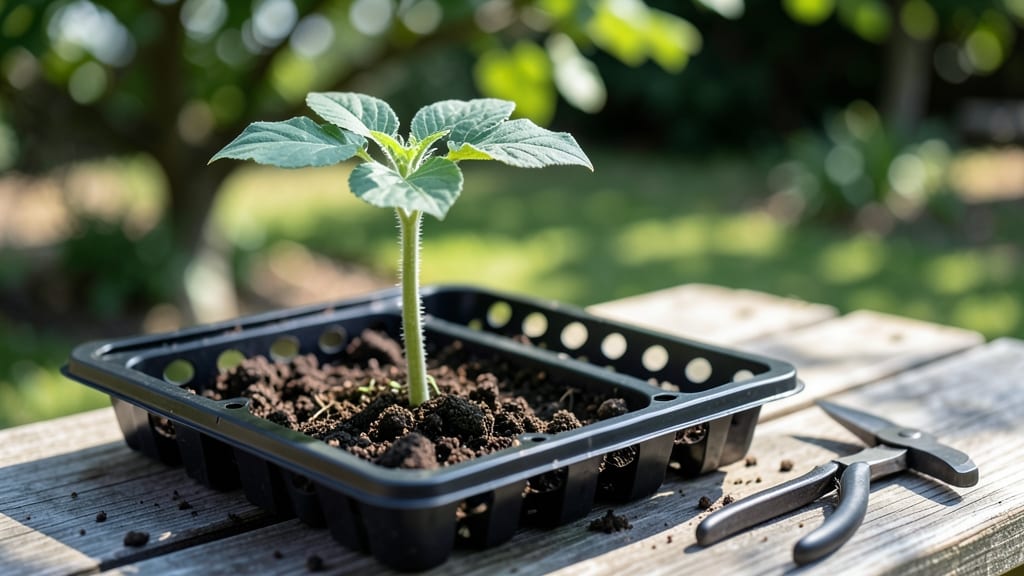
A cucumber seedling looks like tiny round cotyledons (seed leaves) with a fragile stem at first, then transforms into a wiry, hairy vine with sharply serrated, lobed leaves and grasping tendrils. During the first 2-3 weeks, growth is gradual but becomes noticeably bushier as it develops.
A cucumber seedling's early stages are all about those distinctive round cotyledons, which soon give way to true leaves that are deeply lobed and jagged-edged. 🌱 These leaves are wider than they are long, with prominent veins that create a web-like pattern—key traits that set them apart from other vines.
The first true leaves appear after the cotyledons drop, and their serrated edges become more pronounced as the plant matures. What's fascinating is how quickly these delicate structures harden into the sturdy vines we recognize later.
What many gardeners overlook is how environmental factors can alter a seedling's appearance. Poor light or cold soil might produce leggy, pale seedlings with smaller leaves, while ideal conditions yield compact, vibrant plants.
I've found that providing consistent moisture and warmth during germination makes the difference between weak, spindly growth and healthy, robust seedlings ready to thrive.
💡 In This Article
- Identifying Cucumber Seedling Stages by Leaf Shape
- Common Mistakes When Spotting Young Cucumber Plants
Identifying cucumber seedling stages by leaf shape
The journey of a cucumber seedling begins with its cotyledons—those first two round, smooth-edged leaves that emerge from the seed. These aren't true leaves but rather the plant's initial food source, packed with nutrients to fuel early growth.
They're typically 1/4 to 1/2 inch wide and have a soft, almost papery texture, often appearing a vibrant green or slightly yellowish when healthy. What's fascinating is how these cotyledons only last about 1-2 weeks before the plant's first true leaves push through.
Once the true leaves appear, you'll notice a dramatic transformation. Cucumber seedlings develop deeply lobed, jagged-edged leaves that are wider than they are long, with 5-7 prominent veins radiating from the central stem.
These leaves have a rough texture with serrations that look almost like tiny teeth along the edges. 🌿 The key distinguishing feature is their palmate shape—the lobes spread out like fingers from a central point, unlike the more rounded leaves of squash or melons.
Early true leaves might be only 1-2 inches wide, but they grow rapidly, reaching 3-6 inches within 3-4 weeks under ideal conditions.
Another telltale sign is the development of tendrils—thin, wiry structures that emerge from the leaf axils (where leaves meet the stem). These tendrils are the plant's way of grasping supports or other plants, helping the vine climb.
They appear as delicate, curly filaments when young but strengthen as the plant matures. What's often overlooked is how the stem hairiness increases as the seedling ages, giving it a fuzzy appearance that's distinct from smoother-stemmed weeds or other vines.
To distinguish cucumber seedlings from weeds or other plants, focus on these three key traits: lobed leaves with serrated edges, palmate vein structure, and tendril development.
For example, squash seedlings have more rounded leaves with smoother edges, while morning glory vines produce heart-shaped leaves with entire (non-serrated) margins. The cucumber's hairy stems also help differentiate it from sleek-stemmed weeds like pigweed, which have smooth, ribbon-like leaves.
Light conditions play a crucial role in leaf development. Seedlings grown in low light often produce larger but paler leaves with fewer serrations, while those in full sun develop darker green, more robust foliage.
I've observed that seedlings in 60-70°F soil temperatures grow the fastest, with leaves reaching maturity 2-3 days earlier than those in cooler conditions. This is why gardeners in cooler climates often use row covers or cold frames to accelerate seedling development.
Here's what to watch for as your seedlings progress:
- Week 1: Cotyledons appear, stem remains delicate and hairless
- Week 2: First true leaves emerge with slight serrations, tendrils begin forming
- Week 3-4: Leaves develop full lobed shape with pronounced serrations, stem becomes hairy
- Week 5+: Leaves reach 3-6 inches wide, tendrils strengthen for climbing