
Picking
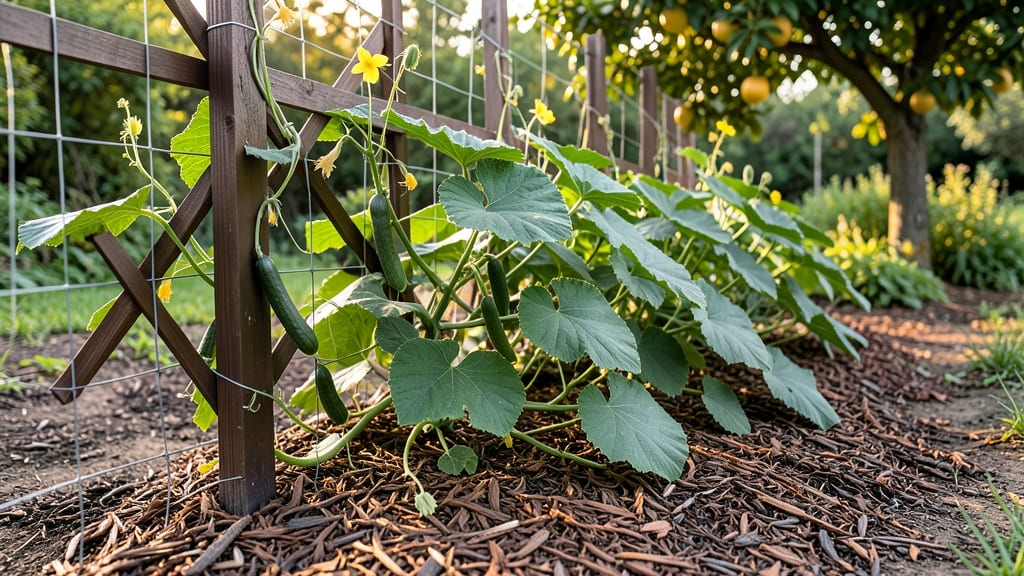
Training cucumbers on vines transforms your garden from a tangled mess to a neat, high-yielding display of crisp, shade-loving fruits. 🌱 I learned the hard way—last summer's sprawling vines took over half my patio, and the cucumbers touching the ground rotted before harvest.
A simple trellis changed everything: cleaner plants, fewer pests, and cucumbers that stayed crisp until I picked them. The right varieties make all the difference: bush types like 'Bush Champion' work for small spaces, but vining types like 'Straight Eight' or 'Marketmore' climb like jungle vines when given support.
Start with sturdy 6-foot trellises or A-frame structures—just make sure they can handle the weight of heavy fruits. Spacing matters too: give vines 18-24 inches between plants and 3-4 feet of row space to prevent overcrowding. Once trained, your vines will reward you with longer harvest seasons and fewer diseases.
Prune regularly to encourage airflow, and watch as cucumbers grow straight and uniform instead of sprawling. The best part? You’ll spend less time weeding and more time enjoying the harvest—no more digging through vines to find hidden gems. This method works for containers, raised beds, or ground gardens.
Whether you're dealing with limited space or just tired of cucumber chaos, trellising turns gardening into a neat, productive experience. Let’s get those vines climbing!
📚 In This Guide
- What you need
- Instructions
- Tips and common mistakes
- Wrapping up and next steps
What you need
- ● Cucumber seeds or seedlings: Choose vining varieties like 'Straight Eight,' 'Marketmore,' or 'Lemon Cucumber' (6-12 plants, depending on space).
- ● Trellis or support structure: DIY option: Sturdy wooden stakes (6-8 ft tall), bamboo poles, or PVC pipes (2-3 per plant).
- ● Store-bought: A cucumber trellis net or A-frame trellis (8-10 ft wide).
- ● Garden twine or soft plant ties: 100 ft roll (jute or plastic-free for eco-friendliness).
- ● Potting mix or garden soil: Well-draining, rich in compost (1-2 bags or enough to fill containers).
- ○ Containers (optional but helpful): 5-gallon grow bags or large pots (12-18" deep) if not planting in-ground.
- ● Hand trowel or transplanting spade.
- ● Watering can or hose with a gentle nozzle.
- ● Pruning shears (for trimming excess vines later).
- ● Measuring tape (to space plants 12-24" apart).
- ● Sunlight: At least 6-8 hours of direct sun daily (partial shade in hot climates is okay!).
- ● Water access: Consistent moisture (1-2 inches per week).
- ● Space: Vertical vines need 8-10 ft of air space to sprawl.
- ● Warmth: Soil temps above 60°F (15°C) for planting.
- ● Mulch (straw or shredded leaves) to retain moisture.
- ● Fertilizer (balanced 10-10-10 or compost tea for a boost).
- ● Shade cloth (30-50%) for scorching-hot afternoons.
- ● Row covers (floating fabric) to deter pests early on.
Step-by-step guide to training cucumbers on vines
Here's my foolproof method for growing cucumbers vertically—more yield, cleaner fruit, and less disease in your garden.
🌱 Step 1: Select and Prepare Your Trellis Structure
Choose a sturdy trellis that can support 6-8 feet of vine growth—I prefer 5-foot tall A-frame trellises or strong wire mesh stretched between posts. The structure must handle 10+ pounds of cucumber weight per vine, so avoid flimsy plastic frames. Position it in partial shade (morning sun, afternoon shade) to prevent sunscald on vines.
Install the trellis in early spring, at least 2 weeks before transplanting seedlings. This gives roots time to establish before climbing. If using wire mesh, twist it tightly to prevent vines from slipping through. Here's the thing—cucumbers grow fast, so the trellis needs to be planted near the trellis base (within 12 inches) to avoid root stress when training begins.
🌿 Step 2: Plant Seedlings and Encourage Early Vine Growth
Transplant 4-5 week old seedlings (or direct-sow seeds) 1 inch deep, spacing them 12-18 inches apart at the trellis base. Water deeply after planting to settle roots. The key here is to avoid overhead watering—wet leaves breed powdery mildew, and cucumbers hate damp foliage. Instead, water at the base until top 2 inches of soil feel moist.
Once seedlings show 4-5 true leaves, gently tie the main stem to the trellis using soft plant ties (never wire or zip ties—they cut into tender vines). Watch for first tendrils (thin, curly growths) on the vine tips—these will naturally latch onto the trellis. If they miss, guide them by hand. Real talk: Don't rush this step. Wait until vines are 3-4 feet tall before letting them climb freely—young vines snap easily.
✂️ Step 3: Prune and Train Vines for Maximum Yield
When vines reach 5 feet, start pruning side shoots (small stems growing from leaf axils) to direct energy upward. Remove all but 1-2 leaves at the base of each side shoot—this prevents overcrowding and improves air circulation. You'll see more flowers and fruit when vines focus growth on the main stem. I prune every 7-10 days during peak growth (late spring to early summer).
Here's the trick: Pinch off the growing tip of the main vine when it reaches the top of the trellis. This forces the plant to produce more lateral branches, which bear heavier fruit loads. After pinching, watch for new tendrils to form—these will climb downward, creating a "bushier" vine structure. Never let vines sprawl—they'll produce fewer, smaller cucumbers and attract pests.
💧 Step 4: Water and Fertilize for Continuous Harvest
Cucumbers on trellises need consistent moisture—water deeply 2-3 times weekly (more in 90°F+ heat) until top 3 inches of soil feel damp. Drip irrigation works best—it delivers water directly to roots without wetting leaves. I fertilize every 2 weeks with a balanced 10-10-10 formula (½ cup per plant) during fruiting. Stop fertilizing 4 weeks before first frost to avoid tender new growth.
Watch for yellowing lower leaves—this is normal as vines mature, but wilting or crispy edges mean underwatering. Adjust your schedule if cucumbers grow bumpy or bitter (a sign of uneven water). Harvest every 2-3 days once fruit appears—this encourages more production. Use sharp pruners to cut stems ½ inch above the fruit to prevent disease entry points.
☀️ Step 5: Manage Shade and Pest Pressure
Even shade-loving cucumbers need 4-6 hours of morning sun for best yields. If your trellis is in full shade, supplement with a grow light (12 hours daily) during fruiting. I use lightweight shade cloth (30-50% block) on hot afternoons to prevent sunscald—just drape it loosely over the trellis and secure with clips. Remove it by 4 PM to allow cooling.
Pests like cucumber beetles and aphids target trellised vines more aggressively. Inspect leaves weekly and blast off pests with a soapy water spray (1 tsp mild soap per gallon). For severe infestations, wrap the lower 2 feet of the trellis with fine mesh to block beetles. I also rotate trellis locations yearly to break pest cycles—don't plant cucumbers in the same spot two years in a row.
Tips & tricks for perfect vertical cucumber growth
Let me share the insights I've gathered after years of training cucumbers vertically—these small adjustments make all the difference between a decent harvest and a garden full of crisp, disease-free cucumbers.
Trellis Stability is Non-Negotiable: I learned this the hard way after watching a 6-foot vine snap a flimsy plastic trellis during a summer storm. For maximum stability, anchor your 5-foot A-frame trellis with stakes at each corner and use heavy-duty zip ties to secure the wire mesh to the posts. The goal is to create a structure that doesn't sway—cucumbers can get surprisingly heavy when fully loaded with fruit. If you're in a windy area, consider adding a cross brace halfway up for extra support.
Root Zone Management: The 12-inch spacing between trellis and planting site is crucial for preventing root stress. I've found that adding a 3-inch layer of compost around the base creates an ideal root zone. This extra organic matter helps young roots establish quickly before they need to support climbing. Confession: I skipped this step for years and wondered why my vines always seemed stunted—until I realized they were struggling to reach the trellis.
Pruning Precision: When you're pruning those side shoots at the 5-foot mark, here's what nobody tells you—the 1-2 leaves you leave at the base should be the healthiest, largest leaves on that shoot. These leaves will photosynthesize and support fruit development. I also recommend using sterilized pruners (wipe with rubbing alcohol between plants) to prevent spreading disease through open wounds. And watch your timing: prune on overcast days or in the early morning to give vines time to recover before afternoon heat sets in.
Watering Wisdom: That 2-3 times weekly watering schedule becomes critical when temperatures hit 90°F. I've developed a simple test: stick your finger 3 inches into the soil—if it feels dry, it's time to water. For container-grown cucumbers, you'll need to water daily in extreme heat. And here's a pro move: water in the morning so leaves have time to dry before evening, which dramatically reduces powdery mildew risk. The goal is consistent moisture, not soggy soil.
Pro Tips for Cucumbers On Vines
- Let me share the insights I've gathered after years of training cucumbers vertically—these small adjustments make all the difference between a decent harvest and a garden full of crisp, disease-free cucumbers.
- Trellis Stability is Non-Negotiable: I learned this the hard way after watching a 6-foot vine snap a flimsy plastic trellis during a summer storm.
- Root Zone Management: The 12-inch spacing between trellis and planting site is crucial for preventing root stress.
Frequently asked questions
Got questions about growing cucumbers on vines? You’re not alone! Here are some of the most common queries—plus quick, actionable answers to help you master trellising like a pro.
Why should I grow cucumbers on vines instead of letting them sprawl?
Trellising cucumbers saves space, improves air circulation (reducing disease risk), and produces straighter, cleaner fruits. Plus, vining cucumbers ripen faster and are easier to harvest—no more digging through tangled vines!
How long does it take for cucumbers to vine and produce fruit?
Most cucumber varieties start vining within 2–3 weeks after planting, with female flowers (the ones that turn into fruit) appearing in 4–6 weeks. Trellising early helps guide their growth upward, speeding up the process. Patience pays off—harvests typically begin in 50–70 days!
What if my cucumber vines stop growing or turn yellow?
Yellowing leaves or stunted growth often signals underwatering, overwatering, or nutrient deficiencies (like nitrogen). Check soil moisture (keep it consistently damp but not soggy) and fertilize with a balanced 10-10-10 mix. If pests like cucumber beetles are chewing leaves, handpick them or use row covers.
Can I grow other vine plants (like peas or beans) alongside cucumbers?
Cucumbers are companion plants for peas, beans, and radishes—they fix nitrogen in the soil, benefiting cucumbers. Avoid planting near potatoes or sage, though. Just ensure each vine has its own trellis or support to prevent overcrowding.
What if my cucumbers won’t climb the trellis?
Some varieties (like bush cucumbers) are less eager to vine. If your cucumbers are lagging, gently tie them to the trellis with soft twine or use soft plant ties. Prune side shoots to encourage upward growth, and ensure the trellis is sturdy enough to support their weight as they mature.
Wrapping up and next steps
Growing cucumbers on vines with trellis training isn’t just a gardening hack—it’s a game-changer for space, yield, and plant health! 🌱 By mastering this technique, you’ll enjoy cleaner fruits, fewer pests, and a garden that’s both productive and beautiful. Ready to level up your harvest?
Your next step? Grab your trellis, pick your favorite variety, and get planting! Start small—even a single vine can teach you the ropes. Before you know it, you’ll be reaping crisp, vine-ripened cucumbers all season long. Happy gardening!