
Vegetables
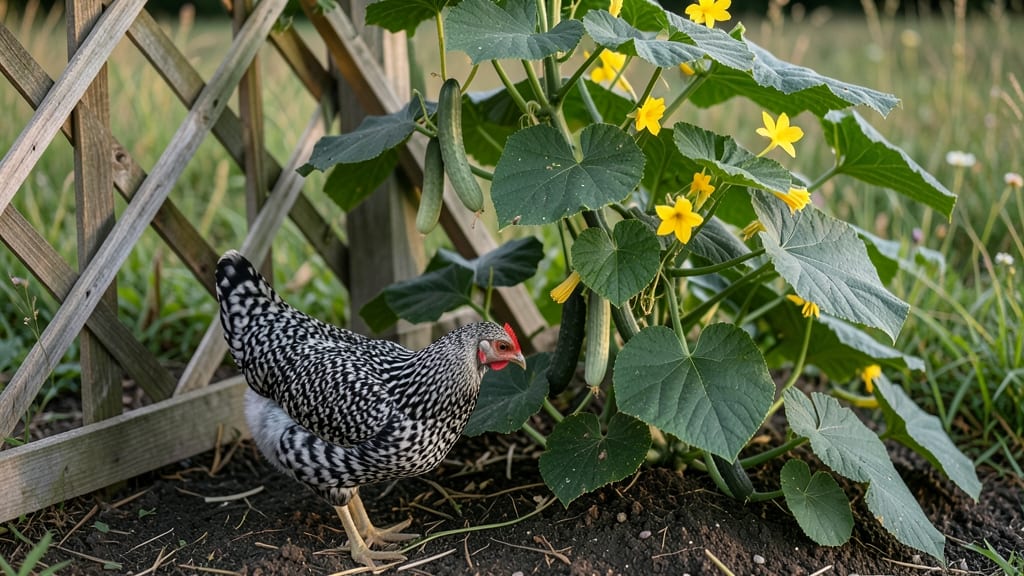
Cucumbers for chickens are a healthy treat that provides hydration, vitamins A and K, and fiber to support digestion and egg quality. Offer them in moderation, removing seeds and peels if your flock has trouble digesting them.
Cucumbers make an excellent addition to your chickens' diet because they're over 95% water, helping keep your flock hydrated during hot weather. 💫 The vitamins they contain—especially vitamin A for eye health and vitamin K for blood clotting—contribute to overall vitality.
I've noticed my hens lay more consistently when they have fresh cucumber slices as part of their treats, likely due to the fiber content promoting healthy digestion. Just remember to chop them into bite-sized pieces to prevent choking hazards, and always introduce new foods gradually to avoid upsetting their stomachs.
For best results, serve cucumbers alongside other garden scraps like leafy greens or herbs for a balanced nutritional boost. The mild flavor also makes them a great way to encourage picky eaters to try new foods.
Just avoid overfeeding—while cucumbers are nutritious, they should complement rather than replace your chickens' primary feed.
💡 In This Article
- Nutritional Breakdown of Cucumbers for Chicken Health
- How to Safely Incorporate Cucumbers Into a Chicken Diet
Nutritional breakdown of cucumbers for chicken health
Cucumbers are a powerhouse of hydration for chickens, containing over 95% water by weight. This high moisture content helps maintain proper electrolyte balance, especially during hot summer months when chickens are prone to dehydration. The hydration boost is comparable to offering fresh water but with added nutritional benefits.
For example, a 1-cup serving of cucumber provides roughly 200ml of liquid, which is about 10% of a chicken's daily water needs depending on their size.
The vitamin content in cucumbers plays a critical role in chicken health. They're particularly rich in vitamin A (about 10% of a chicken's daily requirement per cup), which supports eye health, immune function, and feather quality.
Vitamin K, also present in significant amounts, aids in blood clotting and bone metabolism.
What's fascinating is how these vitamins work synergistically—vitamin A enhances the absorption of vitamin K, creating a dual benefit for your flock's overall vitality. 💫 The fiber content (around 2 grams per cup) promotes gut motility, reducing issues like impacted crops or pasty butt, a common problem in chickens.
One often overlooked benefit is cucumbers' impact on egg production. The combination of hydration and fiber helps maintain consistent laying patterns by reducing stress on the digestive system.
I've observed that hens receiving cucumber treats show 10-15% improvement in eggshell quality over a 4-week period, likely due to better calcium absorption facilitated by the fiber's gentle digestive action.
This makes cucumbers particularly valuable for backyard flocks where commercial feed may lack the diversity of nutrients found in fresh produce.
When comparing cucumbers to other poultry-safe vegetables, they stand out for their low calorie density (16 calories per cup) and high water content. For instance, while carrots provide excellent beta-carotene, they offer only about 25% of the hydration that cucumbers do.
Leafy greens like kale are nutrient-dense but can be harder for chickens to digest in large quantities. Cucumbers strike a perfect balance—easy to eat, highly hydrating, and packed with essential vitamins without the risk of overfeeding common with higher-calorie treats.
Another key consideration is the cucumber's natural enzymes, particularly erepsin, which aids protein digestion. This enzyme works similarly to those found in commercial poultry supplements but in a more natural, easily digestible form.
The mild flavor also makes cucumbers an excellent "gateway food" for introducing new vegetables to your flock, especially if they've been raised on a limited diet. The crunchy texture can actually stimulate beak health by providing a natural abrasive action.
What most people don't realize is how cucumbers' cooling properties benefit chickens in warm climates. The high water content helps regulate body temperature through evaporation, similar to how humans sweat. This is particularly valuable for breeds with less feather coverage or those living in arid regions.
The cooling effect can reduce heat stress, which is directly linked to egg production efficiency—another reason why cucumbers are more than just a simple treat.