
Planting
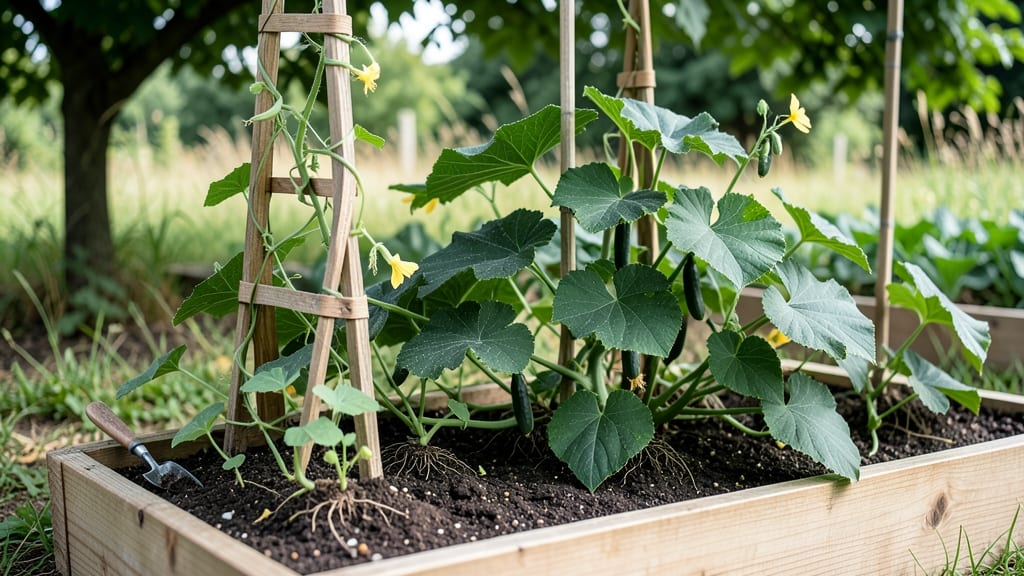
Planting cucumbers at the right depth—about ¼ to ½ inch for seeds—is the first step to avoiding weak, leggy seedlings and maximizing your harvest.
Struggling with weak cucumber seedlings? The secret to robust, thriving vines starts with perfect planting depth—a small detail that makes a massive difference in yield and plant health. Too shallow, and they’ll dry out; too deep, and they’ll suffocate.
Whether you’re sowing directly in the garden or transplanting young plants, getting this step right ensures strong roots and faster growth. Below, I’ll break down the exact depth for seeds vs. transplants, common mistakes to avoid, and how to adjust for containers or different cucumber varieties.
You’ll also learn how soil temperature and moisture play into germination, plus pro tips for spacing and support to keep your 🥒 plants thriving from seed to harvest.

Ideal cucumber planting depth by seed type: direct vs transplant rules
Getting your cucumber seeds or transplants in the ground at the right depth is one of the most overlooked steps for gardeners—yet it directly impacts germination rates and long-term plant health. Whether you're starting with direct-sown seeds or young transplants, the depth matters more than you might think.
Too shallow, and your seeds won't have enough moisture to sprout; too deep, and they'll struggle to break through the soil, leading to weak, leggy seedlings.
The key to strong cucumber starts lies in understanding how soil temperature and moisture retention interact with planting depth. Cucumber seeds need consistent warmth—ideally between 60-90°F—to germinate properly. If your soil is too cool, even the perfect depth won't help.
Meanwhile, moisture must stay evenly distributed around the seed or transplant roots to prevent drying out or suffocation.
Here’s a quick rule of thumb: Direct-sown seeds should go in ¼–½ inch deep, while transplants need a slightly deeper 1–2 inch burial. But why the difference?
Seeds need just enough soil to anchor them while keeping moisture close, whereas transplants already have established roots that benefit from deeper placement for stability.
Let’s break down the exact planting depths, soil conditions, and pro tips for each method to ensure your cucumbers get off to the strongest possible start.
| Factor | Direct-Sown Seeds | Transplants |
|---|---|---|
| Planting Depth | ¼–½ inch | 1–2 inches |
| Soil Temperature | 60–90°F | 55–85°F |
| Moisture Needs | Keep soil damp | Even moisture |
| Germination Time | 5–10 days | N/A (already sprouted) |
| Spacing After Germination | 3–6 feet apart | 2–3 feet apart |
| Best Soil Type | Loamy, well-draining | Loamy, fertile |
For direct-sown seeds, the ¼–½ inch depth is critical because cucumber seeds contain a limited food supply. Planting them too deep forces them to use up their energy reserves just to reach the surface, weakening the seedling.
Use your finger to create small holes—just deep enough to cover the seeds lightly with soil. After planting, gently press the soil around the seeds to ensure good contact and water thoroughly but carefully to avoid displacing them.
If you're working with transplants, burying them 1–2 inches deep helps stabilize their root systems and encourages faster establishment. Transplants already have a head start, so deeper planting reduces stress from wind and temperature fluctuations.
When transplanting, make sure the soil line on the stem matches the original soil level from the nursery pot to avoid burying the stem too deeply, which can lead to rot.
Soil temperature plays a huge role in germination success. Cucumber seeds won’t sprout if the soil is below 60°F. Use a black plastic mulch or row covers to warm the soil faster in early spring.
If your soil is on the cooler side, consider starting seeds indoors under grow lights and transplanting once the soil reaches the ideal range. For transplants, slightly cooler soil (55–85°F) is acceptable since they’re already established.
Moisture is another game-changer. After planting, keep the soil consistently moist but not soggy. Overwatering can lead to seed rot, while underwatering causes seeds to dry out before germinating. Use a spray bottle for seeds and a gentle watering can for transplants to avoid disturbing the soil.
Mulching with straw or shredded leaves after planting helps retain moisture and regulate soil temperature, creating the perfect environment for your cucumbers to thrive.
One common mistake is planting seeds too shallow, thinking they’ll "pop up" faster. In reality, shallow seeds dry out quickly and fail to germinate. Conversely, planting too deep can suffocate seedlings, causing them to rot before they even emerge.
For transplants, burying them too deeply can smother the stem, while planting too shallowly leaves them vulnerable to wind damage. Always follow the ¼–½ inch for seeds and 1–2 inches for transplants guideline for the best results.
If you’re growing cucumbers in containers, adjust your planting depth slightly. Use a well-draining potting mix and plant seeds ½ inch deep in containers at least 12 inches deep. For transplants, ensure the container has enough depth to accommodate the 1–2 inch burial without crowding the roots.
Containers dry out faster, so monitor moisture levels closely and water consistently to prevent stress.
Finally, pay attention to your local climate. In hot, dry regions, deeper planting helps cucumbers access moisture from lower soil layers. In cooler, wetter climates, shallower planting prevents waterlogging.
Always adapt the standard guidelines based on your specific growing conditions to give your cucumbers the best chance at a bountiful harvest.
With the right planting depth, your cucumbers will germinate quickly, establish strong roots, and produce healthy vines ready for trellising or sprawling. Don’t let this small detail hold back your garden’s potential—get it right from the start for cucumbers that thrive all season long! 🥒
Common mistakes that kill cucumber seedlings (and how to fix them)
Even experienced gardeners sometimes struggle with cucumber seedlings that refuse to thrive. The problem often starts with planting depth—a seemingly small detail that can make or break your entire harvest.
I've seen seedlings planted too shallow, where they dry out before sprouting, and others buried too deep, which stunts their growth. Both extremes leave you with weak, leggy plants that struggle to produce fruit.
The ideal cucumber planting depth is just ½ to 1 inch for seeds, but many gardeners either underestimate or overestimate this measurement. When seedlings fail to emerge or grow slowly, it’s usually because they’re not getting the right balance of moisture, warmth, and light from the start.
Let’s fix these common mistakes before they derail your garden.
Problem: Seeds planted deeper than 1 inch struggle to reach light, while those planted shallower than ¼ inch dry out before germinating.
Fix: Use your finger to create a hole ½ inch deep, place 2-3 seeds inside, and cover lightly with soil. Press gently to ensure good seed-to-soil contact.
Another frequent issue is overcrowding, where seeds are sown too close together. This leads to competition for nutrients and light, resulting in spindly seedlings that can’t support themselves.
I’ve had to thin my cucumber seedlings from 10 plants per square foot down to just 2-3 strong plants to give them room to grow. Overcrowding also increases humidity around the seedlings, creating the perfect conditions for fungal diseases like powdery mildew.
Poor germination is another silent killer of cucumber seedlings. If your soil is too cold (below 55°F) or too dry, seeds may not sprout at all. To fix this, I recommend using a seedling heat mat or planting in a warm, protected microclimate like a greenhouse.
If germination is slow, check for uneven soil compaction—hard soil can prevent roots from emerging properly. Loosen the soil gently with a fork before planting.
Uneven soil compaction is often overlooked but critical for seedling success. When soil is packed too tightly, it restricts oxygen flow to the roots, slowing germination. To test compaction, press your finger into the soil—if it resists, add compost or perlite to improve drainage and aeration.
For container gardening, use a well-draining potting mix to prevent waterlogging, which can rot seeds before they sprout.
For container growers, another common mistake is using pots that are too small. Cucumber roots need space to spread, and seedlings in under-sized containers become root-bound quickly. Always choose pots at least 12 inches deep and 18 inches wide for bush varieties or larger for vining types.
If you’re repurposing containers, ensure they have drainage holes to prevent water from pooling at the roots.
Finally, don’t forget to monitor your seedlings after they sprout. Thin them to the strongest 2-3 plants per hill once they reach 2 inches tall, and provide support early (like small stakes or trellis netting) to prevent weak stems from snapping.
With these fixes, your cucumber seedlings will have the strong start they need to produce a bountiful harvest. 🌱