
Planting
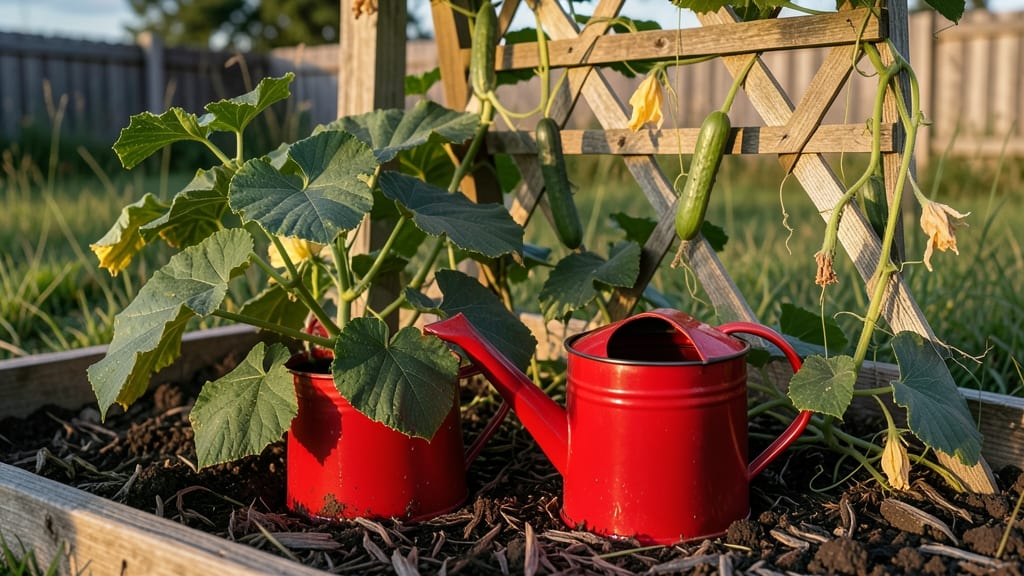
Cucumber plants drooping? You’re not alone—this is the #1 sign your plant is either thirsty, overwatered, or struggling with heat. 🌱 I’ve nursed back more wilting cucumbers than I’d like to admit, and the fixes are faster than you’d expect.
The key is identifying the real cause (it’s rarely what you think) and acting within hours to save those vines.
Overwatering is the sneaky culprit: soggy roots can’t breathe, so the plant wilts even when the soil feels damp. But heat stress or pests (like aphids) can drain energy just as fast.
Start by checking the soil—if it’s dry 1-2 inches down, water deeply until it drains from the bottom. If it’s soggy, hold off and let it dry out before watering again.
Within 24 hours, you’ll see improvement if the issue was water-related. For heat stress, move plants to partial shade and mist leaves in the afternoon. Add a mulch layer to keep roots cool and retain moisture. The goal? Stronger roots that support those heavy cucumbers without collapsing.
Prevention is even easier: water at the base in the morning, avoid overhead sprinklers, and watch for pests weekly. A healthy cucumber plant should bounce back in days—not weeks. Let’s get those vines perky again!
Why it happens
When your cucumber plants start drooping like a sad balloon 🎈, it’s often their way of signaling distress. Understanding the why behind the wilt is the first step to bringing them back to life.
Below, we break down the most common culprits—each with a clear scientific explanation and actionable clues to help you diagnose the issue fast.
💧 Overwatering or Poor Drainage
Cucumbers thrive in consistently moist (not soggy) soil, but too much water can suffocate roots by cutting off oxygen. When roots can’t breathe, they struggle to absorb nutrients, leading to wilting. Poor drainage exacerbates the problem, leaving roots waterlogged and prone to rot.
How to spot it:
- Soil feels muddy when squeezed (like a damp sponge).
- Yellowing leaves paired with drooping.
- Puddles lingering on the soil surface after watering.
Science note: Oxygen deprivation triggers anaerobic respiration in roots, producing ethanol—a toxic byproduct that weakens cellular function.
🌡️ Extreme Heat or Cold Stress
Cucumbers are heat-loving plants, but they wilt when temperatures swing outside their ideal range (65–95°F). Heat stress causes stomata (leaf pores) to close to conserve water, while cold snaps slow metabolic processes, leading to limp stems.
How to spot it:
- Drooping occurs suddenly during heatwaves or after chilly nights.
- Leaves may develop crispy edges (heat) or purple tinges (cold).
- Morning wilting that recovers slightly in cooler evening air.
Science note: High temperatures (>95°F) disrupt photosynthesis by denaturing enzymes in the chloroplasts, while cold (<50°F) thickens cell membranes, impairing nutrient transport.
⚡ Nutrient Deficiencies or Imbalances
Drooping can signal a hungry plant, especially if it lacks key nutrients like nitrogen, potassium, or magnesium. Nitrogen deficiency (pale yellow leaves) weakens overall vigor, while potassium deficiency (brown leaf edges) disrupts osmotic regulation, causing cells to lose turgor pressure.
How to spot it:
- Nitrogen: Older leaves turn yellow (but veins stay green).
- Potassium: Leaf edges scorch or curl upward.
- Magnesium: Interveinal chlorosis (yellow patches between veins).
Science note: Magnesium is central to chlorophyll production; its deficiency disrupts the plant’s ability to convert light into energy, leading to wilting.
🐜 Pest Damage or Root Invasion
Hidden pests like cucumber beetles, aphids, or root-knot nematodes can chew on roots or sap nutrients, causing sudden wilting. Even fungal infections (e.g., Fusarium wilt) clog vascular tissues, restricting water flow.
How to spot it:
- Stems show tiny holes or chew marks (beetles).
- Sticky residue on leaves (aphids).
- Mushy, discolored roots when pulled gently.
- Wilting that worsens over days despite proper watering.
Science note: Nematodes release enzymes that break down root cell walls, while beetles transmit bacterial wilt, which clogs xylem vessels like a blocked pipe.
🌱 Transplant Shock or Root Bound Stress
Newly transplanted cucumbers or those in root-bound containers may wilt as roots struggle to adapt. Transplant shock occurs when roots are damaged during moving, while root-bound plants suffer from circumstantial girdling, where roots grow in tight circles, restricting nutrient uptake.
How to spot it:
- Wilting starts within days of transplanting.
- Roots circle the pot like a pretzel when checked.
- No other symptoms (e.g., pests, discoloration).
Science note: Root damage triggers ethylene gas production, a stress hormone that accelerates wilting until new roots regenerate.
Revive Your Plant Step by Step
When your cucumber plant starts drooping, it’s often a sign that something needs immediate attention—but don’t panic! With the right approach, you can coax it back to health and even prevent future wilting.
Below, we’ve broken down practical fixes for the most common causes, along with prevention tips to keep your plants thriving.
Fix: If your soil feels soggy or the plant is mushy at the base, it’s likely overwatered. If the soil is bone-dry and pulling away from the pot edges, it’s underwatered.
- For overwatering:
- 🔥 Stop watering immediately and let the top 1–2 inches of soil dry out.
- 👨🍳 Repot if needed—if roots are rotting, transfer the plant to fresh, well-draining soil in a pot with drainage holes.
- 🌡️ Improve drainage by mixing in perlite or compost to aerate the soil.
- For underwatering:
- 💦 Water deeply until it runs out the drainage holes, then wait until the top inch of soil feels dry before watering again.
- 🥗 Mulch the soil to retain moisture and reduce evaporation.
💡 Prevention Tip: Water cucumbers 1–2 inches deep, 1–2 times per week, depending on heat and humidity. Stick your finger in the soil—if it’s dry up to your first knuckle, it’s time to water.
Fix: If leaves are crispy, yellow, or drooping in hot afternoons, your plant is struggling with too much sun or heat.
- 🌿 Provide afternoon shade by moving the plant to a spot with morning sun and afternoon shade, or use a light shade cloth (30–50% coverage).
- 💦 Increase humidity by misting leaves in the morning or placing a tray of water nearby.
- 🥘 Prune damaged leaves to help the plant focus energy on recovery.
💡 Prevention Tip: Cucumbers love 6–8 hours of sunlight daily but can scorch in intense midday heat. If growing in containers, move them to a sheltered spot during peak heat.
Fix: If roots are circling the pot or soil is compacted, nutrients can’t reach the plant efficiently.
- 🔪 Check the roots—if they’re tightly packed, it’s time to repot into a larger container with fresh, well-draining potting mix.
- 🌱 Add compost or worm castings to improve soil fertility and structure.
- ⏰ Space plants properly—cucumbers need 12–24 inches between vines for airflow and root growth.
💡 Prevention Tip: Use container-friendly soil mixes with perlite or coconut coir to prevent compaction. Rotate pots occasionally to encourage even root growth.
Fix: If you spot aphids, spider mites, or fungal spots, the plant may be struggling to uptake water and nutrients.
- 🔪 Remove severely infested leaves and dispose of them (don’t compost!).
- 💦 Spray with neem oil (1 tsp per quart of water) or insecticidal soap to kill pests.
- 🌡️ Improve airflow by pruning nearby foliage or spacing plants further apart.
- 🍎 For fungal issues, apply a baking soda spray (1 tsp baking soda + 1 quart water + a drop of dish soap) weekly.
💡 Prevention Tip: Inspect plants weekly for early signs of pests. Encourage beneficial insects like ladybugs to keep pests in check naturally.
- 🌿 Trim damaged leaves to reduce stress on the plant.
- 💧 Water at the base (not overhead) to avoid fungal growth.
- 🌡️ Monitor temperature—keep cucumbers between 60–90°F (they wilt in extreme heat or cold).
- 🍎 Fertilize lightly with a balanced, water-soluble fertilizer (10-10-10) if growth stalls after recovery.
✨ Pro Tip: If your cucumber plant is severely drooping but stems are still firm, it may just need a good drink and a few days of shade. Keep an eye on it—many plants bounce back faster than you’d expect!
Frequently asked questions
Why does my cucumber plant droop only in the afternoon?
Afternoon drooping is usually a sign of heat stress or underwatering. Cucumbers close their stomata (leaf pores) to conserve water during hot afternoons, causing wilting. Check if the soil is dry 1-2 inches deep—if so, water deeply in the morning. For extreme heat, provide afternoon shade with a light cloth (30-50% coverage).
Can I save a cucumber plant with mushy stems and yellow leaves?
Mushy stems and yellowing leaves indicate root rot from overwatering or poor drainage. If caught early, trim away mushy roots, repot in fresh well-draining soil with perlite, and water only when the top 2 inches feel dry. If the stem is hollow or black, the plant is likely beyond saving—focus on preventing rot in future plants.
How often should I water cucumber plants to prevent drooping?
Water cucumbers when the top 1 inch of soil feels dry—typically 1-2 times per week, depending on heat and humidity. Use your finger as a guide: if soil is dry up to your first knuckle, it's time to water. Always water at the base (not overhead) to avoid fungal issues and keep roots consistently moist, not soggy.
What’s the difference between drooping from thirst and drooping from pests?
Thirst-related drooping happens gradually and improves after watering, while pest-related wilting worsens over days despite proper care. Check for tiny holes in stems (cucumber beetles), sticky residue (aphids), or white webbing (spider mites). If pests are present, treat with neem oil or insecticidal soap immediately—wilting from pests often leads to permanent damage.
Will pruning help a drooping cucumber plant recover faster?
Yes! Pruning damaged or yellow leaves reduces stress on the plant by redirecting energy to healthy growth. Focus on removing leaves with brown edges or spots, and avoid cutting more than 20-30% of the foliage at once. Prune in the morning so wounds have time to heal, and always use clean, sharp scissors to prevent disease spread.