
Diseases
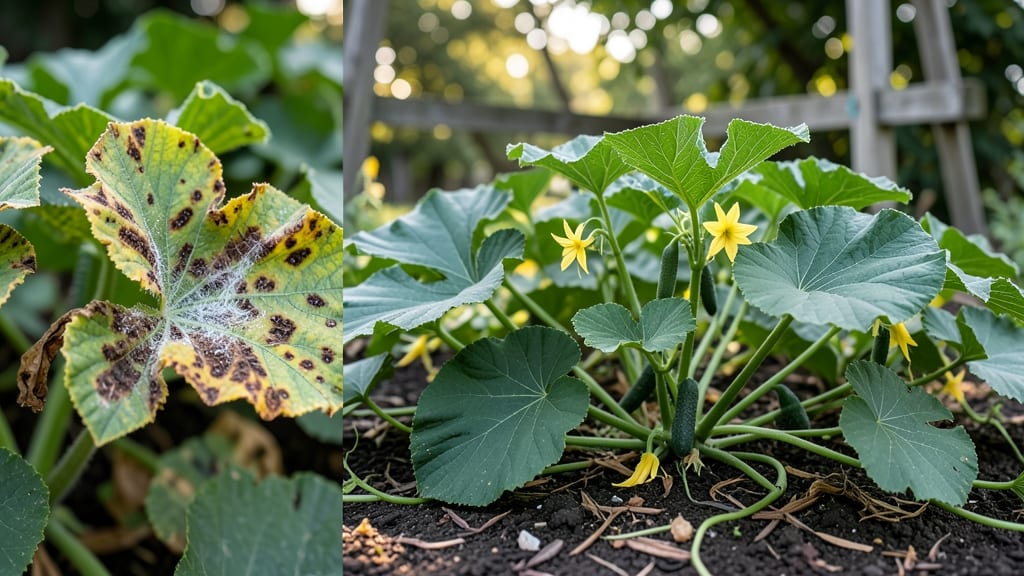
Browse these cucumber plant diseases images to spot the problem—those strange white spots on your leaves might hold the key.
That’s powdery mildew—one of the most common cucumber diseases that can wipe out your harvest if you don’t act fast. 🌿 I’ve battled this exact problem in my garden, and the key to saving your plants is catching it early and knowing exactly what to do (spoiler: it’s not just spraying random stuff).
The good news is that most cucumber diseases—like downy mildew or bacterial wilt—leave telltale signs you can spot with a quick inspection. Yellowing leaves, black spots, or oily streaks?
Those are your plant’s SOS signals. The bad news? Once they’re full-blown, treatments only slow things down. Prevention—like proper spacing, airflow, and resistant varieties—is your best bet.
By the end of this guide, you’ll recognize these diseases faster than a gardener with a magnifying glass. We’ll cover organic sprays that actually work, when to pull the plug on a hopeless plant, and how to keep your next crop from getting the same fate.
Your cucumbers will thank you with crisp, disease-free harvests all season.
Whether you’re a first-time gardener or a veteran who’s lost battles before, this visual guide gives you the tools to win. Think of it as your cucumber plant’s first line of defense—because once those spots appear, it’s already too late to ignore them.
Root Causes Behind Plant Troubles
Cucumber plants, like any other crop, are vulnerable to diseases—but many of these issues stem from specific, often preventable, conditions. Understanding why these problems arise is the first step to protecting your harvest.
Below, we break down the science behind the most common culprits, from environmental factors to human habits that invite trouble.
Fungal diseases like downy mildew and powdery mildew thrive in environments where humidity lingers above 70% for extended periods. Here’s why:
- Fungal spores germinate faster in damp conditions, creating an ideal breeding ground. Pseudoperonospora cubensis (downy mildew) spreads via airborne spores that land on wet leaves, germinating within hours.
- Poor air circulation traps moisture near foliage. Dense plantings or crowded vines prevent airflow, keeping leaves damp longer—perfect for fungal growth.
- Overnight dew or irrigation timing plays a role. Watering late in the day leaves leaves wet overnight, prolonging moisture exposure.
Actionable fix: Space plants 18–24 inches apart, prune for airflow, and water early in the day so foliage dries by evening. Use drip irrigation to avoid wetting leaves.
Diseases like fusarium wilt and bacterial soft rot often originate in the soil. Here’s the science:
- Waterlogged soil cuts off oxygen, weakening roots and making plants susceptible to Fusarium oxysporum, a soil-dwelling fungus that clogs vascular tissue.
- Reused contaminated soil harbors pathogens. If previous crops (especially cucurbits like melons or squash) were diseased, spores remain viable for years.
- Compacted or heavy clay soil slows drainage, creating anaerobic zones where Pythium (a water mold) thrives, leading to root rot.
Actionable fix: Test soil pH (ideal: 6.0–6.8) and amend with compost or sand for drainage. Rotate crops annually and disinfect tools with 70% isopropyl alcohol between uses.
Insects like aphids, cucumber beetles, and whiteflies don’t just damage plants—they spread diseases. Here’s how:
- Aphids excrete honeydew, a sugary residue that fosters sooty mold (a black fungal growth) and attracts other pests.
- Cucumber beetles carry bacterial wilt (Erwinia tracheiphila) on their bodies. A single beetle feeding on a healthy plant can introduce the bacteria, which clogs the plant’s xylem within days.
- Whiteflies transmit viruses like cucumber mosaic virus (CMV) while feeding, stunting growth and distorting leaves.
Actionable fix: Use row covers early in the season to block beetles. Introduce ladybugs or parasitic wasps to control aphids naturally. Remove infected plants immediately to prevent spread.
Plants under stress—whether from nutrient deficiencies, over-fertilization, or temperature extremes—become prime targets for disease. The mechanics:
- Nitrogen deficiency weakens cell walls, making leaves more vulnerable to fungal penetration. Powdery mildew exploits this by growing on weakened tissue.
- Excess phosphorus can promote root rot by encouraging lush, soft growth that’s prone to collapse when infected.
- Temperature swings (e.g., sudden cold snaps) shock plants, reducing their ability to resist pathogens like alternaria leaf spot.
Actionable fix: Conduct a soil test and balance nutrients with a 5-10-10 fertilizer (nitrogen-phosphorus-potassium). Mulch with straw to stabilize soil temperature and retain moisture without excess humidity.
Pro tip: 💡 Monitor weather forecasts and avoid planting cucumbers in low-lying areas where cold air pools—this increases risk of chilling injury, which opens doors for secondary infections.
Quick Fixes for Cucumber Plant Woes
When your cucumber plants show signs of distress—whether it’s yellowing leaves, powdery residue, or mushy stems—acting fast can save your harvest. Below are practical, step-by-step solutions tailored to the most common cucumber diseases, along with prevention tips to keep your plants thriving. 🌱💪
Symptoms: White, powdery coating on leaves (like dust), stunted growth.
How to Fix It:
- 🔥 Prune the Problem Remove heavily infected leaves with clean, sharp scissors (sterilize with rubbing alcohol). Dispose of them in the trash—not the compost!
- 🍳 Homemade Spray Solution Mix 1 tsp baking soda + 1 tbsp vegetable oil + 1 tsp dish soap + 1 gallon water. Spray leaves early in the morning (avoid direct sunlight to prevent leaf burn). Repeat every 5–7 days.
- 👨🍳 Boost Airflow Space plants 12–24 inches apart and prune foliage to improve air circulation. Use a fan on low for 1–2 hours daily if growing indoors.
Prevention Tips: ✅ 💡 Rotate crops—don’t plant cucumbers in the same spot yearly. ✅ 🌡️ Water at the base (avoid overhead sprinkling). ✅ ✨ Choose resistant varieties like ‘Lemon Cucumber’ or ‘Straight Eight.’
Symptoms: Yellow spots on top leaves, fuzzy gray mold on undersides.
How to Fix It:
- 🔪 Remove Infected Leaves Cut off and destroy affected leaves immediately. Downy mildew spreads fast—don’t wait!
- 🍄 Copper Fungicide Treatment Use a store-bought copper fungicide (like Bonide Copper Fungicide) or a homemade mix: 1 tbsp copper sulfate + 1 gallon water. Spray every 7–10 days until symptoms disappear.
- 🌿 Companion Planting Interplant with marigolds, nasturtiums, or radishes to deter spores.
Prevention Tips: ✅ 🎯 Avoid overhead watering—use drip irrigation. ✅ ⏰ Harvest promptly—don’t let cucumbers overripe on the vine. ✅ 🌱 Start seeds indoors if your climate is humid (transplant when cooler).
Symptoms: Wilting leaves (even when soil is moist), oozing stems, yellowing veins.
How to Fix It:
- 🚨 Quarantine Immediately Bacterial wilt is incurable. Remove and burn or trash the entire plant (don’t compost!). Disinfect tools with bleach or alcohol.
- 🌱 Rotate Crops Heavily Avoid planting cucumbers, melons, or squash in the same spot for 3 years.
- 💡 Soil Treatment Solarize soil in summer: Cover with clear plastic for 4–6 weeks to kill bacteria. Or add compost + beneficial bacteria (like Bacillus subtilis) to improve soil health.
Prevention Tips: ✅ 🔥 Use cucumber-free seeds from reputable sellers. ✅ 👨🍳 Avoid wounding plants—handle gently to prevent bacterial entry. ✅ 🌡️ Monitor temperature—bacteria thrive in 77–86°F soil.
Symptoms: Yellowing leaves, wilting (starts in one branch), stunted growth.
How to Fix It:
- 🌱 Replace Infected Soil These fungi persist in soil for years. Remove plants and replace top 6–12 inches of soil with fresh, sterile mix.
- 🍳 Fungal Treatment Apply Trichoderma harzianum (a beneficial fungus) or hydrogen peroxide spray (3% solution, 1:9 with water) weekly for 4 weeks.
- 🌿 Crop Rotation + Solarization Plant non-susceptible crops (like beans or tomatoes) for 2–3 years before replanting cucumbers. Solarize soil as above.
Prevention Tips: ✅ 🎯 Test soil for fungal levels before planting. ✅ ✨ Use raised beds with fresh soil. ✅ 💡 Avoid overwatering—these fungi love soggy soil.
Use this quick-reference table to tackle multiple issues at once:
| Problem | Immediate Fix | Prevention |
|---|---|---|
| Powdery/Downy Mildew | Prune + copper/baking soda spray | Improve airflow, rotate crops |
| Bacterial Wilt | Remove plant + sterilize tools | Use disease-free seeds, avoid wounds |
| Fusarium/Verticillium | Replace soil + Trichoderma | Solarize soil, rotate crops aggressively |
Final Pro Tip: 🌟 Inspect plants weekly—early action is key! Healthy soil, proper spacing, and consistent monitoring will keep your cucumbers thriving all season.
Frequently asked questions
What's the fastest way to identify cucumber diseases without a microscope?
Focus on leaf patterns and plant behavior! Powdery mildew shows as white dust, downy mildew has yellow spots with fuzzy gray undersides, and bacterial wilt causes sudden wilting despite moist soil. Snap photos of symptoms and compare them to our visual guide—most diseases reveal themselves through these key visual clues.
Can I still harvest cucumbers from plants with mild disease?
Only if the disease is non-contagious like powdery mildew and hasn't spread to the fruit. For fungal issues, pick cucumbers before they reach full size to reduce stress on the plant. With bacterial wilt or fusarium, remove ALL fruit immediately—infected plants can't recover, and the disease spreads through harvested produce.
How do I know if my cucumber plant has a fungal or bacterial infection?
Fungal diseases (like mildew) spread slowly and appear as powdery coatings or spots, while bacterial infections (like wilt) cause rapid wilting, oozing stems, and yellowing veins. Fungi thrive in damp conditions, while bacteria often enter through wounds—check for recent pruning or beetle damage if symptoms appear suddenly.
Are there any cucumber varieties that naturally resist diseases?
Yes! Look for disease-resistant hybrids like 'Straight Eight' (powdery mildew resistant) or 'Lemon Cucumber' (downy mildew tolerant). Seed packets often list resistance codes—'PM' means powdery mildew resistant, 'DM' means downy mildew resistant. While no variety is 100% immune, these reduce your risk by 50-70%.
What's the best time of day to inspect cucumber plants for early disease signs?
Morning is ideal! Dew evaporates by midday, revealing hidden symptoms like powdery mildew or downy mildew spores. Check undersides of leaves first (many diseases start there) and examine stems for oozing or discoloration. Avoid inspecting after rain—wet leaves can mask early signs until they dry.