
Pests and Diseases
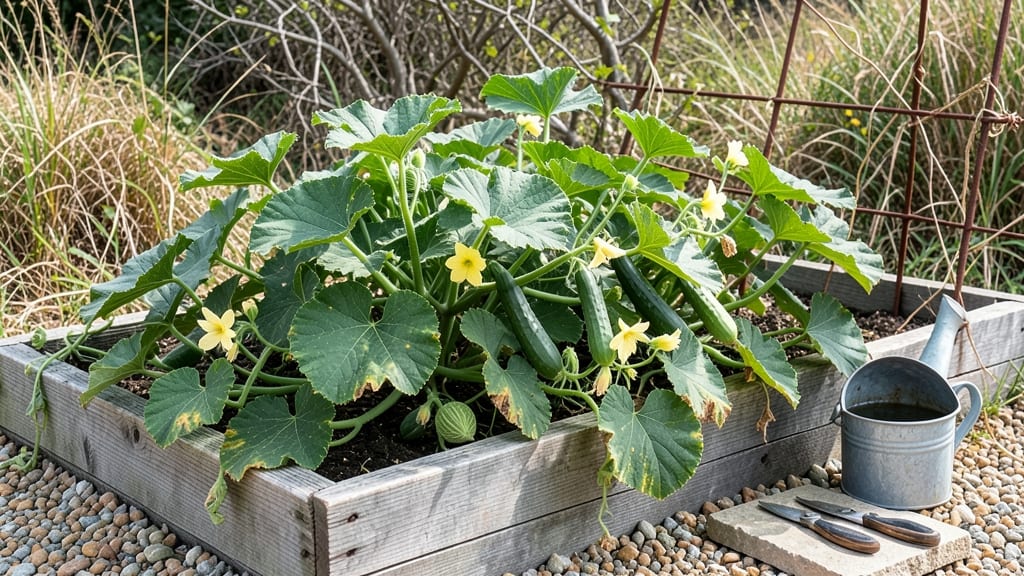
Those cucumber leaves turned yellow? They’re likely drowning in overwatering or starving for nutrients—just like after that rainstorm where your plants begged for help. 🌱 watering can, turning soil into swampy conditions.
The good news? Both issues fix with simple adjustments that won’t take more than an hour of your time.
The first clue is where the yellowing starts. If it begins on the older leaves near the soil, overwatering’s likely the culprit—roots suffocating from soggy conditions. But if the yellowing spreads evenly across new growth, your plants might be begging for nitrogen or magnesium.
Grab a small trowel and check the soil: it should crumble like cake, not stick together like wet clay.
Here’s the quick fix: Cut back watering to once every 2-3 days (unless it’s scorching hot) and let the top inch of soil dry out between waterings. For nutrient issues, a balanced fertilizer (like 10-10-10) or a Epsom salt soak (1 tablespoon per gallon of water) works wonders.
Within a week, you’ll see fresh green leaves returning—proof your cucumbers are back on track.
Prevent future yellowing by testing your soil’s drainage first (fill a pot with soil and water—if it drains in under an hour, you’re golden). Mulch heavily to retain moisture without waterlogging, and rotate crops next season to keep nutrients in check.
No more sad, yellowing leaves—just vibrant, productive vines ready for harvest.
Root Causes Behind Yellowing Cucumber Leaves
Understanding why your cucumber leaves turn yellow starts with identifying the underlying stress factors. These plants are sensitive to environmental and cultural imbalances, and yellowing often signals an urgent need for intervention.
Below, we break down the most common—and fixable—reasons behind this telltale symptom, complete with scientific explanations and actionable insights.
Yellowing leaves are a classic sign of waterlogged roots, a condition known as anaerobic stress. When cucumbers sit in soggy soil for too long, their roots suffocate due to a lack of oxygen.
This disrupts nutrient uptake, particularly iron and nitrogen, which are essential for chlorophyll production (the green pigment in leaves).
Why it happens:
- Excess moisture triggers the breakdown of chlorophyll, leading to yellowing (a process called chlorosis).
- Compacted or clay-heavy soil prevents water from draining, trapping roots in a waterlogged state.
- Frequent watering without checking soil moisture can drown roots, even if the topsoil feels dry.
Actionable fix:
- Test soil moisture by sticking your finger 1–2 inches deep—water only if it’s dry.
- Amend heavy soil with perlite, sand, or compost to improve drainage.
- Use raised beds or containers if your garden soil is naturally water-retentive.
Cucumbers are heavy feeders, and yellowing leaves often point to a lack of key nutrients. The most common deficiencies include:
| Symptom | Likely Nutrient Deficiency | How to Fix It |
|---|---|---|
| Yellowing between veins | Iron (Fe) or Magnesium (Mg) | Apply chelated iron or Epsom salt (magnesium sulfate). |
| Older leaves yellow first | Nitrogen (N) | Use a balanced fertilizer (10-10-10) or compost. |
| New leaves yellow | Zinc (Zn) or Manganese (Mn) | Spray with a zinc sulfate solution or add compost. |
Why it happens:
- Iron deficiency (chlorosis) is common in alkaline soils (pH > 7.0), where iron becomes unavailable to plants.
- Nitrogen starvation slows photosynthesis, causing leaves to yellow from the oldest to newest.
- Over-fertilizing with phosphorus/potassium can lock out other nutrients, worsening deficiencies.
Actionable fix:
- Conduct a soil test to identify pH and nutrient imbalances.
- For iron deficiency, lower soil pH with sulfur or use iron-chelating sprays.
- Side-dress with compost or worm castings for a slow-release nutrient boost.
Yellowing leaves can also stem from hidden pests or pathogens that weaken the plant’s ability to produce chlorophyll. Common culprits include:
- Aphids, spider mites, or whiteflies – These sap-sucking pests inject toxins that disrupt nutrient flow, causing yellowing.
- Powdery mildew or downy mildew – Fungal infections clog stomata (leaf pores), reducing photosynthesis.
- Root rot (Pythium, Phytophthora) – Fungal root infections block nutrient absorption, leading to systemic yellowing.
Why it happens:
- Weakened plants (from stress or poor growing conditions) are more susceptible to pests and diseases.
- High humidity or poor airflow encourages fungal growth, while crowded plants attract pests.
- Overhead watering spreads fungal spores, accelerating leaf yellowing.
Actionable fix:
- Inspect leaves undersides for pests—spray with neem oil or insecticidal soap if needed.
- Remove infected leaves and apply copper fungicide for mildew.
- Improve airflow by pruning nearby plants and watering at the base (not overhead).
Extreme temperatures, light fluctuations, or transplant shock can trigger yellowing leaves by disrupting cellular processes.
Why it happens:
- Heat stress (above 90°F) causes protein denaturation, leading to leaf yellowing.
- Cold drafts or frost damage cell membranes, halting chlorophyll production.
- Transplant shock occurs when roots struggle to adapt to new soil, reducing nutrient uptake.
Actionable fix:
- Mulch heavily to regulate soil temperature and retain moisture.
- Provide shade cloth during heatwaves to protect young plants.
- Acclimate seedlings to outdoor conditions for 1–2 weeks before transplanting (hardening off).
Yellowing can also result from over-application of fertilizers, herbicides, or pesticides, which damage root systems or leaf tissues.
Why it happens:
- Salt buildup from fertilizers or tap water osmotically stresses roots, preventing water uptake.
- Herbicide drift (e.g., glyphosate) can bleach leaves if sprayed nearby.
- Excessive chlorine in water can burn roots, leading to yellowing.
Actionable fix:
- Flush soil with rainwater to reduce salt buildup.
- Use filtered or rainwater for irrigation to avoid chlorine damage.
- Avoid fertilizing if leaves show signs of burn (crispy edges, brown spots).
💡 Pro Tip: Always rule out multiple causes—yellowing leaves are rarely from just one issue. Start with the most obvious (water, nutrients, pests) and work your way down!
Fix Yellowing Cucumber Leaves Fast
Yellowing cucumber leaves can feel like a garden emergency, but the good news is most causes have quick fixes—if you know what’s wrong. Below, we’ve mapped the most common culprits to practical, step-by-step solutions, plus prevention tips to keep your plants lush and green.
Let’s turn those sad, yellowing leaves around!
Signs: Yellowing lower leaves, mushy stems, or waterlogged soil.
How to Fix It:
- 🚰 Stop Watering Immediately
- Let the top 1–2 inches of soil dry out completely before watering again. Stick your finger in the soil—if it’s soggy, wait.
- 🪴 Improve Drainage
- If your pots lack drainage holes, repot your cucumbers into containers with holes or add a layer of gravel or perlite at the bottom.
- In garden beds, amend heavy clay soil with compost or sand to help water drain faster.
- 🌱 Adjust Your Watering Schedule
- Water deeply once or twice a week (depending on heat) rather than daily shallow sprinkles. Aim for 1–1.5 inches of water per week.
- Water at the base of the plant in the morning to reduce fungal risks.
💡 Pro Tip: Use a moisture meter or the “squeeze test”—grab a handful of soil; if it crumbles easily, it’s dry enough. If it sticks together, hold off!
Signs: Yellowing edges, crispy texture, or leaves wilting in the afternoon.
How to Fix It:
- 🌿 Provide Shade
- If your cucumbers are in full sun (6+ hours/day), add shade cloth (30–50%) during peak heat (11 AM–3 PM).
- Use row covers or move potted plants to a spot with partial afternoon shade.
- 💦 Mulch Like a Pro
- Spread 2–3 inches of straw or wood chips around the base to keep roots cool and retain moisture.
- 🌱 Adjust Watering for Heat
- Water early in the morning (before 9 AM) to reduce evaporation. Avoid evening watering—wet leaves + humidity = fungal trouble.
🌡️ Pro Tip: If leaves are scorched (brown/yellow patches), prune the damaged foliage to help the plant focus energy on new growth.
Signs: Pale yellow leaves (especially younger ones), stunted growth, or leaf edges curling.
How to Fix It:
- 🌱 Test Your Soil
- Grab a DIY soil test kit (or send a sample to your local extension office) to check pH and nutrient levels. Cucumbers thrive in pH 6.0–6.8.
- 💊 Fix the Deficiency
- Nitrogen (N) deficiency? Add compost, fish emulsion, or a balanced 10-10-10 fertilizer.
- Magnesium (Mg) deficiency? Sprinkle Epsom salt (1 tbsp per gallon of water) every 2 weeks.
- Iron (Fe) deficiency? Use chelated iron supplements or apply iron sulfate.
- 🚫 Avoid Over-Fertilizing
- Too much fertilizer burns roots! Flush soil with water if you suspect overdoing it, and reduce feeding to every 3–4 weeks.
🎯 Pro Tip: For container cucumbers, use a slow-release fertilizer (like Osmocote) to avoid nutrient spikes.
Signs: Yellowing with spots, holes, or sticky residue (aphids, spider mites, or powdery mildew).
How to Fix It:
- 🔍 Identify the Problem
- Powdery mildew? White fuzzy coating on leaves.
- Aphids? Tiny green/black bugs clustering on undersides.
- Spider mites? Fine webbing + yellow stippling.
- 🧼 Treat Naturally
- Neem oil spray (1 tsp neem oil + 1 tsp mild soap + 1 quart water) – spray every 5–7 days until pests are gone.
- Insecticidal soap for aphids/spider mites (follow label rates).
- Baking soda spray (1 tbsp baking soda + 1 quart water + a drop of soap) for powdery mildew.
- 🌿 Boost Plant Health
- Prune infected leaves immediately to stop the spread.
- Improve airflow by spacing plants 18–24 inches apart.
✨ Pro Tip: Prevent future outbreaks by rotating crops (don’t plant cucumbers in the same spot yearly) and removing debris at season’s end.
To keep your cucumbers green, happy, and productive, follow this quick maintenance guide:
- Water: Deep and infrequent (check soil moisture daily in extreme heat).
- Sun: Morning sun + afternoon shade in hot climates.
- Soil: Well-draining, rich in compost (avoid heavy clay).
- Fertilizer: Balanced feedings (don’t overdo nitrogen).
- Pests: Weekly inspections + neem oil on standby.
🎉 Ready to Revive Your Cucumbers? Pick the cause that matches your plant’s symptoms, follow the steps, and watch those leaves bounce back in 7–14 days. Need extra help? Drop a comment below—we’re happy to troubleshoot! 🌱
Frequently asked questions
Why do cucumber leaves turn yellow first on the older ones?
This is usually a sign of nitrogen deficiency—your cucumbers are starving for this essential nutrient! Older leaves yellow first because the plant prioritizes sending nutrients to new growth. Try adding compost or a balanced fertilizer (like 10-10-10) around the base of the plant. For quick results, use fish emulsion every 2 weeks.
Can overwatering really kill cucumber plants?
Waterlogged roots suffocate and block nutrient uptake, causing yellowing leaves. The fix is simple: let the top 1–2 inches of soil dry out between waterings. If your soil drains poorly, amend it with perlite or sand. For container plants, ensure pots have drainage holes—no exceptions!
What does yellowing between the leaf veins mean?
This classic pattern signals iron or magnesium deficiency (chlorosis). For iron, use chelated iron supplements or add composted manure. For magnesium, mix 1 tablespoon of Epsom salt per gallon of water and spray it on leaves weekly. Test your soil pH—cucumbers thrive in 6.0–6.8 range.
How do I tell if yellow leaves are from pests vs. overwatering?
Check for tiny webs, holes, or sticky residue on leaves—those mean pests (like spider mites or aphids). Overwatering causes mushy stems and yellowing from the bottom up. For pests, spray neem oil; for water issues, let soil dry out. Pro tip: Flip leaves over—pests love hiding there!
Will pruning yellow leaves help my cucumber plant?
Yes! Pruning removes the plant’s energy drain, helping it focus on healthy growth. Snip yellow leaves at the base with clean scissors. For severe cases, trim 1/3 of the plant back to encourage new, vibrant foliage. Just avoid cutting into green stems—save that for pests or diseases.