
Light Requirements
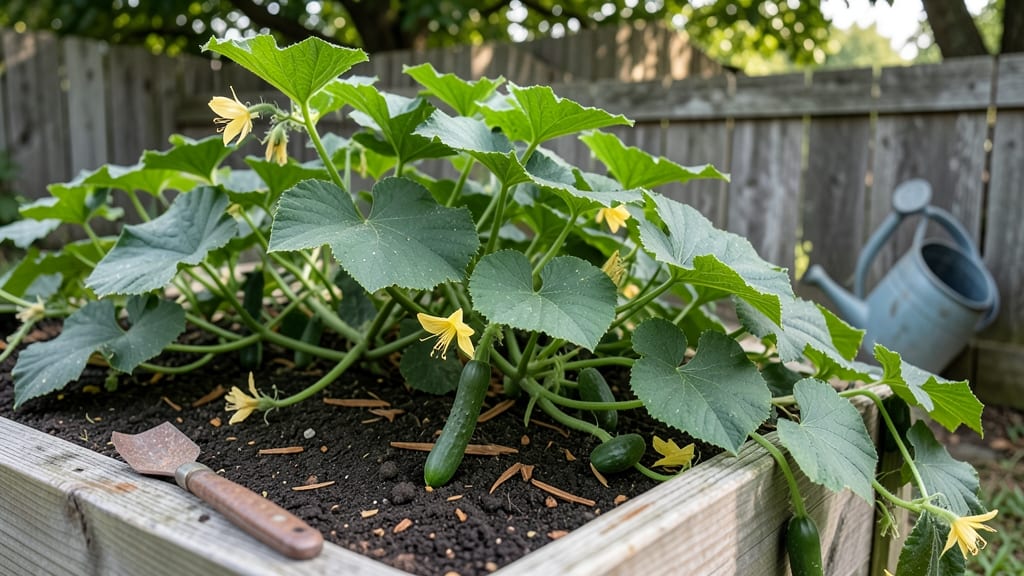
Cucumber leaves turning light green means your plants are screaming for nitrogen—your first clue they're hungry, not sick. 🌱 I've seen this happen after planting in fresh soil without a boost, or when vines outgrow their fertilizer supply.
The fix is simpler than you think: a balanced organic feed or compost tea applied at the base, not the leaves. The real game-changer? Timing. Feed when vines start running (not after flowers appear) and repeat every 2-3 weeks during active growth.
I've revived multiple plants this way—within a week, leaves go from pale to deep green, and new growth pops up faster. The secret's in the roots, not the foliage. You'll know it's working when new leaves emerge with that rich, dark green color and the stems thicken noticeably.
The plants won't just survive—they'll thrive, producing more cucumbers than you can harvest. This fix works for both in-ground plants and container-grown cucumbers too. Prevention is easy: mix compost into planting holes at the start, and side-dress with nitrogen-rich amendments like fish emulsion mid-season.
My journal shows this combo keeps leaves vibrant all summer long.
Understanding Light Green Leaf Causes
When your cucumber plants sport pale, light green leaves instead of their usual vibrant hue, it’s often a signal that something fundamental is off—usually tied to light exposure, nutrient balance, or environmental stress.
Below, we break down the most common culprits, backed by science, so you can diagnose and fix the issue fast.
Cucumbers are heavy feeders when it comes to sunlight, thriving in 6–8 hours of direct light daily. When they don’t get enough, chlorophyll production slows, leading to pale, yellow-tinged leaves (a condition called chlorosis).
Why it happens:
- Photosynthesis slowdown: Light is the energy source for chlorophyll, the pigment that gives leaves their green color. Without enough sun, plants can’t produce sufficient chlorophyll, causing leaves to lose their deep green tone.
- Weak stem development: Light deprivation also weakens stems, making plants more susceptible to stretching (etiolation) and disease.
- Partial shade traps: Even if your cucumbers are in a garden, overcrowding, tall neighboring plants, or poor placement can block critical light.
Actionable fix:
- Move pots or relocate plants to a sunnier spot (south-facing is ideal in the Northern Hemisphere).
- Use reflective surfaces (like white walls or mirrors) to bounce extra light onto leaves.
- If growing indoors, supplement with grow lights (LED or fluorescent) for 12–14 hours/day.
Light green leaves can also signal a nitrogen deficiency—or, surprisingly, too much nitrogen in some cases. Cucumbers need nitrogen for leafy growth, but an imbalance throws off their color and health.
Why it happens:
- Nitrogen deficiency (most common):
- Nitrogen is a chlorophyll-building block. Without enough, leaves can’t produce sufficient green pigment, leading to pale, yellowing foliage (especially on older leaves).
- Symptoms often start at the leaf tips or edges before spreading.
- Soil depletion (from over-harvesting or poor fertilization) or leaching (common in sandy soils) are usual causes.
- Nitrogen overload (less common but possible):
- While rare, excess nitrogen can dilute chlorophyll, causing leaves to appear washed out or light green instead of dark green.
- This often happens with over-fertilization (especially with synthetic nitrogen-heavy fertilizers like urea).
- Secondary nutrient deficiencies (like magnesium or iron) can also mimic light green leaves, as these elements are critical for chlorophyll function.
Actionable fix:
- Test your soil (a simple home kit or lab test) to check nitrogen (N), phosphorus (P), and potassium (K) levels.
- For deficiency: Apply a balanced fertilizer (like 10-10-10) or compost/manure to boost organic nitrogen.
- For overload: Flush the soil with water to leach excess nitrogen, then switch to a low-nitrogen, high-potassium fertilizer (like 5-10-10) to encourage stronger growth.
- Add micronutrients: A foliar spray with magnesium (Epsom salt) or iron chelate can help if deficiencies are suspected.
Waterlogged roots can’t absorb nutrients efficiently, leading to chlorosis and light green leaves—even if the soil seems moist.
Why it happens:
- Root suffocation: Too much water displaces oxygen in the soil, causing roots to suffocate and struggle to uptake nutrients (especially nitrogen and iron).
- Fungal growth: Excess moisture encourages root rot (like Pythium or Phytophthora), which blocks nutrient transport.
- Leaching: Overwatering washes away essential nutrients (like nitrogen and magnesium) before roots can absorb them.
Actionable fix:
- Check drainage: Ensure pots have drainage holes and garden beds aren’t compacted.
- Adjust watering: Let the top 1–2 inches of soil dry out between waterings. Stick your finger in—if it’s soggy, hold off!
- Amend soil: Mix in perlite, vermiculite, or compost to improve aeration and drainage.
- Use mulch: A 2–3 inch layer of straw or wood chips helps regulate soil moisture and prevent evaporation.
Extreme heat, cold, or unbalanced soil pH can lock out nutrients, causing light green leaves even if sunlight and water are fine.
Why it happens:
- Temperature extremes:
- Cold stress (below 50°F/10°C) slows nutrient uptake and chlorophyll production.
- Heat stress (above 90°F/32°C) can denature enzymes needed for nutrient absorption, leading to pale leaves.
- pH imbalance:
- Cucumbers prefer a slightly acidic to neutral pH (6.0–7.0). If soil is too alkaline (pH >7.5), iron and manganese become unavailable, causing interveinal chlorosis (light green leaves with dark green veins).
- Too acidic (pH <5.5) can also leach essential nutrients like calcium and magnesium.
Actionable fix:
- Monitor soil temperature: Use a soil thermometer to keep roots in the ideal 60–85°F (15–29°C) range.
- Adjust pH:
- Raise pH (if too acidic): Add lime or wood ash.
- Lower pH (if too alkaline): Mix in sulfur or peat moss.
- Use chelated nutrients: If pH is stable but chlorosis persists, try a chelated iron or magnesium spray for quick absorption.
Certain pests and pathogens sap nutrients from leaves, leaving them light green, weak, or spotted.
Why it happens:
- Sap-sucking insects (like aphids, spider mites, or whiteflies) feed on plant juices, disrupting nutrient flow and causing stunted, pale growth.
- Fungal diseases (such as powdery mildew or downy mildew) coat leaves, blocking sunlight and reducing chlorophyll production.
- Root-knot nematodes damage roots, impairing nutrient uptake and leading to yellowing or light green foliage.
Actionable fix:
- Inspect leaves for pests—spray with neem oil or insecticidal soap if needed.
- Remove infected leaves and treat with copper fungicide for mildew.
- Rotate crops and use resistant varieties to prevent nematode buildup.
Quick Fixes for Reviving Cucumber Leaves
If your cucumber plants are sporting pale, light green leaves, don’t panic—there are simple, actionable steps to restore their vibrancy and boost growth. Below, we break down the most common causes and practical fixes tailored to each scenario, plus prevention tips to keep your plants thriving long-term.
Signs: Light green or yellowing leaves (especially older ones), stunted growth, weak stems. Why it happens: Nitrogen is the backbone of chlorophyll—without enough, leaves lose their deep green hue and struggle to photosynthesize.
How to fix it:
- 🔥 Choose the right fertilizer:
- Quick fix: Use a balanced liquid fertilizer (like 10-10-10) or a high-nitrogen option (e.g., blood meal, fish emulsion, or compost tea). For instant results, opt for a fast-acting granular fertilizer (e.g., ammonium sulfate).
- Organic route: Mix 1–2 inches of well-aged compost into the soil around the base of the plant. Microbes in compost release nitrogen slowly over time.
- 👨🍳 Apply it correctly: - For liquid fertilizers: Dilute to half-strength and water the soil (not the leaves) every 7–10 days during active growth. - For granular fertilizers: Sprinkle 1–2 tablespoons per plant, then water deeply to activate it. - Pro tip: 💡 Avoid overdoing it! Too much nitrogen can lead to excessive leafy growth (but fewer cucumbers).
Stick to the recommended dosage.
- 🌡️ Monitor and adjust:
- After 2–3 weeks, check for improvement. If leaves stay pale, reapply fertilizer or test your soil’s pH (ideal range: 6.0–6.8 for cucumbers). Acidic soil (pH <5.5) locks out nitrogen—add lime to raise pH if needed.
Prevention: ✨ Feed regularly: Side-dress plants with compost or a slow-release nitrogen fertilizer every 3–4 weeks. ✨ Mulch: Use straw or grass clippings to retain moisture and slowly release nitrogen as they decompose.
Signs: Light green, bleached or crispy edges, wilting, or leaves curling upward. Why it happens: Intense sunlight or heat causes oxidative stress, burning chlorophyll and reducing leaf pigment. Cucumbers thrive in partial shade (6–8 hours of sun max).
How to fix it:
- 🌿 Provide shade:
- Quick shade: Use a lightweight row cover (30–50% shade cloth) or drip irrigation shade (like a DIY system with a white sheet) during peak afternoon sun (12 PM–4 PM).
- Permanent fix: Plant cucumbers near tall crops (e.g., corn, sunflowers) or under a trellis with a canopy for dappled shade.
- 💧 Hydrate deeply:
- Water early in the morning (before 10 AM) to prevent evaporation. Aim for 1–1.5 inches of water per week (more in extreme heat).
- Mulch heavily: Use straw or wood chips to keep roots cool and retain moisture.
- 🌡️ Cool the roots:
- If growing in containers, move pots to a shadier spot or place them on brick or reflective surfaces to deflect heat.
- Avoid overhead watering—it can scorch leaves. Use drip irrigation instead.
Prevention: ✨ Choose the right spot: Plant cucumbers where they get morning sun and afternoon shade, especially in hot climates. ✨ Use reflective mulch: Lay white plastic mulch around plants to bounce back sunlight and reduce heat absorption.
Signs: Light green, soggy soil, yellowing leaves, or roots smelling rotten. Why it happens: Waterlogged roots drown plant cells, starving leaves of oxygen and nutrients, including nitrogen.
How to fix it:
- 🔪 Improve drainage:
- For garden beds: Amend soil with perlite, vermiculite, or coarse sand (1 part additive to 3 parts soil). This creates air pockets for roots.
- For containers: Repot in a larger container with drainage holes and use a fast-draining mix (50% potting soil + 30% perlite + 20% compost).
- 💧 Adjust watering habits:
- Let soil dry slightly between waterings—stick your finger 1 inch into the soil. If it’s damp, wait 1–2 days before watering again.
- Use a moisture meter for precision (aim for 40–60% moisture in the root zone).
- 🌱 Revive stressed plants:
- Trim severely affected leaves to redirect energy to healthy growth.
- Apply a fungicide (like neem oil) if roots show signs of root rot (black, mushy roots).
Prevention: ✨ Raise beds: Grow cucumbers in raised beds or containers to prevent water pooling. ✨ Test your soil: Use a soil test kit to check drainage—clay-heavy soil benefits from gypsum to loosen it.
Signs: Light green leaves with holes, spots, or sticky residue, wilting, or white powdery coatings. Why it happens: Pests (e.g., aphids, spider mites) or diseases (e.g., powdery mildew) sap nutrients, causing leaves to pale.
How to fix it:
- 🔍 Identify the culprit:
- Aphids/spider mites: Tiny bugs on undersides of leaves; leaves may curl or develop sticky honeydew.
- Powdery mildew: White, powdery patches on leaves.
- Fungal spots: Yellow/brown spots with dark borders.
- 🚿 Treat naturally: - For pests: Spray with soapy water (1 tsp mild soap + 1 quart water) or neem oil (1 tbsp neem oil + 1 quart water + drop of dish soap).
Repeat every 3–5 days until pests vanish. - For mildew: Apply baking soda spray (1 tsp baking soda + 1 quart water + 1 tsp oil) weekly. Improve airflow by pruning crowded vines.
- 🌱 Strengthen plants:
- Prune damaged leaves to prevent spread.
- Rotate crops next season—don’t plant cucumbers in the same spot yearly.
Prevention: ✨ Prevent pests: Install yellow sticky traps to catch flying insects early. ✨ Space plants: Leave 12–24 inches between cucumber vines for better airflow and less humidity (which fuels mildew).
Final Pro Tip: 🎯 Combine fixes! If your cucumbers are light green from low nitrogen + heat stress, fertilize and provide shade simultaneously for the best results. Monitor progress weekly and adjust as needed—your plants will bounce back faster than you think!
Frequently asked questions
Why do my cucumber leaves turn light green instead of dark green?
Light green cucumber leaves usually signal a nitrogen deficiency or chlorosis from poor nutrient uptake. This happens when plants can't produce enough chlorophyll due to low sunlight, compacted soil, or imbalanced soil pH. Check for pale veins first - that's a classic sign of iron/magnesium deficiency too.
Can I fix light green leaves by just adding more water?
No - overwatering actually makes the problem worse! Too much water leaches nutrients and causes root suffocation, preventing plants from absorbing nitrogen and other essential minerals. Let the top 1-2 inches of soil dry between waterings instead.
What's the fastest way to restore dark green color to cucumber leaves?
For quick results, use a liquid nitrogen fertilizer (like fish emulsion) diluted to half-strength and apply directly to the soil. Add Epsom salt (1 tablespoon per gallon of water) for magnesium if veins stay green. New leaves should show improvement within 7-10 days with consistent feeding.
Are light green leaves always a bad sign for cucumber plants?
Not necessarily! Some varieties naturally have lighter green foliage, especially when young. The key is comparing new growth to mature leaves. If only older leaves are affected, it's likely nitrogen deficiency. If new leaves are pale too, check for pests or heat stress instead.
How can I prevent light green leaves in my container-grown cucumbers?
Use a well-draining potting mix with compost and a slow-release fertilizer at planting. Add perlite for aeration and water only when the top 1 inch feels dry. Feed with balanced liquid fertilizer every 2-3 weeks during growing season.