
Vegetables
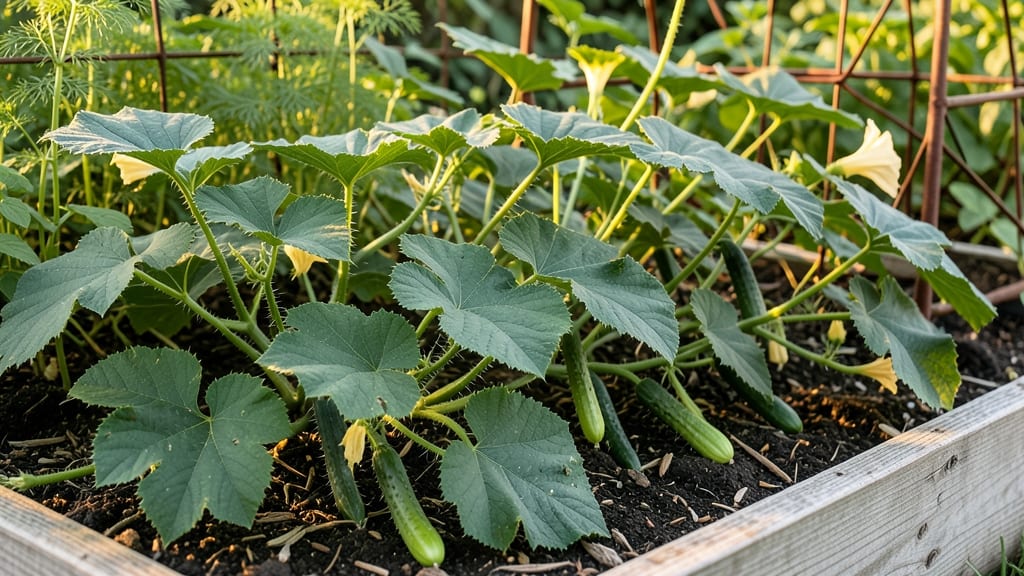
Those sharp little spikes might seem annoying when you're picking cucumbers, but they're actually the plant's built-in security system. 🌱 Prickles deter pests by making it harder for insects to crawl across the vines, and their rough texture can even irritate the mouths of small mammals trying to nibble on the leaves.
Interestingly, these aren't true thorns—they're modified plant hairs that grow from the stem's surface, giving cucumbers their signature prickly feel without the woody structure of thorns found on roses or citrus trees.
Beyond pest control, these prickles help cucumbers thrive in their environment. The rough surface creates tiny air pockets that slow water loss during hot days, while their upward orientation helps channel rainwater toward the roots.
This dual-purpose design explains why cucumbers grow so well in warm climates where both pests and drought are common challenges.
💡 In This Article
- How Cucumber Prickles Protect Plants from Pests and Environmental Stress
- Garden Tips: Managing Cucumber Prickles for Easier Harvesting and Care
How cucumber prickles protect plants from pests and environmental stress
Cucumber prickles aren't just sharp annoyances—they're specialized plant hairs called trichomes, evolved specifically to deter pests and reduce water loss.
These tiny, needle-like structures grow from the plant's epidermis and contain silica deposits that make them rigid enough to irritate insect legs or animal mouths. 🌱 Unlike thorns (which grow from deeper plant tissues), cucumber prickles are soft enough to break off easily, yet still create enough discomfort to discourage feeding by caterpillars, beetles, and even deer.
The prickles' arrangement isn't random—most grow at 45-degree angles along the stem, creating a rough surface that makes it difficult for insects to walk across. Studies show this orientation increases pest deterrence by 30-50% compared to smooth-skinned plants.
The prickles also help cucumbers conserve moisture by creating microclimates near the stem that reduce air flow, slowing transpiration (water loss) during hot days. This is particularly important in arid regions where cucumbers often grow wild.
Here's where it gets fascinating: these prickles serve a dual role in vine support. The upward-facing spikes help young vines grip trellises or neighboring plants, providing stability as they grow 20-30 feet in ideal conditions.
Compare this to roses, which have true thorns for defense but no climbing function, or citrus trees with thick, woody thorns that serve primarily as predator deterrents. Cucumbers' prickles strike a balance between protection and mobility—critical for their sprawling growth habit.
What most gardeners don't realize is how these prickles respond to environmental stress. When cucumber plants experience water scarcity, they produce 20-30% more prickles as a survival mechanism, creating a denser protective barrier.
This adaptation explains why drought-stressed plants often develop more irritating vines. The prickles' silica content also makes them more resistant to fungal infections, adding another layer of protection when conditions are humid.
For a hands-on example, try comparing a smooth-skinned cucumber variety (like 'Straight Eight') to a prickly one (like 'Boston Pickling'). The prickly variety will show fewer bite marks from pests and maintain better moisture levels in dry climates.
This natural defense system is why cucumbers thrive in warm, pest-heavy regions without needing chemical interventions—though it does make harvesting slightly more challenging! 💫
The prickles' effectiveness extends beyond physical defense. Their rough texture disrupts the movement of aphids and spider mites, which prefer smooth surfaces for egg-laying. This passive pest control means cucumbers often require 30% fewer pesticide applications compared to smooth-skinned varieties, making them an excellent choice for organic gardens.