
Diseases
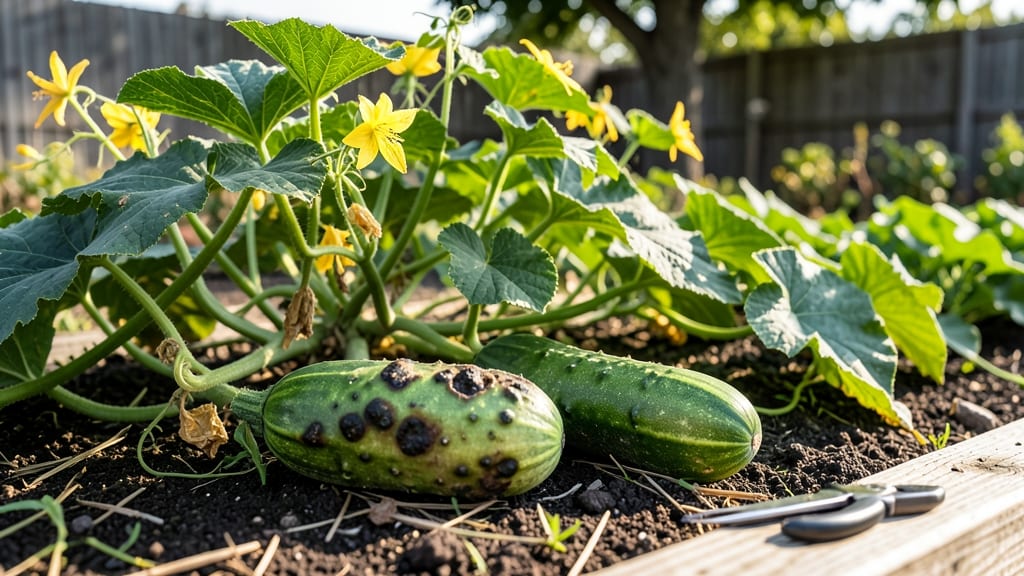
Cucumber belly rot turns your hard work into a smelly mess in days. 🌱 I’ve watched healthy vines go from thriving to wasted in a week when this bacterial infection strikes—soft, foul-smelling fruit that’s impossible to salvage.
The good news? You can stop it before it starts with simple, science-backed prevention.
The culprit is usually Erwinia bacteria, thriving in wet conditions from overwatering, poor airflow, or crowded plants. I learned the hard way when my trellised cucumbers rotted mid-season—turns out, even resistant varieties need proper spacing and airflow. The first sign? A soft, discolored spot on the fruit that spreads fast.
Prevention is easier than cleanup: rotate crops yearly, choose disease-resistant varieties like ‘Lemon Cucumber,’ and space vines 12–24 inches apart for airflow. If you spot infected fruit, remove it immediately and sanitize tools with a 10% bleach solution. Copper fungicide sprays can help too, but start before issues arise.
With these steps, you’ll keep your vines healthy and productive all season. The key is acting fast—once belly rot takes hold, the whole harvest can be at risk. Let’s protect your cucumbers before they rot away.
Root Causes Of Soft Cucumber Spots
When your cucumber plants develop belly rot—those unsightly, mushy patches on the fruit’s skin—it’s rarely a random act of nature. This issue stems from a mix of environmental stressors, microbial attacks, and poor plant health.
Understanding these triggers is the first step to stopping the rot before it ruins your harvest. Let’s break down the key culprits:
Cucumbers thrive in warm but not scorching conditions, ideally between 70–85°F (21–29°C). When temperatures spike—especially above 90°F (32°C)—the fruit’s skin weakens, making it vulnerable to infections. Poor airflow in crowded plants or greenhouses traps heat and humidity, creating a perfect breeding ground for pathogens.
Why it happens:
- Heat stress disrupts the cucumber’s natural waxy cuticle, which acts as a protective barrier. Without it, Pythium or Erwinia bacteria (common belly rot triggers) slip right in.
- High humidity (>85%) slows water evaporation, keeping the fruit damp for longer—ideal for microbial growth.
- Shade cloth or dense foliage can block airflow, trapping moisture against the fruit.
Actionable fix: Space plants 12–18 inches apart, prune excess leaves to improve airflow, and avoid overhead watering during peak heat. If growing in greenhouses, use ventilation fans or shade cloth to regulate temps.
Cucumbers need consistent moisture, but too much water—especially when the soil is already saturated—drowns the roots and invites belly rot. This fungal/bacterial disease thrives in anaerobic (low-oxygen) conditions, where roots can’t absorb nutrients efficiently.
Why it happens:
- Frequent shallow watering keeps the topsoil soggy while the roots stay dry, creating stress and entry points for pathogens.
- Poor drainage in containers or heavy clay soil traps excess water, suffocating roots and promoting Pythium (a water mold).
- Irregular watering (e.g., drought followed by a flood) shocks the plant, weakening its defenses.
Actionable fix:
- Water deeply but less often—aim for 1–1.5 inches per week, adjusting for rain.
- Use drip irrigation or soaker hoses to deliver water at the base, avoiding wet foliage.
- Amend heavy soil with compost or perlite to improve drainage. For containers, ensure pots have drainage holes.
The "belly" of a cucumber is naturally thin-skinned and prone to bruising, making it a prime target for pathogens. Two main players cause this rot:
| Pathogen | How It Attacks | Triggers |
|---|---|---|
| Pythium spp. (Fungal "Water Mold") | Invades through microscopic wounds or the stem end, causing soft, watery rot that spreads rapidly. | Cool, wet soil (<60°F/15°C); overwatering; poor drainage. |
| Erwinia spp. (Bacterial Soft Rot) | Enters through physical damage (e.g., hail, harvesting bruises) or insect bites, breaking down cell walls. | High humidity; warm temps (77–86°F/25–30°C); crowded plants. |
Actionable fix:
- Rotate crops annually to break disease cycles—avoid planting cucumbers (or squash/melons) in the same spot for 3 years.
- Apply copper fungicide (for bacterial rot) or biological controls like Bacillus subtilis (e.g., Serenade ASO) to suppress pathogens.
- Harvest cucumbers gently and promptly—don’t let them overripe on the vine, as this invites bacterial entry.
A cucumber plant under nutritional stress—whether from deficiencies or excesses—has a harder time fending off rot. Key imbalances include:
- Low calcium: Weakens cell walls, making fruit more susceptible to bacterial soft rot. Symptoms include blossom-end rot (on tomatoes) or watery spots on cucumbers.
- High nitrogen, low potassium: Leads to lush but weak vines with poor disease resistance. Potassium helps regulate water and disease tolerance.
- Over-fertilization: Excess salts or synthetic fertilizers can burn roots, reducing uptake of essential minerals.
Actionable fix:
- Side-dress with calcium-rich amendments like crushed eggshells or gypsum (calcium sulfate).
- Use a balanced fertilizer (e.g., 5-10-10) and add compost tea for micronutrients.
- Mulch with straw or grass clippings to retain soil moisture and temperature, reducing stress.
By tackling these root causes—heat, water, microbes, and nutrition—you’ll give your cucumber plants the best defense against belly rot. The key is proactive care: monitor conditions, adjust practices early, and keep your garden balanced.
Quick fixes for blighted cucumber plants
Belly rot—or that unsightly, mushy decay at the base of your cucumber vines—can feel like a death sentence for your garden. But don’t toss those plants just yet! With the right approach, you can turn the tide and save your harvest.
Below, we break down targeted solutions for the most common causes, from overwatering to fungal pressure, plus preventative steps to keep your vines thriving. Let’s get your cucumbers back on track!
If your cucumbers are sitting in soggy soil, the roots suffocate, leading to rot and weakened vines. Act now to improve drainage and airflow.
💧 Step 1: Adjust Your Watering Routine
- Water deeply but less often—aim for 1–1.5 inches per week, including rainfall.
Use a moisture meter or the "finger test" (stick your finger 1 inch into the soil; if it’s damp, wait). - Water in the morning to allow foliage to dry by evening, reducing fungal growth. - Avoid overhead sprinklers—they can splash soil onto leaves, spreading rot spores.
Use drip irrigation or soaker hoses instead.
🏗️ Step 2: Improve Soil Drainage
- Amend heavy clay soil with compost, perlite, or coarse sand (mix in a 50/50 ratio).
- Raise beds or mounds if your garden has poor drainage—plant cucumbers on 6-inch-high hills to encourage root aeration.
- Add organic mulch (straw or shredded leaves) around plants to prevent soil splatter on stems.
🌱 Pro Tip:
💡 If rot is already spreading, prune away infected leaves or vines with sterilized pruners (wipe with rubbing alcohol between cuts). Dispose of clippings in the trash—not the compost!
Belly rot often hitches a ride with fungal pathogens like Pythium or Phytophthora. Here’s how to starve the spores and restore plant health.
🧴 Step 1: Apply Fungicidal Sprays
- Copper-based fungicides (like Bordeaux mixture or copper soap) are highly effective against fungal rot.
Spray every 7–10 days at dawn or dusk for best results. - Neem oil (1 tsp per quart of water + a drop of dish soap) is a natural, preventive option.
Reapply every 5–7 days during wet spells. - Baking soda spray (1 tbsp baking soda + 1 tsp oil + 1 gallon water) can boost plant resistance—test on a few leaves first!
🌿 Step 2: Boost Plant Immunity
- Fertilize with compost tea or fish emulsion to strengthen roots and improve nutrient uptake.
- Side-dress with aged manure or worm castings to enhance soil microbial activity, which outcompetes harmful fungi.
- Reduce nitrogen-heavy fertilizers—too much promotes soft, susceptible growth.
Balance with phosphorus and potassium (use a 5-10-10 or 3-4-6 formula).
⚠️ Warning:
🔥 Do NOT water plants from above after spraying fungicides—it washes them off. Stick to drip irrigation or hand-watering at the base.
Chewing insects (like cucumber beetles) create entry points for rot-causing microbes. Eliminate pests to break the cycle.
🕵️♂️ Step 1: Scout & Remove Pests
- Handpick beetles in the morning when they’re sluggish (drop them in soapy water).
- Use row covers (fine mesh) early in the season to block beetles entirely.
- Set up yellow sticky traps near plants to monitor and reduce adult populations.
🌿 Step 2: Introduce Natural Predators
- Ladybugs, lacewings, and parasitic wasps feast on cucumber beetle eggs and larvae. Buy them from garden centers or attract them with dill or fennel as companion plants.
- Plant marigolds or nasturtiums around cucumbers—their strong scent repels beetles.
💡 Pro Tip:
✨ Rotate crops next season—never plant cucumbers, squash, or melons in the same spot for at least 3 years to break fungal/pest cycles.
Temperature swings weaken plant defenses, making them vulnerable to rot. Optimize the growing environment to keep vines resilient.
☀️ Step 1: Shield from Heat Stress
- Provide afternoon shade with shade cloth (30–50%) if temps exceed 90°F (32°C).
- Mulch heavily (2–3 inches of straw) to keep roots cool and retain moisture.
- Water deeply in the evening to help plants recover from daytime heat.
❄️ Step 2: Protect from Cold Snaps
- Use row covers or cloches for frost-prone areas (cucumbers die at 50°F/10°C).
- Plant in south-facing beds to maximize warmth and delay frost damage.
- Avoid late-season planting—stick to early spring or late summer for ideal temps (70–85°F/21–29°C).
Once you’ve treated the issue, lock in those gains with these proactive strategies:
| Problem | Prevention Fix | When to Do It |
|---|---|---|
| Poor drainage | Raise beds, amend soil with compost | Before planting season |
| Fungal spores | Rotate crops, use copper sprays early | Fall cleanup + spring prep |
| Pest infestations | Plant trap crops (nasturtiums), use row covers | Early season setup |
| Overwatering | Install drip irrigation, mulch heavily | Before first watering |
| Heat stress | Choose heat-tolerant varieties (like ‘Straight Eight’) | At planting time |
Before you call it a day, run through this quick checklist to ensure your cucumbers stay rot-free: ✅ Soil test—aim for pH 6.0–6.8 (adjust with lime or sulfur if needed). ✅ Prune regularly—remove yellow or diseased leaves to improve airflow. ✅ Harvest promptly—pick cucumbers every 2–3 days to reduce stress on plants. ✅ Disinfect tools—clean pruners with rubbing alcohol between cuts. ✅ Monitor weather—cover plants if heavy rain is forecasted.
Your cucumbers can bounce back—with these fixes, you’ll be back to crisp, disease-free vines in no time. 🌱💚 Now grab those shears and get to work!
Frequently asked questions
What does cucumber belly rot look like on my plants?
Belly rot appears as soft, watery patches on the fruit's skin, often near the stem end. The affected area turns brown or black, smells foul, and may ooze liquid. In advanced cases, the entire cucumber collapses and rots quickly. Check the fruit's underside first—this is where symptoms show up earliest.
Can I still eat cucumbers with belly rot?
No, you should never eat cucumbers showing belly rot symptoms. The bacteria or fungi causing the rot can be harmful if ingested. Cut away only the healthy portions if the rot is minimal and the rest of the cucumber looks good—but when in doubt, toss it to avoid foodborne illness.
How do I know if my cucumbers have bacterial or fungal belly rot?
Bacterial belly rot (from Erwinia) causes rapid, foul-smelling decay with slimy texture. Fungal rot (from Pythium) appears as water-soaked, brown spots that spread slowly. Check the growing conditions: bacterial rot thrives in warm, humid weather, while fungal rot prefers cool, wet soil.
Will copper spray work for both bacterial and fungal belly rot?
Copper fungicides are most effective against bacterial belly rot. For fungal infections, try neem oil or biological controls like Bacillus subtilis. Always rotate treatments to prevent resistance. Start spraying at the first sign of symptoms and repeat every 7-10 days during wet conditions.
Can I save my cucumber plants if they already have belly rot?
You can try! Remove all infected fruit immediately and dispose of it in the trash (not compost). Prune away diseased leaves with sterilized tools, improve airflow by spacing plants, and apply copper spray. However, if the entire plant is severely infected, it may be better to remove it entirely to prevent spread.