
Pests
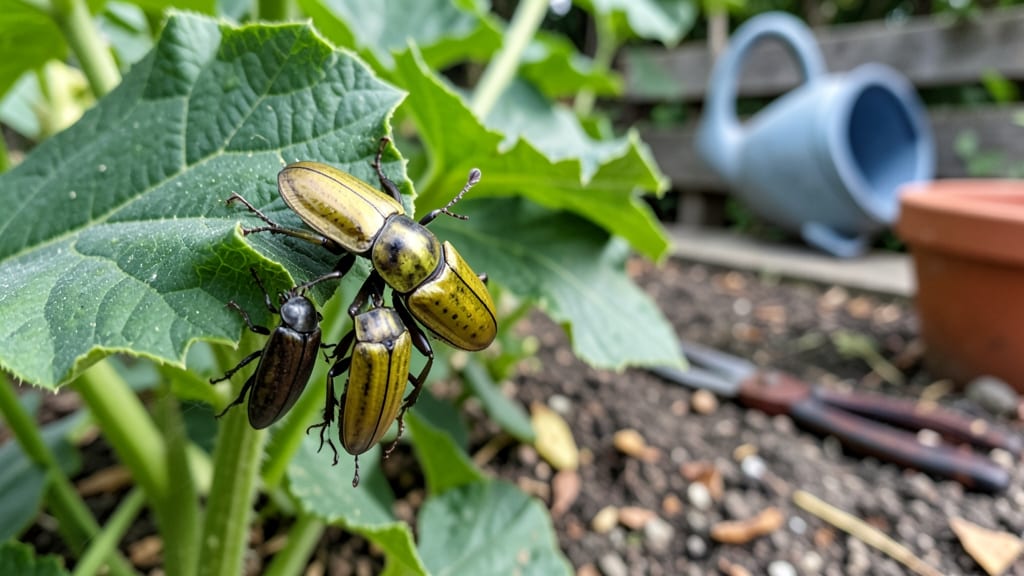
Controlling cucumber beetles is essential—these striped pests can turn a thriving vine into a skeleton in days unless you act fast. 🌱 I’ve lost entire cucumber plants to them, but this combo of row covers and neem oil saved my garden last summer.
The key is stopping them before they lay eggs, then smothering any survivors with organic treatments.
You’ll need lightweight row covers to shield young plants, neem oil for spot treatments, and a spray bottle for precision. The row covers create a physical barrier while still letting sunlight and water through—just secure them tightly to avoid gaps.
Neem oil disrupts their feeding cycle and reproduction, but timing matters: apply it at dusk when beetles are most active.
Within a week, you’ll see fewer chewed leaves and more vigorous growth. The plants stay protected through flowering, and the neem oil breaks the beetle life cycle without harming pollinators. It’s not a one-time fix, but consistent effort keeps them under control all season.
For extra defense, interplant with radishes or nasturtiums—their strong scents repel beetles naturally. Rotate crops yearly to starve out larvae hiding in the soil. This method works for squash, melons, and pumpkins too, making it a garden-wide solution.
📚 In This Guide
- What you need
- Instructions
- Tips and common mistakes
- Wrapping up and next steps
What you need
- ● Floating row covers (lightweight, breathable fabric): 1–2 covers per garden bed (adjust based on size; typically 4’ x 10’ or larger)
- ● Made of spunbonded polyester (pore size: 0.6–1.2 mm to block beetles)
- ● Neem oil (organic insecticide): 16–32 oz (1–2 pints) per gallon of water (or pre-mixed spray)
- ● Look for cold-pressed, food-grade neem oil (e.g., Neem Bliss or Bonide)
- ● Garden hose with adjustable nozzle (for mixing/spraying)
- ● Spray bottle or pump sprayer (1–2 quart capacity for targeted application)
- ● Garden twine or clips (to secure row covers; 50–100 ft roll)
- ● Gloves and long sleeves (for protection while handling neem oil or pests)
- ● Handheld fan or leaf blower (to dislodge beetles before covering plants)
- ● Diatomaceous earth (food-grade) (sprinkle lightly around plant bases as a barrier)
- ● Yellow sticky traps (5–10 traps per garden to monitor beetle activity)
- ● Soap spray (1 tbsp mild castile soap + 1 quart water) for quick beetle knockdowns
- ● Plant collars (cardboard or plastic) to block beetles from crawling up young seedlings
Step-by-Step instructions for cucumber beetle control
Here's how I combine row covers and neem oil to keep cucumber beetles off my vines all season.
🪴 Step 1: Install Row Covers Early for Maximum Protection
Put lightweight floating row covers over your cucumber plants as soon as you see the first true leaves—usually 3-4 days after transplanting. These covers create a physical barrier that blocks beetles from reaching your plants. I use hoop tunnels made from 10-foot long PVC pipes bent into arches and covered with frost cloth secured with clothespins at the edges.
The key is keeping the covers snug but not touching the plants. If they brush against leaves, you'll trap heat and humidity, which encourages fungal diseases. Leave the bottom edges buried 1-2 inches deep in soil to prevent beetles from crawling underneath. You'll know it's working when you spot no beetles on the plants after a few days of coverage.
💧 Step 2: Apply Neem Oil as a Preventive Spray
Mix 1 tablespoon of neem oil with 1 teaspoon of horticultural oil in 1 quart of water, then add ½ teaspoon of mild liquid soap as an emulsifier. Shake well and spray thoroughly on both sides of leaves and the stems, focusing on the undersides where beetles hide. I apply this every 7-10 days or after heavy rain, which washes it away.
Neem oil works by disrupting beetle feeding and reproduction, but it's not a quick fix. Start spraying before you see beetles—once they're established, you'll need to combine this with other methods. Always spray in the early morning or late evening to avoid harming bees and other beneficial insects. You'll notice fewer beetles within 3-5 days of consistent applications.
✂️ Step 3: Remove Beetles Manually for Immediate Control
Check your plants daily for cucumber beetles, especially in the morning when they're sluggish. Use a small paintbrush or damp paper towel to gently brush them into a container of soapy water. I keep a spray bottle of 1:1 water and dish soap nearby for quick disposal. Focus on the youngest leaves and new growth, where beetles lay their eggs.
This step might seem tedious, but it's the fastest way to reduce beetle populations. If you see more than 3-4 beetles per plant, it's time to increase your neem oil applications to every 5-7 days. The goal is to keep the beetle numbers low enough that your plants can recover without severe damage.
☀️ Step 4: Monitor and Adjust Protection as Plants Mature
When cucumbers start flowering, remove the row covers to allow pollination. This is the only time you'll need to rely entirely on neem oil and manual removal. I set up yellow sticky traps near the plants to catch any remaining beetles. These traps should be placed 1-2 feet above the plants and checked every 2-3 days. Replace them when they're 75% covered with insects.
If you notice silvering or yellowing on leaves, it's a sign of bacterial wilt, which cucumber beetles spread. At this point, remove and destroy the infected plants immediately to prevent the disease from spreading. Keep an eye on the fruit too—beetles love to feed on young cucumbers, leaving behind ugly scars. Harvest cucumbers every 2-3 days to encourage new growth and reduce beetle attraction.
Tips & tricks for cucumber beetle control
Real talk: Cucumber beetles can ruin your harvest if you're not proactive. Here's how to make this method work even better.
Timing is Everything: In Step 1, don't wait until you see beetles to install row covers. I've learned the hard way that once they establish themselves, they're nearly impossible to eradicate. The 3-4 days after transplanting is the critical window—set up your hoop tunnels before you spot any damage. This gives your plants a fighting chance from day one.
Neem Oil Application Precision: When mixing your neem oil spray in Step 2, focus on the undersides of leaves where beetles hide. I use a spray bottle with a fine mist setting to ensure thorough coverage. The 7-10 day application schedule works best when conditions are dry—neem oil gets washed away quickly after rain, so adjust your schedule accordingly.
Manual Removal Strategy: For Step 3, I've found that checking plants in the morning works best because beetles are sluggish after overnight cooling. Use a small paintbrush to gently sweep them into soapy water—this prevents crushing them, which can release pheromones that attract more beetles. The 3-4 beetle threshold is important: once you exceed that number, you'll need to increase your neem oil frequency to every 5-7 days.
Monitoring Matters: In Step 4, set up your yellow sticky traps at least 2 feet above the plants to catch beetles before they reach your cucumbers. I check these traps daily during peak beetle season (late spring to early summer) and replace them when they're 75% covered. This visual cue helps me track beetle activity and adjust my control measures accordingly.
Pro Tips for Controlling Cucumber Beetles
- Real talk: Cucumber beetles can ruin your harvest if you're not proactive.
- Timing is Everything: In Step 1, don't wait until you see beetles to install row covers.
- Neem Oil Application Precision: When mixing your neem oil spray in Step 2, focus on the undersides of leaves where beetles hide.
Frequently asked questions
Got questions about tackling cucumber beetles? You’re not alone—these pesky critters can wreak havoc on your garden if you don’t act fast. Here are some of the most common concerns and straightforward answers to help you protect your plants like a pro.
What’s the best time of year to start using row covers and neem oil for cucumber beetles?
Start before beetles appear in spring—typically when your plants are still young (2–3 weeks old). Row covers should stay on until flowers appear (beetles love them!), then switch to neem oil for post-bloom protection. Timing is key: early intervention prevents damage and saves your crop!
Will row covers alone stop cucumber beetles, or do I need neem oil too?
Row covers are a great first line of defense—they block beetles entirely. However, once plants flower, beetles can still sneak in. Neem oil acts as a backup: it disrupts their life cycle and deters adults. For maximum protection, use both methods: covers early + neem oil later.
How often should I reapply neem oil if it rains or washes off?
Neem oil breaks down quickly in rain or under direct sunlight, so reapply every 7–10 days (or after heavy rain). For extra staying power, mix it with a sticky spray (like 1 tsp dish soap per gallon) to help it adhere to leaves. Consistency is critical—don’t skip reapplications!
Are there any natural alternatives to neem oil if I don’t have it?
Yes! Try these DIY cucumber beetle repellents:
- Garlic spray: Blend 5 garlic cloves + 1 tsp cayenne pepper in water, strain, and spray on plants.
- Diatomaceous earth: Dust lightly around plant bases (avoid leaves—it’s harsh on beneficial insects).
- Beer traps: Fill a shallow dish with beer; beetles are attracted and drown.
My plants still have holes even after using row covers and neem oil. What’s going wrong?
If beetles persist, check these troubleshooting steps:
- Are row covers fully secured? Even tiny gaps let beetles in.
- Is neem oil covering all surfaces (top/bottom of leaves)? Beetles hide!
- Are you spraying at the right time (early morning/evening for best adhesion)?
- Consider handpicking adults (drop them in soapy water) for severe infestations.
Wrapping up and next steps
Controlling cucumber beetles doesn’t have to be a battle—it’s all about prevention, consistency, and the right tools. By combining row covers for early protection and neem oil for targeted treatment, you’re giving your cucumbers (and your sanity!) a fighting chance. Stay vigilant, act fast, and your garden will thrive.
Ready to take action? Start with a quick inspection of your plants today—early detection is your best defense! 🌱🛡️