
Planting
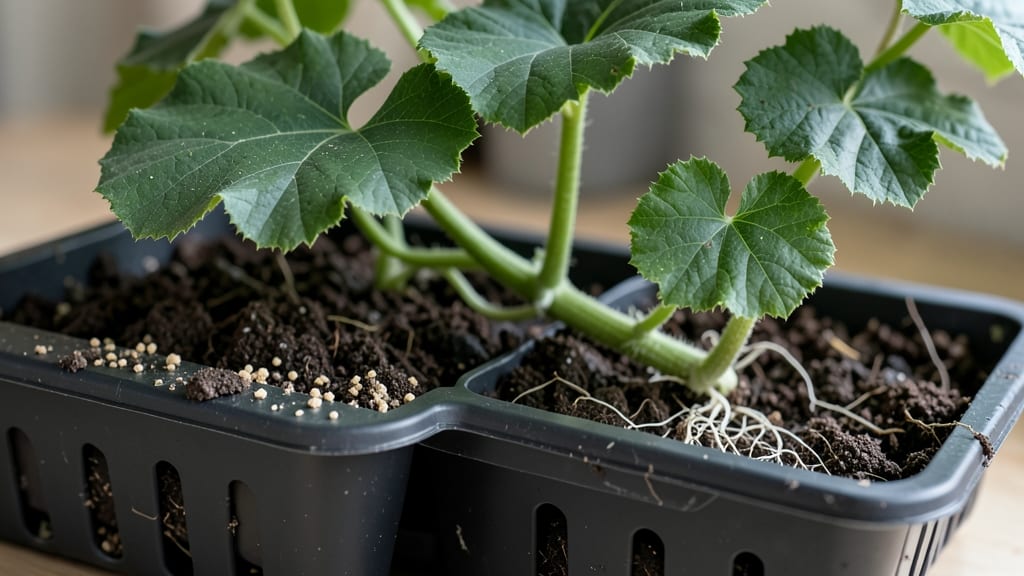
You can start cucumber seeds indoors for earlier harvests, but they need consistent warmth (at least 70°F soil), bright 12-16 hours of light daily, and careful transplanting after developing true leaves. Use sterile seed-starting mix in small pots to prevent damping-off disease.
Starting cucumbers indoors gives you a 3-4 week head start on the growing season, which is especially valuable in cooler climates. 🌱 The key is replicating their tropical preferences—warmth triggers germination, while strong light prevents leggy seedlings.
I recommend using grow lights if natural sunlight falls short, as cucumbers need intense brightness to thrive. Once seedlings have two sets of leaves, they’re ready to harden off before moving outdoors.
For best results, sow seeds ½ inch deep in 3-4 inch pots filled with well-draining mix. Keep the soil moist (not soggy) and maintain humidity with a plastic dome or tray of water until sprouts appear.
This method reduces transplant shock and gives your plants a stronger foundation for outdoor growth.
💡 In This Article
- Optimal Conditions for Germinating Cucumber Seeds Indoors
- Step-by-Step Indoor Cucumber Seed Starting Guide
Optimal conditions for germinating cucumber seeds indoors
Cucumber seeds thrive when mimicking their natural tropical environment, where soil temperatures consistently stay between 70-90°F.
The magic happens at 80°F, which is why many gardeners use seedling heat mats to accelerate germination—sprouts can appear in just 5-7 days under these conditions, compared to 10-14 days in cooler soil (60°F).
The seeds contain enzymes that become active only when warmed, breaking down stored nutrients to fuel the seedling's first push through the soil.
Humidity plays a critical role too—cucumber seeds need moisture levels around 70-80% to prevent the seed coat from drying out before germination. I've found that placing pots on a humidity tray (with pebbles and water) or covering them with plastic wrap creates the ideal microclimate.
Too little moisture causes the seed to shrivel, while excess water leads to rot. The sweet spot is keeping the soil damp but not soggy, like a wrung-out sponge.
Light requirements shift dramatically after germination. While seeds only need darkness to sprout, seedlings crave 12-16 hours of bright light daily to prevent leggy growth. Natural sunlight works, but south-facing windows often provide only 4-6 hours of direct light—supplement with LED grow lights placed 2-3 inches above seedlings.
Without enough light, seedlings stretch toward the source, becoming weak and prone to breakage when transplanted.
Pre-sprouting techniques like soaking seeds in warm water (80°F) for 4-6 hours can shave off 24-48 hours from germination time. This hydrates the seed coat and activates metabolic processes, but avoid soaking longer than 8 hours or you risk fungal growth.
I've seen seeds pre-soaked in a damp paper towel germinate in just 3-5 days when placed in a warm, dark spot—then transferred to soil once roots appear.
One common mistake is overwatering during germination. Cucumber seeds need consistent moisture but can't tolerate waterlogged conditions, which cut off oxygen and trigger rot. The soil should feel like a damp sponge—press your finger ½ inch deep; if it's dry, water lightly.
Overhead watering can also dislodge seeds or wash them too deep, so use a spray bottle or water from the bottom of the tray.
Here's a pro tip: After germination, remove any plastic covers immediately to prevent fungal diseases like damping-off. Cucumber seedlings are particularly vulnerable because their stems are soft and thin. Good airflow from the start helps them develop stronger cell walls, making them more resilient when it's time to transplant.